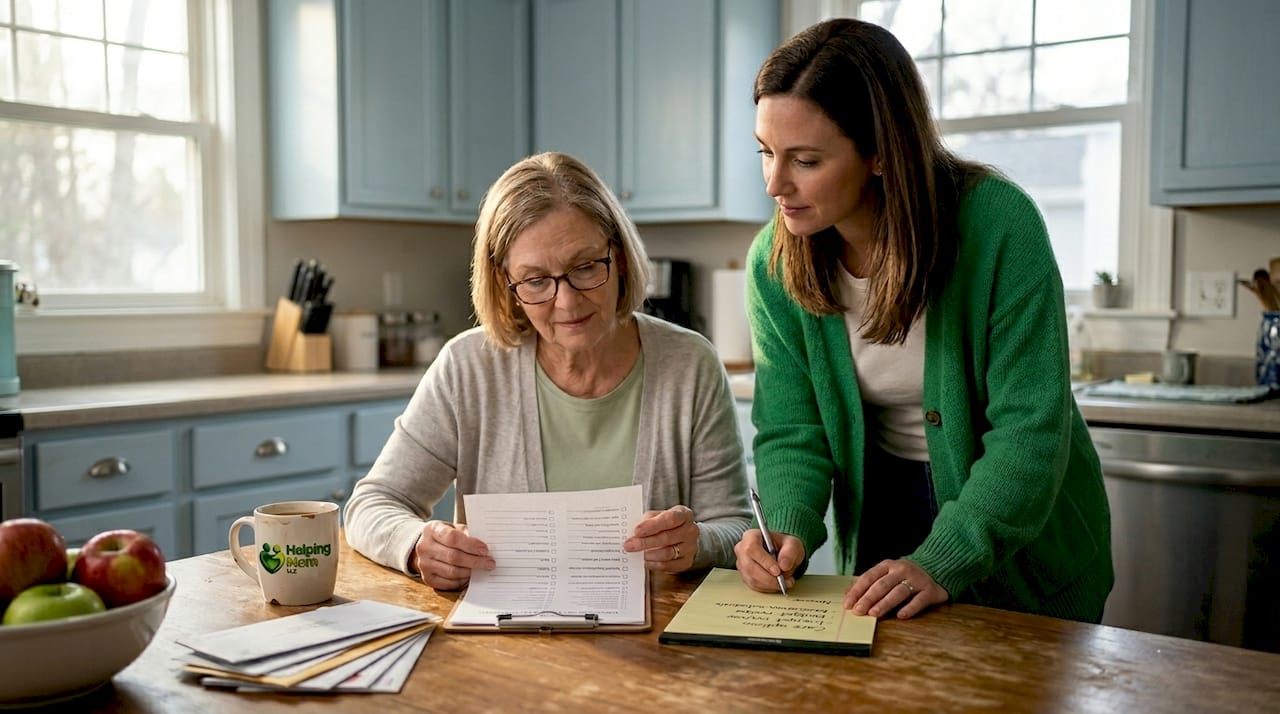
Taking care of an aging parent doesn't come with a clear roadmap.
Most people find themselves reacting as things come up—appointments,
safety concerns, paperwork, conversations they weren't quite ready to
have.
A checklist can help, but not if it feels like one more thing to
manage.
This guide is meant to simplify things. Not to overwhelm you with
everything at once, but to help you see what matters and take it one step
at a time.
| Point | Details |
|---|---|
| Checklist definition | An aging parent checklist structures tasks and communication for safer, more confident care. |
| Customization matters | Tailor checklists to unique health, mobility, and family dynamics for maximum benefit. |
| Collaboration improves outcomes | Sharing and revising checklists with the family leads to clearer roles and fewer safety lapses. |
| Home safety focus | Identifying and correcting hazards in each room is crucial for preventing accidents. |
You don't need every answer here—just enough to avoid guessing in a stressful moment.
An aging parent checklist is a structured document that outlines the key tasks, safety checks, and conversations your family needs to address when supporting an elderly parent at home. It is not a to-do list you scribble on a notepad. Think of it as a living guide, something your whole family can refer to, update, and build on over time.
You're not trying to build a perfect system. You're trying to make things a little easier and a little safer.
You don't need to do all of this today. Think of this as a reference you can come back to when something changes or when you're ready for the next step.
Many families assume that caring for a parent simply means showing up and helping out. But elder care at home involves dozens of moving parts: medication schedules, fall prevention, doctor appointments, financial decisions, and difficult conversations about the future. Without a checklist, important things get missed. Not because anyone is careless, but because it is genuinely hard to track everything in your head.
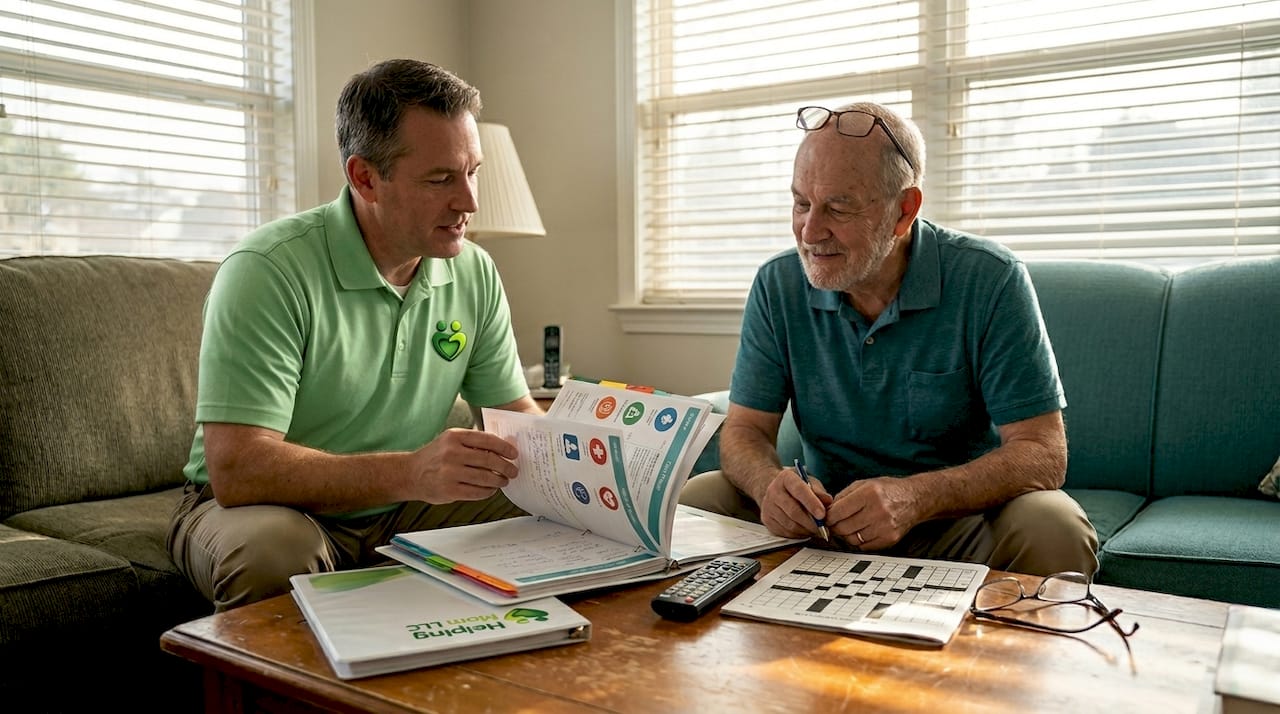
The detailed checklist guide from Helping Mom offers a clear example of what a well-organized checklist looks like in practice. It anchors family communication and gives everyone a shared starting point, rather than leaving each person to figure out their role independently.
Here is what a structured aging parent checklist typically covers:
"A checklist is not about managing your parent's life. It is about making sure nothing important slips through the cracks while your family figures out how to walk alongside them."
The difference between a casual list and a real aging parents checklist is structure and intention. A casual list reacts to problems as they appear. A structured checklist anticipates them before they become crises. Families who use structured checklists report fewer safety lapses, clearer role division, and noticeably lower stress levels across the board.
You can even access a free elder care checklist to get started without any guesswork. Beginning with a ready-made template makes the process far less daunting, especially if you are just getting started and are not sure where to focus first.
Start with just one:
That's enough for today.
Family Meeting Agenda Template — A simple way to get everyone on the same page
This isn't about taking control. It's about not being stuck in an emergency.
Not all checklists are created equal. A minimal checklist might just list a few safety items and phone numbers. A truly useful one covers every dimension of your parent's daily life and future planning. Understanding the difference helps you build something that actually works.
The aging in place checklist framework breaks elder care into four major categories, and these form the backbone of any effective checklist. Here is how a minimal checklist compares to a comprehensive one:
| Feature | Minimal checklist | Comprehensive checklist |
|---|---|---|
| Home safety items | Basic hazard list | Room-by-room detailed review |
| Medical tracking | Medication list | Full schedule, dosages, contacts |
| Daily routines | Meal and hygiene notes | Mobility, social, cognitive support |
| Family roles | One or two tasks assigned | Clear responsibilities per person |
| Legal and financial | Emergency contacts only | Documents, legal planning, insurance |
| Review schedule | No set timeline | Monthly updates built in |
A comprehensive checklist is not harder to manage. It is actually easier, because everyone knows what to expect and nothing is left ambiguous.
Here are the numbered essentials that every aging parent checklist should include:
Pro Tip
Personalize your checklist for your parent's specific situation. A parent with limited mobility needs different home modifications than one with early memory changes. Factor in their medical history, daily habits, and personality when deciding what to prioritize. A checklist that fits your family's actual life is far more useful than a generic template. If you'd like a guided 30-day version, our Home Safety 30-Day Plan walks you through one small task at a time.
The elderly home safety checklist goes deeper into physical safety items, which is worth exploring once your core checklist is in place.
This isn't about taking control. It's about not being stuck in an emergency.
Having a checklist is only half the work. Using it well, especially with siblings and other family members involved, requires some intentional structure. This is where many families stumble. The checklist exists, but no one is sure who owns it, who updates it, or how decisions get made.
The most effective approach is to start with a family meeting. This does not need to be formal or stressful. It can be a video call, a kitchen table conversation, or even a shared document that family members review on their own schedule. What matters is that everyone knows the checklist exists and understands their role in using it.
Here is a simple step-by-step approach to getting your family started:
Share the checklist with everyone involved
Send it digitally or print copies. Make sure every family member, including your parent if appropriate, has access to it.
Walk through each section together
Do not assume everyone understands what each item means. Briefly explain why each section matters and what it involves.
Assign responsibilities clearly
Use names, not vague terms like "someone will handle it." For example, "Sarah handles all medical appointments; Tom manages bill payments."
Set a monthly review date
Pick a consistent time to revisit the checklist as a group. Monthly works well for most families.
Create a way to flag urgent updates
Whether that is a group text, a shared app, or a phone call protocol, establish how time-sensitive information gets communicated between meetings.
There are also common pitfalls to watch for:
Managing family roles can be one of the more emotionally charged parts of this process, and it is worth approaching it with patience. Studies on family caregiving consistently show that structured communication tools reduce conflict and improve outcomes for both the senior and the caregivers. Using a family meeting agenda can make these conversations much smoother by giving everyone a clear structure to follow.
The key actions for caring for aging parents remind us that coordination is not just helpful, it is essential. When everyone knows their role and the information is centralized, caregiving becomes a shared effort rather than a source of family tension.
Families who use structured care coordination tools, including checklists and regular family meetings, report significantly fewer caregiving conflicts and greater confidence in managing their parent's safety at home.
Small changes here often make the biggest difference.
Home safety is often the most urgent section of any aging parent checklist. Falls are the leading cause of injury among older adults, and most fall risks are entirely preventable with a careful room-by-room review. The elderly home safety checklist walks through this in practical detail.
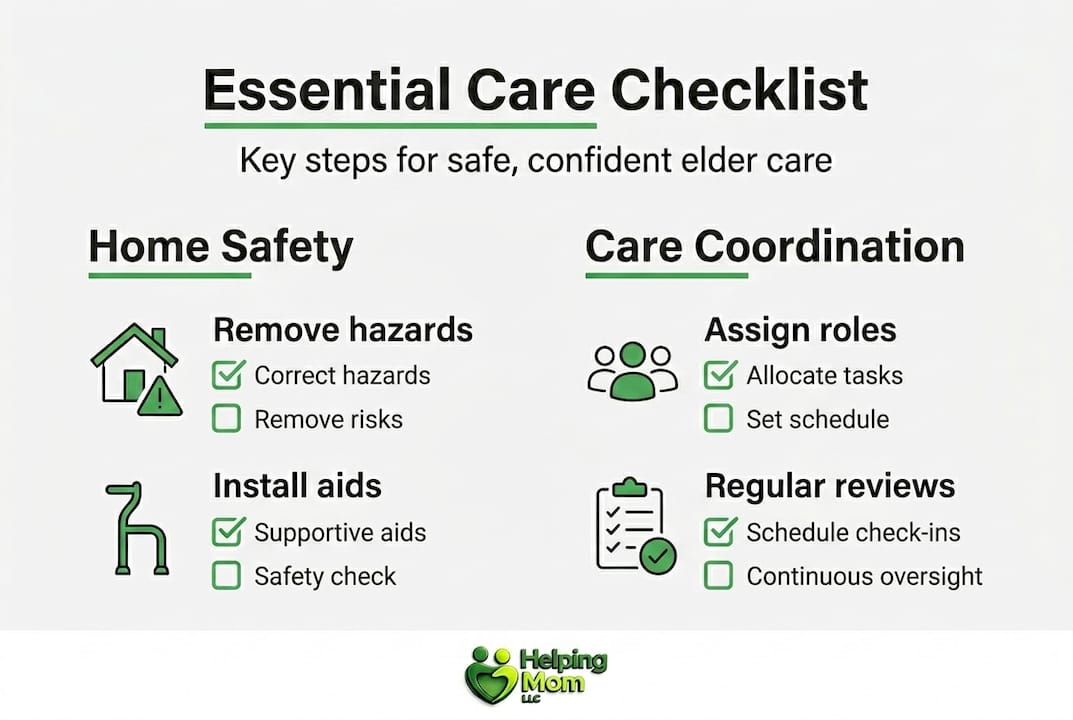
Here is a room-by-room breakdown of what to look for:
| Hazard | Common location | Prevention action | Risk reduction |
|---|---|---|---|
| Loose rugs | Living room, hallways | Remove or secure edges | Significant |
| Poor lighting | Stairways, bathrooms | Add nightlights, brighter bulbs | High |
| No grab bars | Bathroom | Install bars near toilet and shower | Very high |
| Cluttered pathways | Bedrooms, hallways | Clear and reorganize regularly | Moderate to high |
| Unstable furniture | Living room | Secure or replace | Moderate |
The practical home safety guide and the resource on making home safe offer deeper guidance on modifications that go beyond the basics.
Pro Tip
Involve your parent directly in the home safety review. When seniors feel like changes are being done with them rather than to them, they are far more likely to cooperate and even suggest improvements you might have missed. A simple walkthrough together, with a notepad in hand, can open up honest conversations about what feels unsafe or difficult in their daily routine.
Continue learning: How to Talk to Aging Parents About Safety
These don't have to be perfect. They just need to start.
Here is something conventional checklists rarely address: emotional well-being. Most templates focus on physical safety and medical logistics, which are important. But they overlook the fact that caregiving is also an emotional experience for everyone involved, including your parent.
We have seen this pattern repeatedly. A family does everything right on paper: grab bars installed, medications organized, family roles assigned. But no one asks Dad how he feels about losing some of his independence. No one checks in on whether Mom is lonely or anxious. The checklist gets completed, and still something feels off.
The caregiving resource library reflects this broader view of elder care, one that treats the whole person rather than just the logistics.
The other lesson is that checklists need to evolve. A checklist built for your parent's needs today may be inadequate six months from now. Health changes, living situations shift, and family dynamics do too. A checklist is not a document you complete once and file away. It is a conversation that keeps going.
The families who do this well treat the checklist as a starting point, not a finish line. They revisit supporting parents at home as needs change, and they build enough flexibility into their plan to adapt without panic. That flexibility is often what makes the difference between caregiving that feels manageable and caregiving that leads to burnout.
Remember
The best care plans honor both safety and dignity—treating your parent as a whole person, not just a list of needs.
Continue learning: What to Do When Aging Parents Refuse Help
Most families don't.
They take it one step, one conversation, one small improvement at a time.
That's how this becomes manageable.
And that's exactly what Helping Mom is here to support.
You don't have to figure this out alone. Helping Mom is here to give you clear, calm, and practical tools for every stage of caring for your parent.
Identify risks in your parent's home right now with our comprehensive safety guide.
Get startedBuild out your full care plan with our comprehensive caring for aging parents checklist.
Learn moreLearn what your parent's home needs to support safe, independent living for years to come.
ExploreEvery resource is designed to help you feel more confident and less overwhelmed.