An honest comparison of cats, small dogs, shelter seniors, fish, and birds — with the trade-offs nobody tells you.
When families start talking about loneliness, isolation, or emotional health for an aging parent, the idea of getting a pet often comes up quickly.
And sometimes, it truly helps.
The right pet can bring structure, comfort, companionship, and purpose to everyday life. A dog may encourage daily movement and routine. A cat may provide calming companionship without demanding constant attention. Even fish or birds can create a sense of connection and comfort in a quieter home.
But here is the part families often skip:
Not every pet is a good fit for every older adult.
A pet that improves one person's quality of life may create stress, fall risks, financial strain, or caregiving complications for someone else.
The goal is not simply getting Mom a pet.
The goal is choosing the right pet for the life she is actually living right now.
Before discussing breeds, personalities, or adoption websites, start here:
What kind of daily life does your parent realistically have?
That answer matters far more than what animal looks cutest in a photo.
Think about:
The best pet fit is usually the one that supports independence without quietly creating new safety concerns.
For many older adults, especially those with limited mobility, cats are often the safest and easiest choice.
They do not need walks
Generally quieter than dogs
Most short-haired cats groom themselves
Companionship without constant activity
Older, calmer cats are often ideal.
Breeds known for calm temperaments include:
But families should still think practically. Litter boxes require bending and cleaning. Veterinary care still matters. And cats often live 15 years or longer, which means long-term planning matters too.
One of the smartest choices many families make is adopting an already mature cat rather than a kitten.
Kittens are adorable. They are also tiny chaos machines.
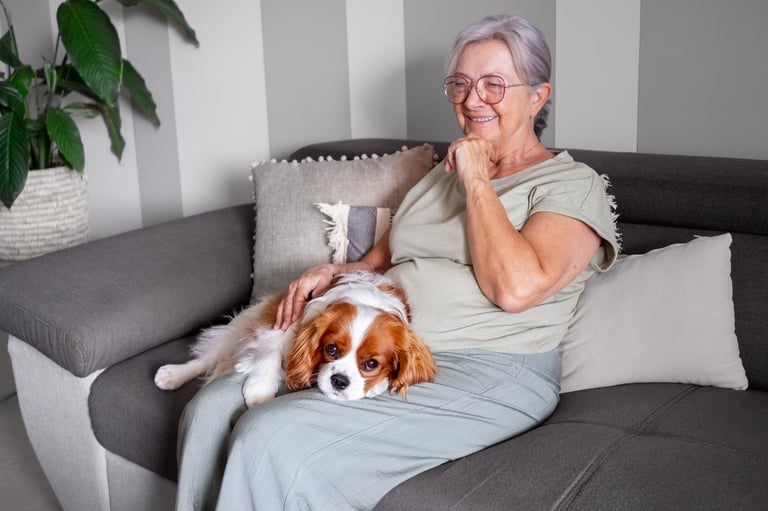
The right pet match can bring comfort and companionship without adding safety concerns
Dogs can provide tremendous emotional support and help older adults stay active and socially connected.
But dog selection matters more than many people realize.
A large, high-energy dog may accidentally pull someone off balance or create a serious fall risk. In fact, dogs are involved in the overwhelming majority of pet-related fall injuries among older adults.
For many seniors, smaller and calmer breeds are a much safer fit.
Some strong options include:
Gentle, affectionate, and typically low-energy.
Small, calm, and content with shorter walks and indoor companionship.
Friendly, apartment-friendly, and often a good option for allergy concerns.
Intelligent, trainable, and lower shedding.
The key is avoiding the common mistake of choosing a dog based only on appearance.
A cute puppy may eventually become a 70-pound tripping hazard.
Families often overlook older dogs in shelters, but they are frequently the best match for older adults.
Senior dogs are often:
An older dog and an older adult can sometimes be the perfect emotional match.
Less chaos. More companionship.
Extremely low maintenance and surprisingly calming. Great for limited mobility.
Betta fish are especially popular:
Interactive without the physical demands of dogs.
Good options:
Often better than people expect. Gentle and social.
Work well:
Note: Cages require regular cleaning. Some birds live far longer than people expect. Long-term planning matters for all pets.
Young animals are adorable — and exhausting. They require training, energy, patience, and physical stamina many older adults simply do not want anymore. Older pets are usually the safer choice.
Temperament matters more than looks. A calm, lower-energy pet almost always works better than an exciting or trendy breed.
Even low-maintenance pets still require cleaning, feeding, vet visits, supplies, and emergency planning. Families should think honestly about physical limitations before making a decision.
Some pets may outlive the older adult by many years. That is not a reason to avoid getting a pet. It is simply a reason to make a realistic plan.
A pet should reduce stress more than it creates it.
That means the "best" pet is not always the most exciting one. Sometimes it is the calm cat sleeping quietly nearby. The older shelter dog happy to take short walks. The fish tank bringing movement and peace into a quiet room.
The goal is not creating more work. The goal is creating more connection, comfort, and quality of life in a way that feels sustainable for everyone involved.
← Back to the Pet Planning Hub