What my mother’s familiar question reminds me about making time for the people we love.
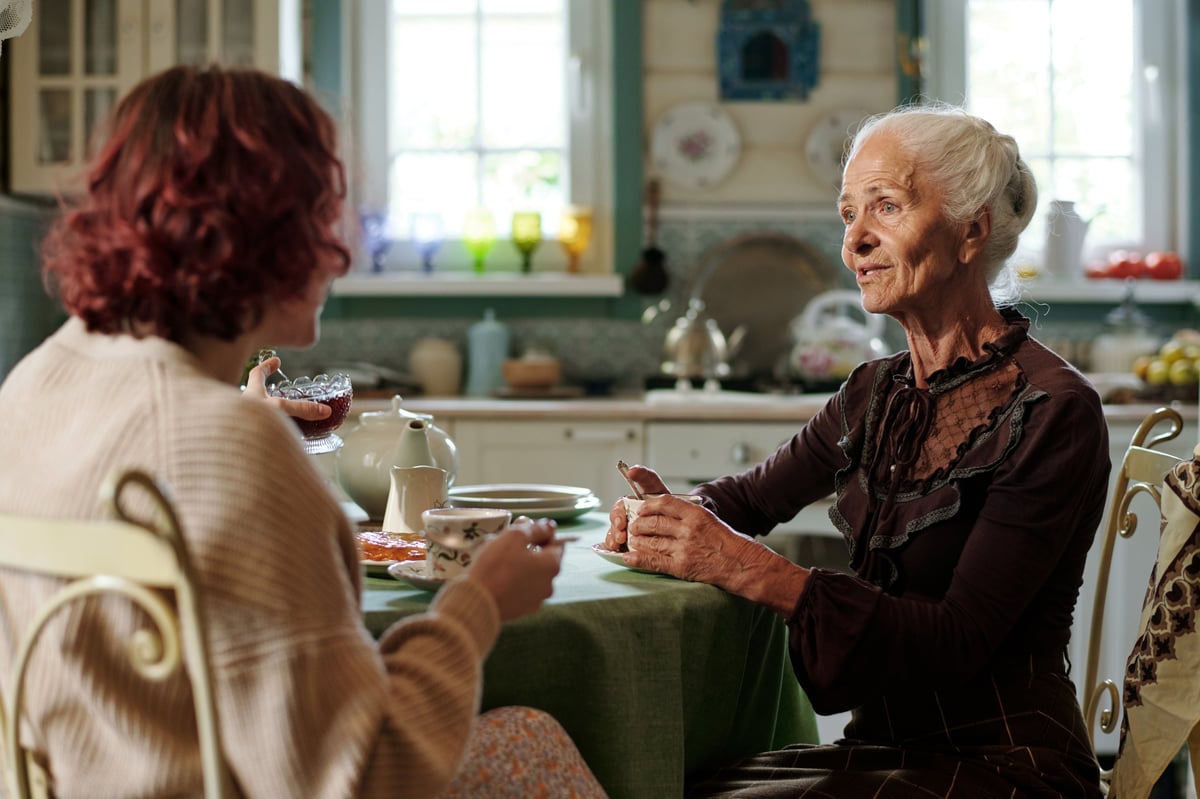
Each time I have coffee with my mother, she asks me the same question.
“Do I get a second cup?”
She knows she will. We have done this enough times that the answer is hardly in doubt. But lately, I have been thinking about what else she might be asking.
Will you stay a little longer?
Can we keep talking?
Is there time for something more?
I cannot claim to know everything behind that familiar question. Sometimes she may simply want more coffee. But I hear an invitation in it, and I want to be careful that I do not miss it.
My mother is 89 now. When I sit with her, I am sitting with someone who carries family stories, memories, and hard-earned wisdom that I cannot find anywhere else. Some of those stories I have heard many times. Others are still waiting for the right question.
And sometimes, perhaps, for a second cup.
When you help an aging parent, a visit can fill up quickly.
There are bills to look at, appointments to discuss, things around the house that need attention. You remember something you meant to bring. You notice something else that needs fixing. You start mentally rearranging the afternoon.
Bills to look at
Appointments to discuss
Things around the house
I know that rhythm well. I want to be useful. I want to take care of things. When you love someone, getting the details right feels like one way of showing it.
It is.
But I can become so focused on what needs doing that I forget to leave room for what might be said.
Then Mom asks about that second cup, and I have an opportunity to settle back into the conversation.
I want to listen more deeply. That means giving her room to finish, including when I think I already know where a story is going.
It means asking the question that follows the first answer.
“What was she like?”
“How did you decide what to do?”
“What do you remember most about that?”
A name can open a whole conversation. So can a photograph, a place, or a small detail I have never thought to ask about.
I want to know about the people behind the names in our family. What made them laugh. What they worried about. Who could be counted on. What life felt like in the years I know mostly through pictures.
I also want to know more about Mom herself.
What did she enjoy when she was young? What surprised her about becoming a mother? Which decisions is she glad she made? What has she changed her mind about over the years?
Those questions give her room to speak as a person with a whole life behind her and interests, thoughts, and opinions right now.
And they give me the chance to learn something about someone I have known all my life.
Some stories come around again.
It is easy to hear the opening sentence and think, I know this one.
But I am trying to pay attention to what happens when I stay with it. There may be a detail I missed before, or something I understand differently now that I have more years of my own behind me.
Sometimes I can ask about the part we usually pass over.
“What happened after that?”
“Were you afraid?”
“Who helped you?”

Sometimes I can simply enjoy hearing her tell it.
A familiar story can be a pleasure shared between us. She knows the people. I know the outline. For a few minutes, we get to visit that part of our family’s life together.
I do not need every conversation to produce a discovery. I want her to feel that what she has to say still interests me.
Because it does.
I do not expect Mom to announce that she is about to share an important life lesson.
Her wisdom comes through the ordinary details of a conversation. How she describes someone who was kind to her. What she remembers about a difficult stretch. The things she says mattered, and the things she now thinks people worry too much about.
I have lived long enough to know that experience does not make any of us right about everything. But it gives us something worth listening to.
Mom has lived through changes I can only imagine. She has loved people, raised a family, made decisions, faced disappointments, and found reasons to keep going.
I want to hear what she has learned from all of that.
I also want to leave room for her to ask me questions. To hear about my life. To offer her opinion, whether I asked for it or not.
She is still my mother. There is something comforting about that.
I know that many adult children are stretched thin.
We have work, families, responsibilities, and our own limits. Some live far away. Some are trying to help a parent while navigating a relationship that has always been complicated.
An invitation to listen more should not become another reason to feel guilty.
There are visits when I have to leave. There are days when something urgent needs my attention. Loving my mother does not mean I can make every afternoon open-ended.
But I can be more intentional with the time I do have.
I can put my phone aside while we drink our coffee.
I can ask one question and give the answer time.
When I need to leave, I can tell her honestly and let her know when we will talk again.
Over the phone, I can sometimes stay with a conversation for a few minutes beyond the practical updates. Ask what she has been thinking about. Bring up a memory. Give her a chance to tell me something that would not appear on a list of things to check.
A small amount of unhurried attention can hold a great deal of meaning.
When Mom tells me something I want to remember, I can write it down afterward.
A name. A family connection. A phrase she uses. A story I would like to ask about again.
If she is comfortable with it, perhaps we can record a conversation sometime. Hearing her tell a story in her own voice would be a gift.
But I do not want our coffee time to feel like an interview she has to prepare for. She does not need to deliver a perfect account of her life, and I do not need to turn every visit into a project.
There is value in the conversation as it happens.
The laughter. The pauses. The way one memory leads to another. The ordinary pleasure of sitting together.
Some of that can be saved. Some of it is simply ours to experience.
“Do I get a second cup?”
It is such a small question. Familiar enough that I could answer it without really thinking.
But I am grateful for what it has made me notice.
My mother still has things to tell me. I still have questions to ask. There are parts of our family’s story I want to understand, and parts of her life I want to know better.
There is also coffee to enjoy and conversation that does not have to go anywhere in particular.
I hope I keep making room for all of it.
The next time she asks, I want to hear the invitation I believe is there. To pour the coffee, sit back down, and give her my attention.
“Yes, Mom. You get a second cup.”
And when I can, a little more time with me.
Published by Helping Mom. A personal reflection on making time, listening more deeply, and being present with the people we love. This piece offers encouragement and connection rather than professional advice.