Home Modification Jan 27, 2026 12 min read

Finding the Right Grab Bar Height for Your Parents

Discover the recommended grab bar height for aging parents. Our guide explains ADA standards and custom placement for bathroom safety and independence.

Grab bar height illustration

Figuring out the right height for a grab bar can feel like a significant decision, but it's really just a practical, loving way to support your parent's safety and independence.

The official ADA recommendation is a great place to start: 33 to 36 inches from the floor. Think of that as a reliable baseline—a solid, well-researched number we can adjust to find the perfect fit for your parent.

Why Grab Bar Height Is a Conversation Worth Having

Bringing up home safety can feel heavy, and that's understandable. The goal isn't to cause alarm; it's to bring peace of mind by making the bathroom feel like a safer, more confident space for your parent. Adding a few grab bars is one of the simplest and most effective ways to do that.
An elderly woman looks at a smiling young woman kneeling beside a bathtub, offering peaceful support.

This isn't about following rigid rules. It's about finding what works for their body and their daily routine. We'll walk through the standard guidelines and then explore how to tailor them, one small step at a time.

Starting with the Standard Recommendation

As you look into grab bars, you'll likely see references to the Americans with Disabilities Act (ADA). These are the guidelines used for public spaces, designed to work for a wide range of people.

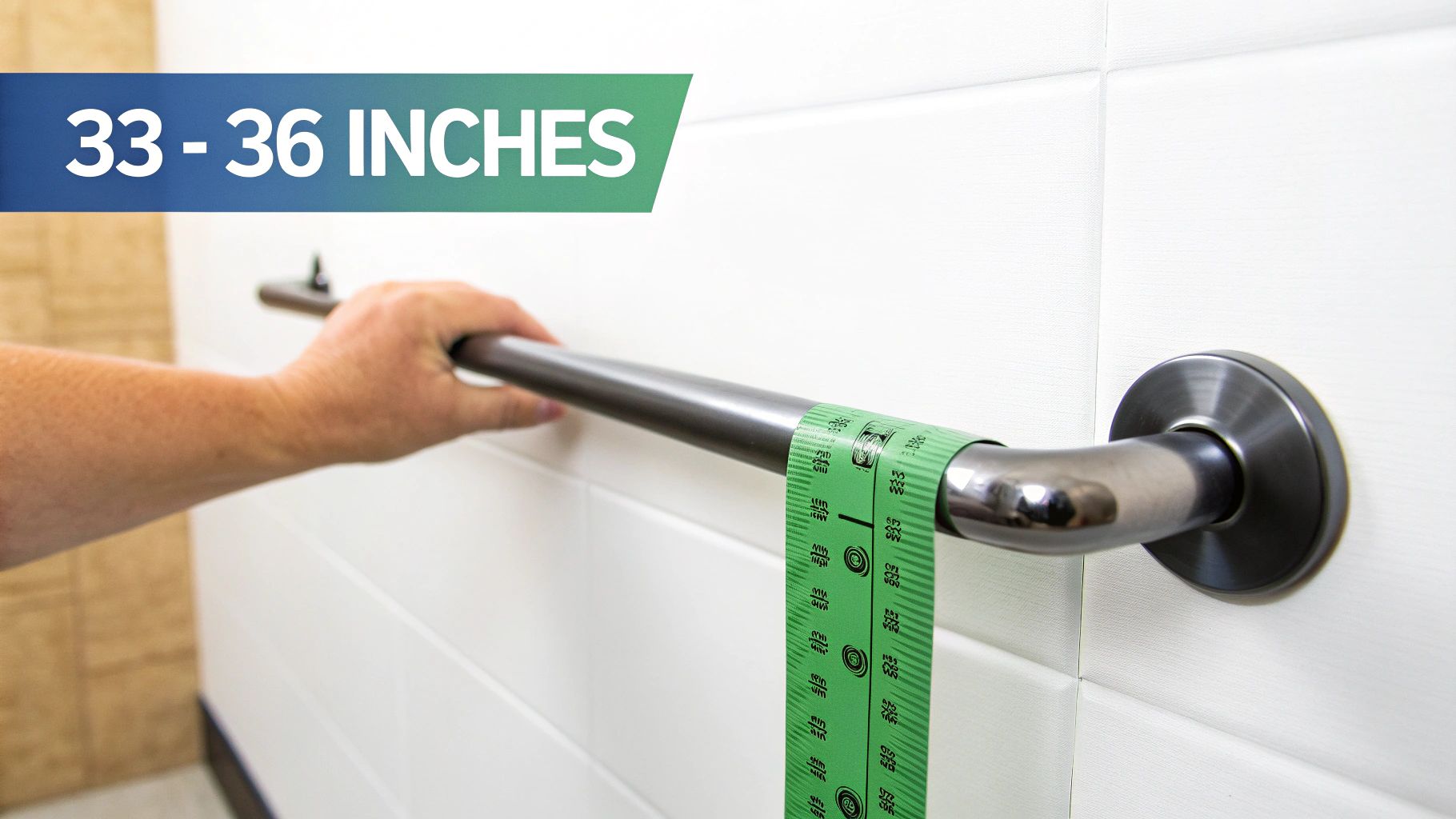
The ADA recommends installing horizontal grab bars between 33 and 36 inches from the finished floor. There's a reason for that specific window: it's low enough for someone who is seated to reach up comfortably but high enough for someone standing to grab without stooping. Knowing why those numbers exist can give you confidence as you start planning. You can see the full details in the ADA requirements for grab bars on AccessibilityChecker.org.

A grab bar isn't just a safety device; it's a tool that can help preserve a sense of autonomy in a private space. Finding the right height and placement is a quiet way of saying, "I support your independence."

This process is about creating a supportive environment that enhances safety while deeply respecting your parent's ability to manage their own life. It's an act of care that can turn a potentially delicate task into a reassuring project you can tackle together.
Understanding the Official Height Guidelines

When you start looking into grab bars, you'll quickly run into the standard measurement: 33 to 36 inches off the floor. This isn't just a random suggestion; it comes from the Americans with Disabilities Act (ADA), which sets the standard for making public spaces safe and accessible. While your parent's home isn't a public building, these guidelines are a thoughtful, well-researched place to begin.

A hand measures a shower grab bar with a tape measure, showing a recommended height of 33-36 inches.

Think of the ADA height not as a rigid rule, but as a reliable foundation. It's based on years of research into how our bodies move, making common motions easier and less stressful.

Why 33 to 36 Inches Works So Well

So, why that specific height? It's all about supporting two of the most common movements in a bathroom: sitting down and standing back up. A horizontal bar in that range is perfectly placed to help someone push up from a toilet or lower themselves down with control.

It's high enough to be easy to grab without an awkward reach, but low enough to provide real leverage from a seated position. This sweet spot reduces strain on wrists, shoulders, and the lower back. It can turn a moment of potential instability into a steady, confident movement.

The standard grab bar height is designed to be exactly where a hand would naturally search for support during a sit-to-stand motion. It creates a predictable, reliable point of contact.

Understanding the "why" behind the numbers can feel empowering. It's not just about meeting a code; it's about providing comfort and making daily routines feel more manageable.

What About Vertical Bars in the Shower?

The same logic applies to other grab bars, like the vertical ones you often see in a shower or at the edge of a tub. A vertical bar serves a different purpose—it acts like a steadying handhold for someone stepping over a tub wall.

While the ADA has specific guidance for these too, the core idea is the same: offer support that aligns with natural movements. For a vertical bar, this means:

By understanding the logic behind these official recommendations, you're in a much better position to use them as a guide. They give you a solid, evidence-based starting point. From there, you can begin to personalize the setup for your parent, making sure it's not just safe by the book, but perfectly suited to them.

How to Personalize Grab Bar Height for Your Parent

While the official ADA guidelines are a fantastic starting point, a home isn't a public space. This is where we can shift from following a rulebook to focusing on your parent's individual needs, because their comfort and how they actually use the space is what matters most.

The goal is to find a grab bar height that feels natural and second-nature to them. This is less about a home improvement project and more about a quiet collaboration—working together to find a solution that boosts their confidence while respecting their dignity.

Finding Their Natural Reach

The best way to figure out the perfect height has less to do with a tape measure and more to do with gentle observation. Instead of starting with measurements, you might begin with a conversation that centers on their experience.

A simple question can tell you everything you need to know. Try asking, "When you stand up from the toilet, where does your hand naturally go to steady yourself?" Their answer is your starting point, showing you a spot that works with their body, not against it.

Think of this as fitting a tool to the person, not forcing the person to adapt to the tool. The right grab bar height should meet your parent exactly where they are, making daily movements feel steadier and more secure.

This small shift in approach turns what could be a clinical task into a simple, supportive act of making their home work better for them.

A Practical Test Run with Painter's Tape

Once you have a general idea, you can do a quick, no-commitment test run. This is where a roll of blue painter's tape can be a helpful tool.

Tear off a few strips and place them horizontally on the wall where you think the grab bar should go. You can even stick a few pieces at slightly different heights. Then, you can ask your parent to go through the motions.

This simple, hands-on method can take the guesswork out of it. It ensures the final placement isn't just "correct" by the numbers, but genuinely helpful for their unique movements. If you're feeling unsure, or if your parent has complex mobility needs, you might want to learn more about how local home safety assessments can provide professional, one-on-one guidance. Getting an expert eye can give you both confidence that the placement is just right.

Where to Place Grab Bars for Maximum Support

Once you've settled on the right height, the next question is where to put the grab bars. It's not just about having them; it's about placing them where a hand would naturally reach in a moment of instability. Think of it as creating a predictable path of support through the bathroom.

The most helpful spots are almost always next to the toilet, inside the shower, and at the edge of the bathtub. Each location serves a distinct purpose, and getting the placement right can be the difference between a bar that gets used every day and one that's just an accessory on the wall.

The Most Helpful Bathroom Locations

The goal is to anticipate the movement. A perfectly placed bar feels like it was always meant to be there, assisting with the specific motions of pushing up, lowering down, or stepping over a threshold.

Here are the key areas to consider:

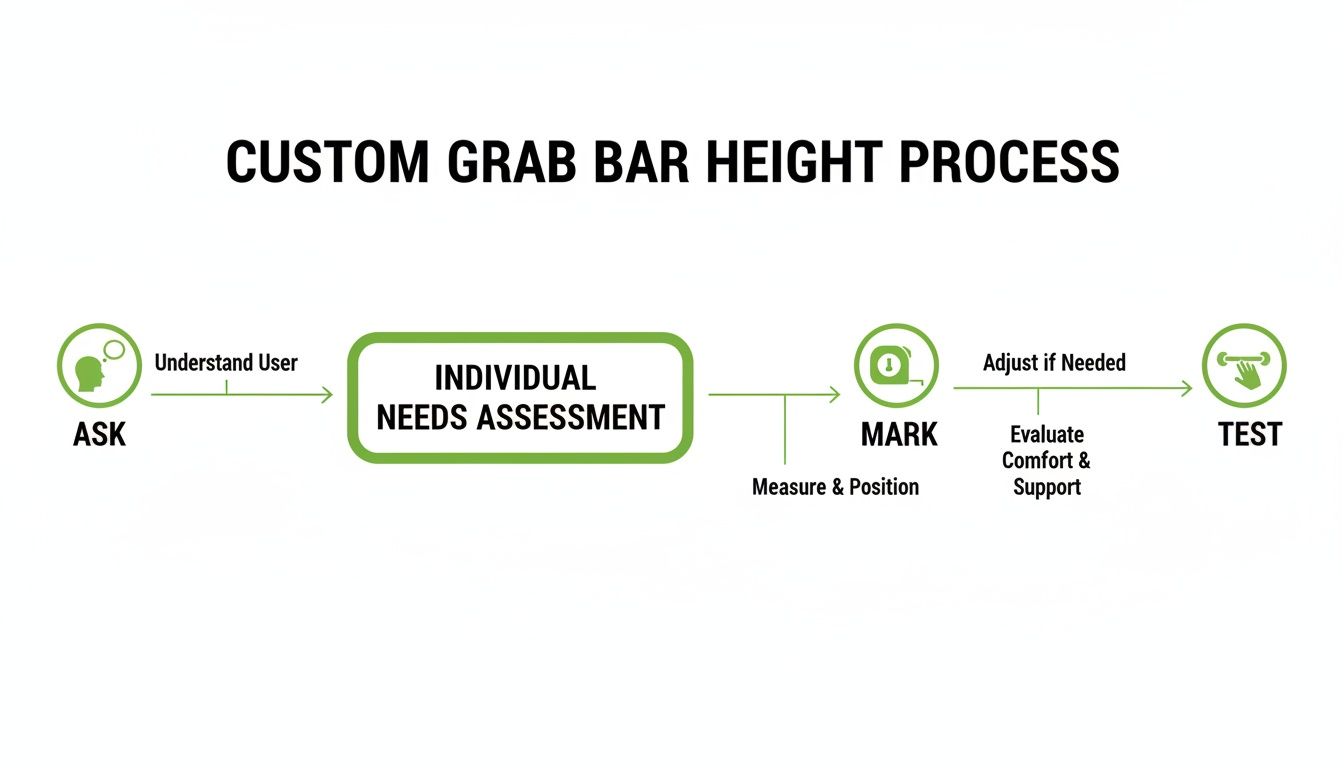
This simple flowchart breaks down the process of finding that just-right custom placement with your parent—it's a team effort.

A flowchart showing the custom grab bar height process, from asking user needs to final testing.

As you can see, it boils down to three simple, collaborative steps: ask what feels hard, mark the spots together, and then test them out before drilling any holes.

The table below breaks down the most common placements and the jobs they do.

Common Grab Bar Locations and Their Purpose

Location Primary Function Best Orientation
Next to the Toilet Assisting with sitting down and standing up from a low position. Horizontal
Inside the Shower Providing stability while standing, washing, or turning. Horizontal
At Shower/Tub Entry Offering a secure grip while stepping in and out over a ledge. Vertical
Along the Tub Wall Supporting the transition from standing to sitting within the tub. Horizontal or Angled

Each placement is designed to solve a specific balance challenge, creating a small zone of safety right where it's needed most.

Matching Bar Orientation to the Movement

The angle of the bar—whether it's horizontal, vertical, or angled—matters just as much as its location. Each orientation is suited for a different kind of movement.

A horizontal bar is like a sturdy railing, perfect for pushing up from or leaning against. A vertical bar acts like a post you'd grab to steady yourself while turning or stepping.

Think about it this way: a horizontal bar inside the shower offers continuous support once someone is standing. But an angled bar next to the toilet might feel more natural for someone pulling themselves up, as it mimics the way the wrist and forearm naturally move.

By matching the bar's placement and angle to your parent's specific motions, you stop just adding safety equipment and start creating an environment that feels intuitively helpful and secure.

Ensuring a Safe and Thoughtful Installation

A grab bar is only as good as its installation. After you've spent time finding the perfect height and location, making sure it's securely attached is the final, most important step. Whether you hire a professional or enlist a handy family member, a few key principles can give you confidence that the bar will be a reliable source of support.

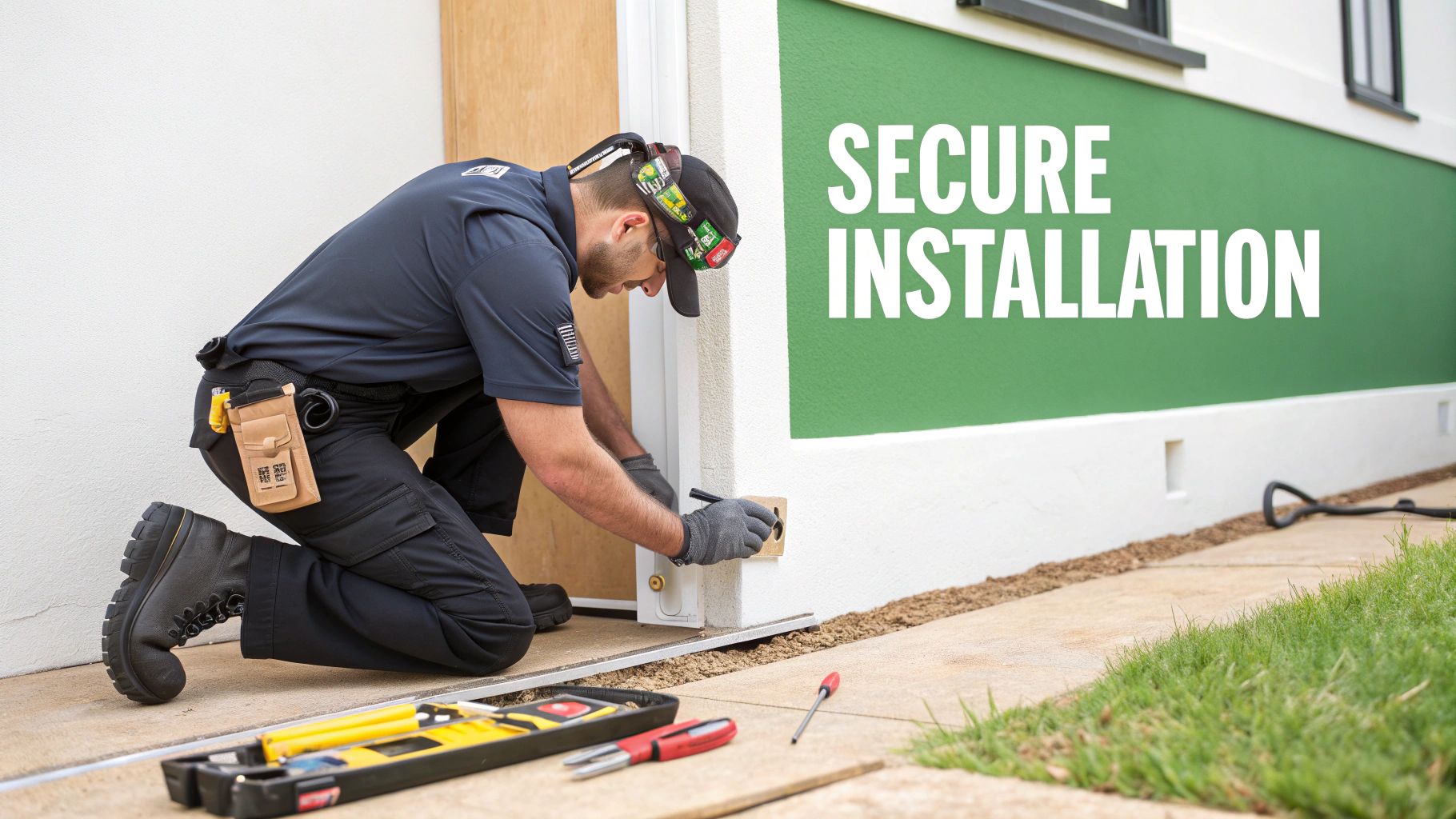
A worker in safety gear kneels, meticulously installing a secure fixture onto a building wall.

This isn't about becoming a DIY expert overnight. It's about knowing what to look for, so you can have peace of mind when the job is done. The right installation turns a simple piece of equipment into a trustworthy tool your parent can depend on.

The Foundation of a Secure Grab Bar

The single most critical part of the installation is how the bar is anchored to the wall. This is non-negotiable for safety.

A securely installed grab bar must be anchored directly into the wall studs—the vertical wooden beams that make up the frame of the house. Drywall or tile alone is not strong enough to support a person's weight. Trying to install a bar without hitting a stud creates a serious risk, as the bar could pull right out of the wall under pressure.

Think of a wall stud as the solid backbone of the wall. Anchoring a grab bar into a stud connects it directly to the home's structure, making it strong enough to handle the force of someone pulling or leaning on it.

If you're unsure about finding studs, or if the ideal grab bar height doesn't quite line up with them, it's often best to consult a professional. They have specialized tools and anchors to create a secure mount in almost any situation, giving you certainty that the installation is solid.

Small Details That Make a Big Difference

Beyond the anchoring, a few other details contribute to a truly helpful and safe grab bar setup. These are the small things that focus on how the bar feels to your parent and how it performs in a wet environment.

Here is a simple checklist of what to keep in mind:

Making these thoughtful choices ensures the final result isn't just installed correctly, but is also genuinely easy and comfortable for your parent to use. For more personalized guidance, you might consider exploring options like virtual home safety consultations, which can offer expert advice tailored to your specific space.

How to Talk with Your Parent About Adding Grab Bars

Bringing up the idea of grab bars can feel like walking on eggshells. It can be helpful to frame it as a smart home upgrade—like adding better lighting or a more comfortable chair—not as a comment on their strength or ability.

This isn't about weakness; it's about making their home work better for them. When you approach it as a team, you can shift the conversation from a sensitive topic to a practical project that supports their independence.

Opening the Conversation Gently

How you start this conversation can make all the difference. Instead of leading with worries, try focusing on comfort and ease. A simple, observation-based opening can sometimes work well.

You might say something like, "You know, I was thinking it would feel so much better getting out of the shower with something really solid to hold onto. Have you ever thought about putting a support bar in there?" It's a suggestion, not a demand, which leaves the door open for their thoughts.

A conversation about safety is really a conversation about preserving independence. By focusing on how grab bars can make life easier, you honor your parent's desire to remain self-sufficient in their own home.

Listening and Making Them the Expert

Once the topic is on the table, the most important thing you can do is listen. Your parent might have complicated feelings about what this change signifies. Hearing them out shows you see them as a partner, not a problem to be solved.

Then, you can put them in the driver's seat. Ask for their expertise on what they need and where. For example:

When you make them the expert, you reinforce their autonomy. This becomes a project you're doing with them, not to them. For more ideas on navigating these important talks, our guide on questions to ask your aging parents can help you connect in a thoughtful way.

A Few Final Questions You Might Be Asking

It's completely normal to have a few lingering questions. Thinking through the small details is a sign of how much you care, and getting clear answers can bring a lot of peace of mind. Getting this right is a practical act of love.

Below are some of the most common questions we hear from families. Hopefully, these simple answers help you feel confident as you take the next steps.

How Many Grab Bars Do We Actually Need?

There's no single right answer here—it really comes down to your parent's bathroom and where they feel the most unsteady. A good approach is to focus on the key spots first.

For most bathrooms, that means starting with at least two bars:

You can always add more later on. The goal isn't to fill the room, but to place support exactly where it's needed most.

How Much Weight Can a Grab Bar Hold?

This is a great question, and the answer is usually reassuring. When properly installed directly into wall studs, most grab bars are rated to support 250 to 300 pounds of force. That's more than enough strength to handle the pushing, pulling, and leaning that happens in daily use.

It's not the bar itself that matters most, but its connection to the wall. A professional installation ensures the bar is anchored to the structural frame of the house, making it a truly reliable source of support.

Can You Install Grab Bars Through Tile or a Fiberglass Shower?

Yes, absolutely. A professional installer has the right tools—like diamond-tipped drill bits—and the expertise to drill cleanly through tile, fiberglass, or other surfaces without causing cracks or damage.

Once through the surface, they anchor the bar directly and securely into the studs behind the wall. This is one of the main reasons to consider professional installation; it takes the guesswork out of the process and ensures a safe, solid result you can both trust completely.


At Helping Mom LLC, our goal is to provide the calm, practical guidance you need to support your parents with confidence and care. For more resources on home safety and thoughtful caregiving, explore our articles at https://helping-mom.com.

Related Topics:

grab bar height aging in place bathroom safety home modification caregiver support