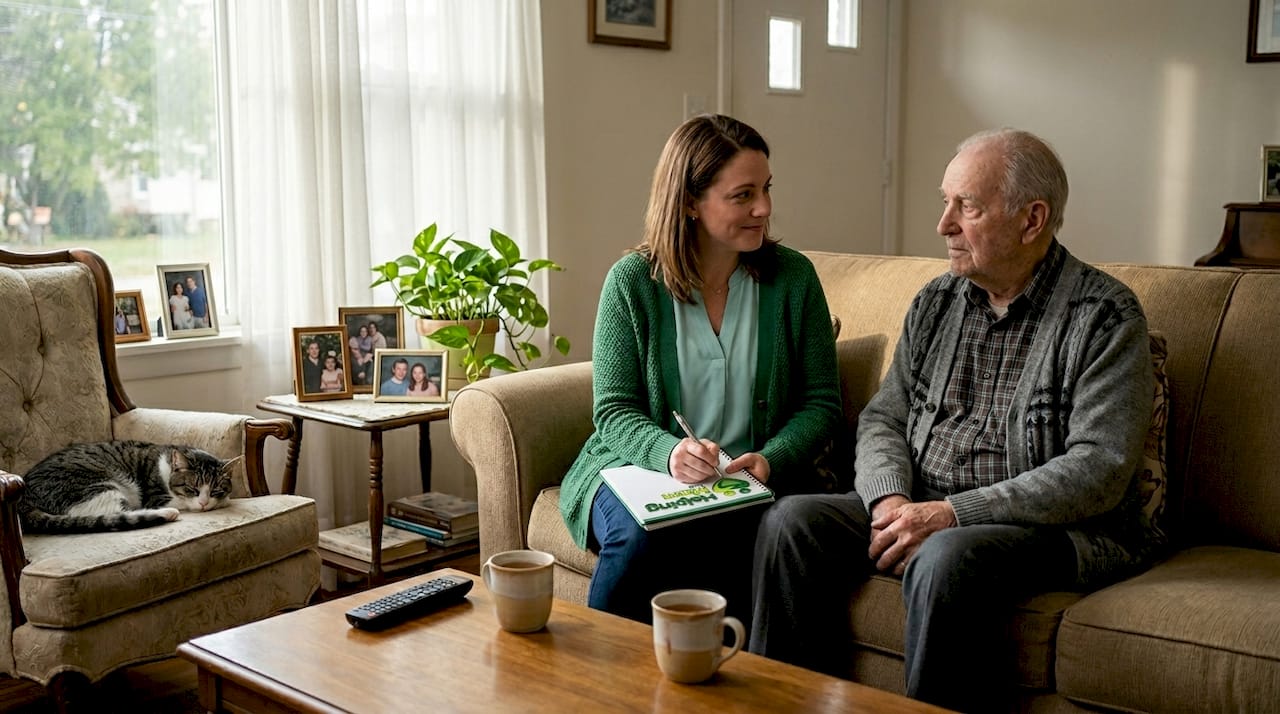
You usually notice it slowly. A missed appointment. A stack of unopened mail. A hallway that feels a little tighter than it used to. Something has shifted.
Supporting an aging parent is one of the most meaningful roles you'll ever step into. And with a few clear conversations, simple home adjustments, and small, consistent steps, you can support your parent in a way that feels steady, respectful, and sustainable.
Evaluate your parent's real needs and your family's caregiving strengths before creating a support plan.
Protect your own health with self-care, rest, and external support, as caregiver stress is widespread.
Simple home adjustments can make a big difference in your parent's safety and independence.
Regular family check-ins and shared responsibilities prevent misunderstandings and resentment.
Small, repeated efforts and flexibility create more sustainable caregiving than any one-time fix.
Start by getting a clear picture of what's actually happening right now. Not what might happen in the future. Not worst-case scenarios. Just today.
Pay attention to:
Then take a step back and look at your own capacity.
What can you realistically take on?
Where might you need
help?
You're not trying to manage everything. You're trying to understand enough to take the next right step.
If you're unsure how to begin that conversation, this can help:
→ How to Talk to Aging Parents About SafetyOne of the most important things you can do early on is sit down with your parent and, if possible, other family members to talk openly about what is changing. This can feel uncomfortable, especially if your parent is resistant or if siblings have different opinions. But avoiding the conversation tends to make things harder later.
When you are dealing with aging parents, it helps to approach the discussion with curiosity rather than urgency. Ask open-ended questions. What does a typical day look like? Are there tasks that have become harder? What worries them most about the future? Listening carefully gives you a much clearer picture than assumptions ever will.
Write down your observations before any family meeting. A short, factual list of what you have noticed, such as missed meals, recent falls, or unpaid bills, keeps the conversation grounded and reduces the chance of defensiveness on all sides.
A thorough assessment covers more than just physical health. Consider each of these areas:
Are there chronic conditions, recent hospitalizations, or medication changes to be aware of?
Can your parent move safely around the home, get in and out of the car, and manage stairs?
Are there signs of forgetfulness, confusion, or difficulty managing finances and appointments?
Is the home free of fall hazards? Are smoke detectors working? Is the kitchen and bathroom accessible?
Does your parent have regular contact with friends, neighbors, or community groups?
Are bills being paid on time? Is there a plan in place for future care costs?
| Area | What to Look For | Why It Matters |
|---|---|---|
| Physical Health | Chronic conditions, recent falls | Guides medical and daily care needs |
| Mobility | Difficulty walking, using stairs | Informs home modification priorities |
| Cognition | Memory lapses, confusion | May indicate need for supervision |
| Finances | Unpaid bills, unusual purchases | Signals need for financial oversight |
| Social Needs | Isolation, withdrawal | Affects emotional well-being |
Caregiver stress affects health in real, measurable ways. Before you commit to a care plan, be honest about how much time, energy, and emotional bandwidth you actually have. Do you have a demanding job? Young children at home? A health condition of your own? These are not excuses. They are important factors that shape what kind of support you can realistically offer.
Exploring elder care for parents options early means you are not scrambling during a crisis. It also means you can set boundaries that protect your own health while still showing up consistently for your parent.
Most caregiving stress comes from preventable problems. Falls. Confusion. Small obstacles that quietly become bigger risks.
You don't need a full home renovation. Start with the obvious:
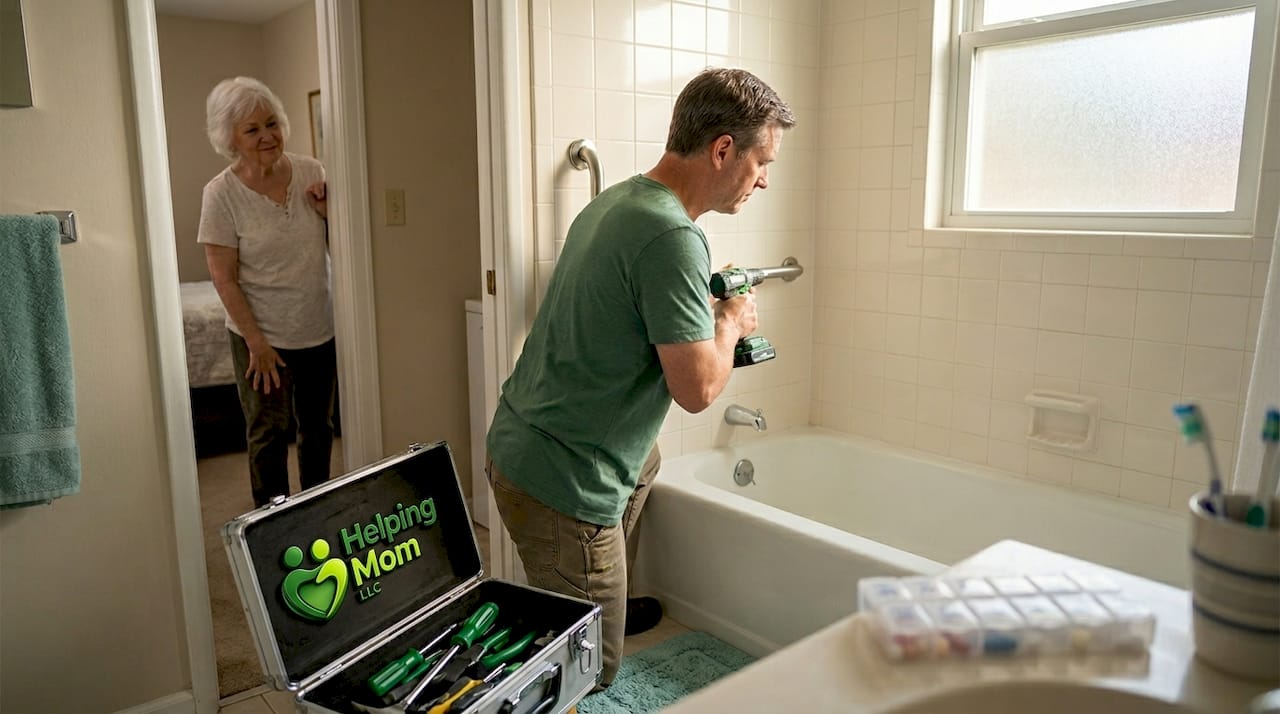
Simple home modifications like grab bars can dramatically improve safety and independence.
Falls are the leading cause of injury among older adults, and the majority happen at home. The good news is that most fall risks are fixable with straightforward, affordable changes.
Clear loose rugs, electrical cords, and clutter from walkways. This single step reduces fall risk significantly and costs nothing.
Add bright bulbs in hallways, stairwells, and the bathroom. Motion-activated night lights are especially helpful for nighttime trips to the bathroom.
Place them in the shower, next to the toilet, and along stairways. These are inexpensive and can be installed in an afternoon.
Add a non-slip mat inside the tub or shower, and consider a shower chair or handheld showerhead for easier bathing.
Move frequently used items to lower shelves so your parent does not need to climb or stretch. Check that the stove has an automatic shut-off feature if memory is a concern.
Make sure there is a sturdy railing at the front steps and that the path is well-lit and free of ice or debris.
Done right, these changes don't feel clinical.
They feel like care.
| Modification | Estimated Cost | DIY or Professional | Priority |
|---|---|---|---|
| Remove loose rugs | $0 | DIY | High |
| Add grab bars | $25 to $80 each | DIY or Pro | High |
| Improve lighting | $10 to $50 per fixture | DIY | High |
| Non-slip bath mat | $15 to $30 | DIY | High |
| Stair lift | $3,000 to $10,000 | Professional | Moderate-High |
| Widened doorways | $700 to $2,500 | Professional | Moderate |
Physical modifications are only part of the picture. Caregiver stress affects health when daily routines are inconsistent or chaotic, so building predictable habits into your parent's day creates a sense of stability for everyone.
If your parent is resistant to changes, frame modifications as upgrades rather than safety measures. Saying "I thought this grab bar would make the shower more comfortable" lands very differently than "I'm worried you'll fall."
Caregiving doesn't fall apart all at once. It builds quietly.
You start doing a little more. Then a little more. Then suddenly, you're exhausted.
Burnout does not arrive all at once. It builds gradually, often disguised as ordinary tiredness or frustration. Watch for these signals in yourself:
Feeling resentful or irritable toward your parent
Withdrawing from friends, hobbies, or activities
Difficulty sleeping, even when you have the chance
Feeling like nothing you do is ever enough
Headaches, frequent illness, or lingering exhaustion
"Taking care of yourself is one of the most important things you can do as a caregiver. When your needs are taken care of, the person you care for will benefit too."
— Office on Women's Health
Caregiver well-being is not a luxury. It is the foundation that makes sustained caregiving possible. The basics matter more than you might think: consistent sleep, regular movement, eating well, and carving out even small pockets of personal time.
Managing caregiver stress effectively often means being honest about what you cannot do alone. Respite care, which is temporary relief provided by another caregiver or a professional service, gives you time to recover without your parent going without support. Many communities offer adult day programs, in-home respite services, and short-term care facilities specifically for this purpose.
Support groups are another underused resource. Connecting with other adult children who understand the burden of caregiving can reduce isolation and provide practical ideas you would not find anywhere else. Many groups meet online now, which makes participation much easier.
You need small resets:
Taking care of yourself isn't separate from caregiving.
It's what makes it sustainable.
Schedule your own self-care the same way you schedule your parent's appointments. A walk, a coffee with a friend, or even an hour of quiet reading is not wasted time. It is maintenance for the most important tool in your caregiving toolkit: you.
If you have siblings or other family involved, clarity matters more than perfection. Have one simple conversation focused on:
You don't need everyone to agree on everything. You just need enough alignment to move forward.
This is where a simple structure helps:
→ Family Meeting Agenda TemplateAnd if you hit resistance (you will), this is worth reading:
→ What to Do When Aging Parents Refuse HelpYou do not need a formal agenda or a conference room. What you do need is a regular time when everyone involved can talk honestly about how things are going. Even a monthly phone or video call can make a significant difference.
What has changed since the last conversation? Any new health concerns, safety issues, or financial matters to address?
Who is doing what, and is the workload still balanced? Adjust as needed.
Encourage everyone to speak up before small frustrations become big conflicts.
End each meeting with a clear list of who is doing what before the next check-in.
Documenting these conversations, even in a simple shared notes app or email thread, keeps everyone on the same page and reduces the chance of misunderstandings later.
The 53 million caregivers in the U.S. include many adult siblings who struggle to divide responsibilities equitably. One person often ends up doing more, which breeds resentment over time.
A practical approach is to match tasks to each person's strengths and availability rather than expecting everyone to do the same things. One sibling might handle medical appointments while another manages finances. Someone who lives far away might contribute by researching care options, coordinating services, or providing financial support.
When you are feeling overwhelmed caring for an elderly parent, it is often because the load is genuinely uneven. Naming that directly, without blame, opens the door to a more sustainable arrangement.
| Nearby Sibling | Medical appointments, daily visits, personal care |
| Faraway Sibling | Research, coordination, financial contributions |
| Working Professional | Weekend coverage, emergency availability |
Disagreements about care decisions are extremely common. They often reflect deeper differences in values, family history, or simply how much each person sees day to day. A few things help:
Prioritize what your parent has expressed over siblings' personal opinions.
Consult with family before major care decisions, especially on significant issues.
Consider a social worker or family mediator for unproductive conflicts.
Learning how to care for aging parents as a family takes practice. It rarely goes perfectly, and that is okay. What matters is that you keep the lines of communication open and stay focused on your parent's well-being together.
There isn't a perfect system. There isn't a moment where everything suddenly feels under control. What works is this: small, consistent steps.
One conversation.
One adjustment.
One decision at a time.
That's how stability gets built.
There is a tendency to look for the one big solution, the right care facility, the perfect conversation, the definitive plan. But caregiving is not a problem you solve once. It is an ongoing relationship that evolves as your parent's needs change and as your own life shifts.
What actually works is simpler. Regular honest conversations. Small home adjustments made before a crisis forces your hand. A willingness to ask for help before you are completely depleted. And a generous amount of self-forgiveness when things do not go the way you hoped.
Check in consistently rather than waiting for problems to escalate. Open dialogue prevents crises.
Make small home adjustments before an emergency forces the issue. Prevention is easier than crisis response.
Reach out for support before you're completely depleted. Building a support network takes time.
Be gentle with yourself when things don't go perfectly. Imperfect action beats perfect inaction.
Presence Over Perfection
Your parent doesn't need you to be perfect. They need you to be present.
You're not trying to take over your parent's life.
You're trying to support it — with respect, clarity, and care.
And you don't have to figure it all out today.

Practical guidance for adult children
Room-by-room modification ideas that are easy to act on.
Honest, compassionate guidance on managing stress.
Identify the most important changes to make right now.
Every small step forward counts.
Continue your caregiving journey with these helpful resources.
Explore more practical resources for your caregiving journey.
Get practical tools, expert guidance, and the support you need to care for your aging loved ones without losing yourself in the process.
If you want a simple place to begin, start here:
→ /start-herePractical next steps, simple tools, and guidance designed for real life — not ideal situations.