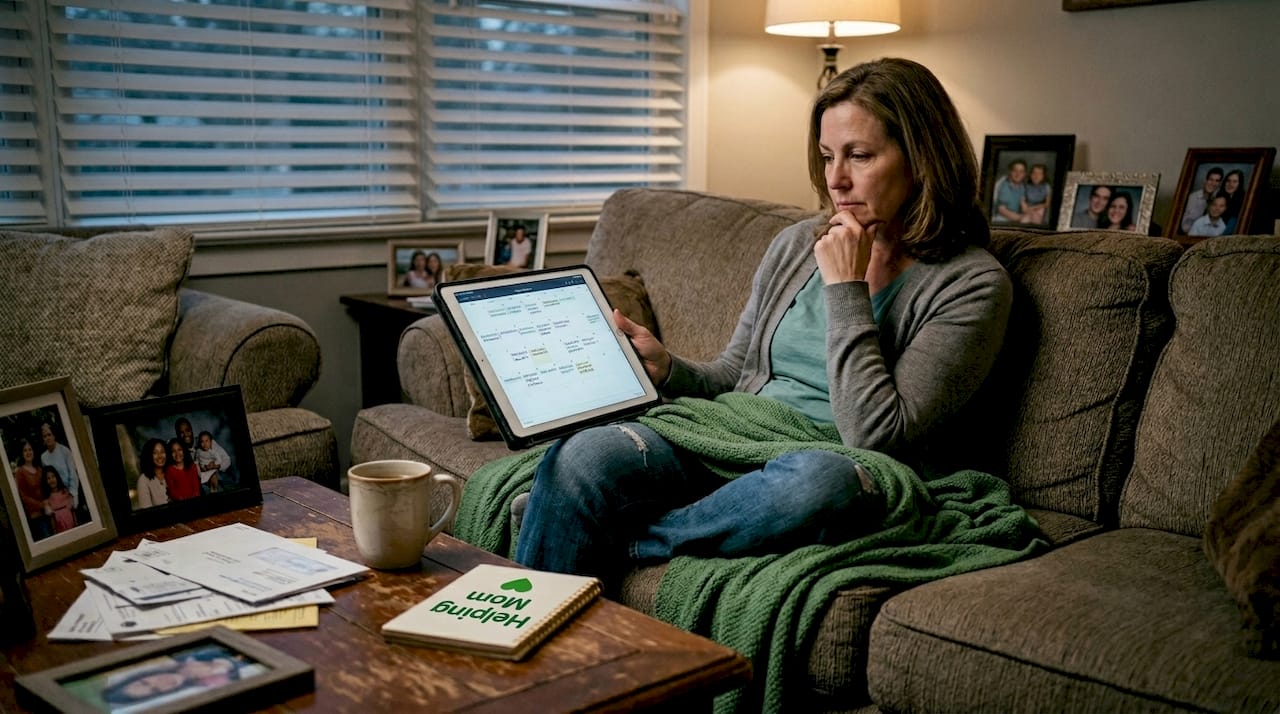
Caring for an aging parent is meaningful work, but it can quietly wear you down in ways you don't always notice.
Most caregivers don't hit a breaking point overnight. It builds slowly. You push through a hard week. Then another. You tell yourself things will settle down soon. But they don't.
When the exhaustion sticks around and the emotional weight keeps growing, it may not be "just stress" anymore.
Understanding the difference between being tired and being burned out matters. Not just for you, but for the person you're trying to care for.
This guide will help you recognize the signs, check in with yourself honestly, and take a few steady, practical steps forward.
| Point | Details |
|---|---|
| Early warning signs | Recognizing physical, emotional, and behavioral symptoms helps prevent caregiver burnout. |
| Self-assessment is vital | Regularly comparing your experience to burnout criteria lets you act quickly. |
| Prevention strategies | Adopting practical solutions protects your health and improves care quality. |
| Seek support resources | Connecting with guides, checklists, and emotional support can ease caregiver stress. |
Caregiver burnout is not simply feeling tired after a long day. It is a state of deep physical, emotional, and mental exhaustion that builds over time when the demands of caregiving consistently outpace the support and recovery available to you. Think of it like a phone battery that never fully recharges. Eventually, it stops holding a charge at all.
Regular stress tends to come and go. You have a difficult week managing your parent's appointments, and then the weekend brings some relief. Burnout is different. It lingers, deepens, and begins to affect how you see yourself, your parent, and your future. You may find yourself feeling resentful, detached, or simply numb, emotions that can feel alarming or shameful if you don't understand what's driving them.
Adult children are particularly at risk for burnout, and there are real reasons for this. Many people in their 40s and 50s are managing careers, raising their own children, and maintaining relationships, all while taking on caregiving duties for a parent. This layered set of responsibilities leaves very little room for rest or recovery. Unlike professional caregivers who have scheduled shifts and defined boundaries, adult children often feel that their role never fully ends.
Caregiver burnout is more common than most people realize, especially for adult children trying to balance work, family, and caregiving at the same time. Yet it often goes unaddressed because caregivers don't recognize the symptoms or feel too guilty to acknowledge them.
Key fact: Studies consistently show that family caregivers experience burnout at significantly higher rates than the general population, yet the majority never seek support or treatment.
If you're noticing resistance or tension with your parent, this guide can help: How to Talk to Aging Parents About Safety
Exploring caregiver wellbeing resources and learning strategies for managing caregiver stress early in your caregiving journey can make a significant difference before burnout takes hold.
Now that we've defined burnout, let's break down the most common warning signs you should watch for. These symptoms span physical, emotional, and behavioral categories, and recognizing them in yourself is not a sign of weakness. It is a sign of self-awareness.
You don't need to check every box for burnout to be real. Even a few of these, especially if they've been building over time, are worth paying attention to.
You wake up tired even after a full night's rest. Rest no longer restores you the way it once did.
You feel disconnected from your parent, your relationships, or activities you used to enjoy. Everything feels flat.
These feelings don't mean you're failing. They usually mean you've been carrying too much, for too long, without enough support.
Small things set you off. You snap at family members or feel frustrated with your parent in ways that don't feel like you.
You start to wonder whether anything you do makes a difference, or whether things will ever improve.
If you're feeling stuck or unsure what to do next, start here: What to Do When Aging Parents Refuse Help
You skip your own doctor appointments, stop exercising, or eat poorly because there simply isn't time or energy.
You decline invitations, stop returning calls, and gradually become more isolated.
You have trouble focusing at work, making decisions, or remembering things. Your mind feels foggy.
Sleep loss in caregiving is extremely common, whether it shows up as insomnia, waking frequently, or sleeping far more than usual.
Headaches, stomach problems, frequent colds, and muscle tension can all be physical signs that stress has become chronic.
You can no longer easily remember who you were before this role began.
Emotional exhaustion, irritability, and changes in sleep or appetite are classic burnout symptoms that tend to show up together, reinforcing one another in a cycle that's hard to break without intentional intervention.
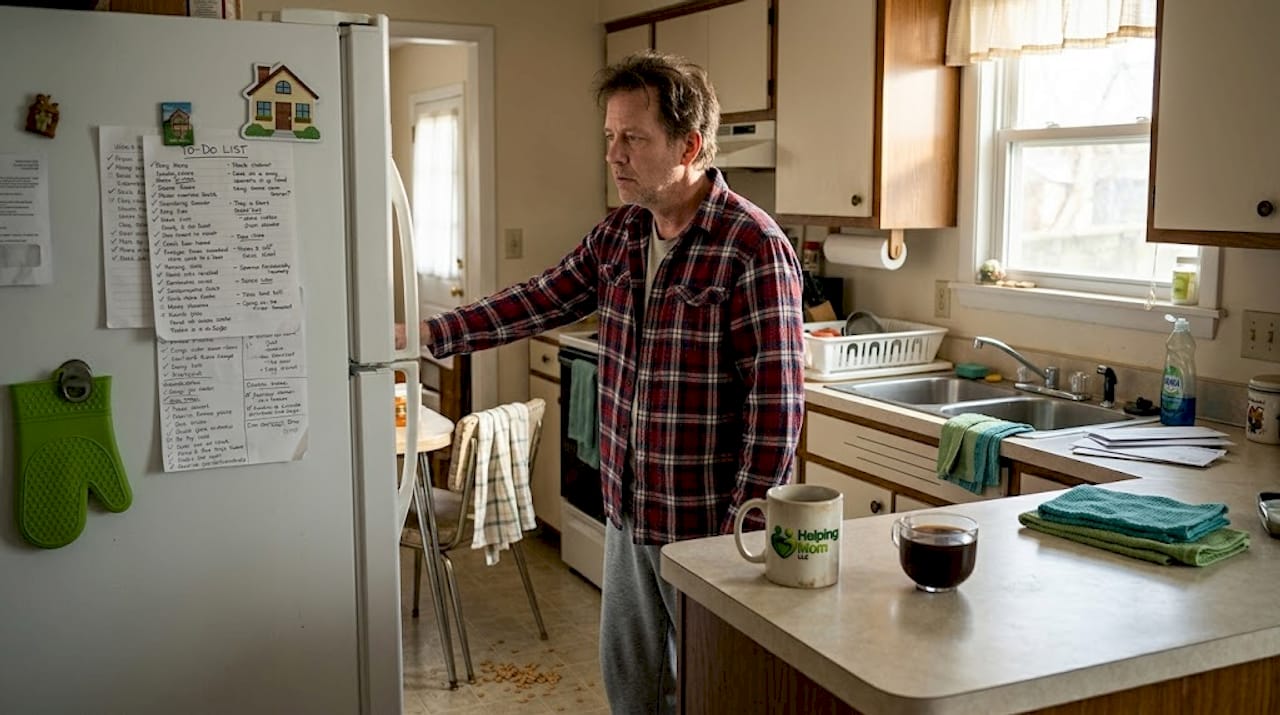
If you recognize yourself in several of these descriptions, you are not alone. Many people feeling overwhelmed caring for an elderly parent experience this combination of symptoms without ever connecting them to burnout.
Understanding the signs is only useful if you can assess your own risk. Here's how to spot burnout in yourself, and how it stacks up against typical stress.
Self-assessment tools can help caregivers recognize burnout early, before it becomes a crisis. You don't need a formal test to start. Simply answering a few honest questions can illuminate a great deal.
You don't need perfect answers. You just need honest ones.
⚠️ If you answered yes to four or more of these, it's worth taking a closer look at your wellbeing and caregiver stress management approaches that can help.
If that's where you are, our Caregiver Burnout Reset Checklist walks you through small steps to take back ground today.
One of the clearest ways to understand whether you're experiencing stress or burnout is to compare the two side by side. They share some features, but they're meaningfully different in how they feel and how long they last.
| Feature | Typical stress | Caregiver burnout |
|---|---|---|
| Duration | Temporary, comes and goes | Persistent, doesn't lift with rest |
| Recovery | Improves after a break | Rest provides little relief |
| Emotional state | Anxious or overwhelmed | Numb, detached, or resentful |
| Motivation | Still present, just strained | Significantly reduced or absent |
| Physical symptoms | Occasional tension or fatigue | Frequent illness, chronic exhaustion |
| Perspective | Still hopeful about improvement | Feels hopeless or trapped |
| Identity | You still feel like yourself | Your sense of self has faded |
This table isn't meant to diagnose you. It's meant to help you see patterns more clearly and give yourself permission to name what you're experiencing. Many caregivers resist labeling their situation because they fear it means they've failed. It doesn't. It means they've been carrying something heavy, often alone, for too long.
Our comprehensive caregiving guides can support you in building a clearer picture of your situation and finding your footing again.
If you see warning signs in yourself, here's how to take action and stay ahead of burnout. Prevention doesn't require dramatic life changes. It requires small, consistent steps that protect your wellbeing over time.
You don't need to do everything perfectly. In caregiving, "good enough" is often what keeps things sustainable.
Prevention strategies, including emotional support and practical tools, substantially lower the risk of burnout. That means relief is genuinely possible, and you don't have to figure it out all on your own.
Even a few hours away from caregiving duties each week can restore your ability to cope. Respite can come from a neighbor, a sibling, a paid aide, or an adult day program for your parent.
This doesn't have to be elaborate. A 20-minute walk, a quiet cup of coffee in the morning, or ten minutes of reading before bed all count. Consistency matters more than duration.
Instead of saying "I need help," say "Can you take Mom to her appointment on Thursday?" People respond better to concrete, manageable requests.
Decide which hours of the day are yours, and protect them as firmly as you can. Boundaries are not selfish. They are what make sustained caregiving possible.
Caregiver support groups, both in-person and online, provide a space where you don't have to explain yourself. Being understood matters deeply.
Keep investing in friendships, hobbies, and interests that remind you who you are beyond this role.
Caregivers who neglect their health often end up less able to provide care. Your wellbeing is part of the equation, not an afterthought.
Shared calendars, care coordination apps, and clear task lists reduce the mental load and make it easier to involve others in practical support.
Sometimes a simple reset helps more than a full plan. Family Meeting Agenda Template
For families navigating care at home, learning more about how to support aging parents can also reduce the logistical overwhelm that contributes to burnout. When you have clear, practical guidance on what to do and when, the mental weight lightens considerably.
Most advice about caregiver burnout tells you to "take better care of yourself." That sounds good, but it's not always realistic when you're already stretched thin.
What actually helps is making small adjustments that protect your energy without adding more pressure. The caregivers most at risk are frequently the most devoted ones: the people who show up every single day, who don't want to burden anyone else, and who quietly absorb more and more without ever asking for relief.
What we've seen, again and again, is that adult children don't recognize burnout because they interpret the symptoms as proof that they care deeply. Feeling drained feels like love. Sacrificing sleep feels like loyalty. This mindset, while understandable, makes it nearly impossible to catch burnout early.
The shift that actually helps is learning to see your own wellbeing as part of your parent's care, not separate from it. When you're running on empty, the quality of care you provide suffers, even if you're physically present. Honest, regular self-reflection is not indulgent. It is responsible caregiving.
If your parent is also experiencing memory loss or cognitive changes, the emotional weight is even greater, and the need for intentional self-care becomes even more urgent. You cannot pour from an empty cup, and the kindest thing you can do for your parent is to make sure you're not running on fumes.
You've already taken an important step by learning to recognize the signs of burnout. Knowing what to look for gives you the ability to act early and protect both yourself and your parent.

Practical, calm, and compassionate resources designed specifically for adult children navigating caregiving.
Explore ResourcesAt Helping Mom, we've built a library of practical, calm, and compassionate resources designed specifically for adult children navigating this journey. From caregiver wellbeing resources that help you build sustainable routines, to honest guidance on stress management strategies that actually fit real life, everything is written with you in mind. You'll find checklists, guides, and real-world advice without clinical jargon or overwhelming recommendations. Explore what resonates with your situation right now, and know that support is here whenever you need it.
If you're just getting started, this is the best place to begin: Start Here
If this feels familiar, you're not alone in it.
You don't have to fix everything today. Just pick one small step that makes the next day a little easier.
And if you need a place to start, that's exactly what Helping Mom is here for.