Discover the vital role of caregivers in family life. This practical guide helps adult children navigate responsibilities while prioritizing their wellness.

Adult daughter reviews caregiving schedule with mother
Millions of Americans provide unpaid care for aging parents every day. While some families share responsibilities, many adult children quietly become the primary caregiver, coordinating appointments, managing medications, handling finances, and responding to emergencies with little regular support. For those caring for aging parents alone — whether as an only child or the sibling who lives closest — the weight can feel especially heavy.
Many professionals refer to this role as the primary family caregiver, but the reality is far more personal than any label can capture. The role of caregivers in family life is one of the most important and least supported responsibilities an adult child can take on.
If this sounds familiar, you're not alone. Many adult children quietly carry these responsibilities without realizing just how much they have taken on. Recognizing the weight you're carrying isn't giving up. It's the first step toward creating a caregiving plan that is sustainable.
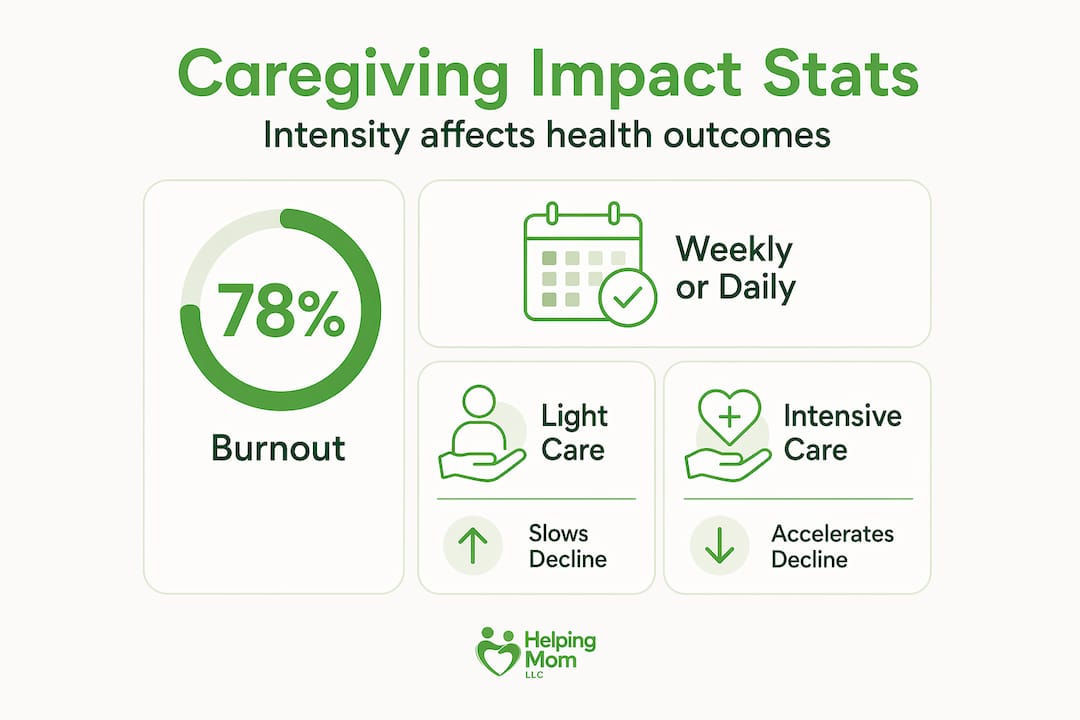
78% of family caregivers report experiencing burnout weekly or daily, yet most carry on without a clear roadmap. This guide covers what caregiving actually involves, how to protect your own wellness, communicate with your family, and keep your parent's home safe.
Adult children caregivers handle many tasks beyond basic care, including advocacy and emotional support.
Most family caregivers experience frequent stress and burnout but regular self-care helps manage this.
Clear communication and dividing tasks among family ease caregiver load and prevent conflict.
Simple home modifications can significantly enhance safety, allowing aging parents to live comfortably.
Limiting intense caregiving hours protects caregivers' cognitive health and wellbeing.
Building from the introduction, it's essential to understand what caregiving actually involves for adult children. Most people assume caregiving means driving to appointments and making meals. The reality is much broader, and recognizing the full picture is the first step to doing it without burning out.
Family caregivers provide unpaid, extensive support that frequently includes complex medical tasks, such as wound care, medication management, and navigating insurance systems, often with no formal training. You are not just a helper. You are a care coordinator, an emotional anchor, an advocate, and often someone constantly watching for risks and changes.
Many caregivers take on all of these responsibilities without realizing they have done so. They slip into the role gradually, and by the time they look up, it is all-encompassing. Reviewing complete caregiving guides early in your caregiving journey can help you see the full scope before you're in too deep.
The importance of caregivers to the health and stability of aging adults cannot be overstated. Caregiver support for adult children is essential — long-term caregiving becomes more sustainable when responsibilities are shared, expectations are realistic, and caregivers receive support too. For those caring for elderly parents without siblings, building a network of friends, neighbors, and professional resources becomes even more important. Explore our family caregiver resources for practical guidance on finding the help you need.
With a clear understanding of what the role involves, let's explore how to protect your own well-being. This is not a bonus item on the checklist. It is the foundation that everything else rests on.
Burnout rarely happens all at once. More often, it builds slowly over months until even simple decisions begin to feel overwhelming. Paying attention to those early warning signs can help you protect both your own well-being and your ability to continue caring for your parent.

78% of caregivers report burnout feelings weekly or daily. That number reflects something that is genuinely widespread and not a sign of personal weakness. Caregiving asks you to be emotionally available, physically present, and mentally organized, often for years at a stretch. Your body and mind will push back if you ignore what they need.
Many adult children don't realize how exhausted they are until they finally stop moving for a moment.
The encouraging truth? 72% of family caregivers still make time for self-care at least weekly, even under significant stress. That means it is doable, even when it feels impossible. Small, consistent habits matter far more than occasional escapes.
"Taking care of yourself isn't separate from taking care of your parent. It's the same task, approached from a different angle."
Pro Tip: Set a specific "caregiver check-in" time each week for yourself. Ask: How am I sleeping? Am I eating? Do I feel resentful more often than grateful? Your honest answers will tell you where to focus.
Now that you know how to care for yourself, effective communication can help share the load with family. The load becomes easier when responsibilities are shared and everyone has a clear, agreed-upon role.
One of the most common sources of resentment in caregiving families is a silent imbalance. One sibling does most of the hands-on work while another provides occasional phone check-ins and considers that sufficient. This rarely gets resolved on its own. It needs a direct, calm conversation.
Active listening, specific task assignments, and regular check-ins are three practices that caregiving professionals consistently recommend for improving family communication and lowering resentment.
A simple structure helps families stay focused on solutions instead of frustration. Using a family meeting agenda template ensures nothing important gets skipped.
"I'll help when I can" is not a commitment. "I'll handle all pharmacy pickups and insurance calls" is.
A short, 10-minute call among siblings keeps everyone aligned and prevents small tensions from growing.
Adult sibling conflict during caregiving is extremely common. The earlier it is named and discussed, the easier it is to resolve.
A simple "thank you" in a group message goes a long way toward keeping people engaged and cooperative.
Pro Tip: Use a shared digital calendar or task app (something as simple as Google Calendar) to track caregiving duties. Visibility alone reduces the feeling that one person is carrying everything.
The goal of good communication in caregiving is not to eliminate disagreement. It is to keep the focus on your parent's well-being while making sure everyone, including you, feels seen and respected.
After strengthening family communication, securing a safe home environment safeguards your loved one and eases your caregiving duties. Falls are the leading cause of injury among older adults, and most of them happen at home. The good news is that many risks are preventable with practical, affordable changes.
Home safety improvements are among the most direct ways to reduce caregiver strain because a safer environment means fewer emergencies, less worry, and more independence for your parent.
Technology can also play an important role in supporting your parent's safety and independence. Simple, affordable tools like smart medication reminders, video doorbells, voice assistants, motion sensors, automatic lighting, and medical alert systems can reduce worry for both you and your parent without being intrusive or complicated.
| Safety Device | Benefit | Limitation |
|---|---|---|
| Grab bars | Prevents bathroom falls, low cost | Requires installation |
| Medical alert system | 24/7 emergency access | Monthly subscription cost |
| Smart medication reminders | Prevents missed doses, auto-alerts | May require smartphone setup |
| Video doorbell | Remote visitor monitoring, security | Needs Wi-Fi and power source |
| Motion-sensor nightlights | Automatic, no effort required | Limited coverage area |
| Voice assistant | Hands-free calls, reminders, music | Requires Wi-Fi connection |
| Stair handrails | Reduces fall risk significantly | May need professional install |
| Non-slip floor mats | Immediate traction improvement | Must be secured properly |
Pro Tip: Walk through your parent's home at night, from their bedroom to the bathroom, to experience it from their perspective. You will immediately spot lighting gaps and hazards that are easy to miss during the day.
For a full room-by-room review, the aging in place and home safety guide covers every area of the home in detail. You can also download an elderly home safety checklist to work through it systematically. For technology that supports independence, explore the Helping Mom Technology Lab for practical tools that simplify daily life. Thoughtful elder care planning includes anticipating future needs before they become urgent — and these resources help you do exactly that.
Understanding and communicating within your family sets the stage for balancing caregiving demands safely. How much time you spend caregiving directly affects your own health, and not always in the way you might expect.
New research shows that intensive caregiving accelerates cognitive decline, while light caregiving actually slows it. Providing more than 50 hours of care per week was associated with faster cognitive aging in caregivers themselves. Light, manageable caregiving, on the other hand, appears to offer a sense of purpose that benefits mental sharpness.
| Caregiving Level | Hours per Week | Impact on Caregiver Cognition |
|---|---|---|
| Light caregiving | Under 20 hours | Cognitive benefit, sense of purpose |
| Moderate caregiving | 20 to 50 hours | Neutral to mild stress effects |
| Intensive caregiving | Over 50 hours | Accelerated cognitive decline risk |
This is not about loving your parent less if you step back. It is about recognizing that an overloaded caregiver serves no one well over time.
"The goal isn't to do everything for your parent. It's to do the right things, consistently, without sacrificing yourself in the process."
Pro Tip: Track your weekly caregiving hours for two weeks. Most people are surprised by the total. Seeing the number clearly makes it much easier to have a productive conversation with siblings or other supporters about sharing responsibilities.
Caregiving is rarely about doing everything perfectly. More often, it's about showing up consistently, paying attention, and creating a safer, calmer life one small step at a time.
Here's something most caregiving articles won't say directly: the biggest threat to your parent's care is not a fall or a missed medication. It is you, quietly running on empty until you cannot continue.
The data reflects this. Caregiving involves a coexistence of strain and self-assurance, meaning most caregivers feel both capable and depleted at the same time. That complexity is real and worth naming. Caregiving is not simply a burden, and it is not simply a gift. It sits somewhere in between, and pretending otherwise leads to unrealistic expectations that make everything harder.
The conventional advice, "just remember to take care of yourself," treats self-care as a personal failing when caregivers skip it. But the truth is that most caregivers skip it because the system around them offers very little support. Employers rarely accommodate caregiving schedules. Siblings often don't show up equally. Community resources are fragmented or hard to find.
What actually creates lasting resilience is a combination of personal strategies and honest expectations. You can protect your caregiver well-being through daily habits, yes. But you also need to be willing to say, clearly and without apology, "this is more than one person can handle."
Caregiving that lasts is built on small, sustainable actions repeated over time. Not heroic sacrifices repeated until something breaks.
One unexpected lesson many caregivers share is that helping an aging parent often changes how they think about their own future.
Questions like Who would help me? Have I planned ahead? Am I building the kind of support network I'll someday need? begin to feel much more personal.
If you've started thinking about your own future while caring for your parent, visit Aging Solo Today for practical guidance on planning ahead, building a support circle, and aging with confidence.
Asking for help doesn't mean you've failed your parent. It means you're protecting your ability to continue showing up tomorrow, next month, and next year. Caring for yourself is not separate from caring for your parent. It is part of caring well.
With practical knowledge in hand, here are trusted resources to support you on this caregiving journey. At Helping Mom, we have built a library of calm, practical, jargon-free guidance specifically for adult children in the early to middle stages of caring for an aging parent.
Our guide to making the home safer for seniors walks you through every room with actionable steps and no unnecessary alarm.
If you're supporting an aging parent from a distance or simply aren't sure where to begin, a Helping Mom Virtual Home Safety Walkthrough can help identify practical safety improvements that support independence while reducing caregiver stress.
Our caregiver well-being support resources address burnout, stress, and how to ask for help.
Our guidance on talking with aging parents gives you a calm, practical framework.
If you're managing most or all of your parent's care, download our free Caregiver Starter Kit. Inside you'll find practical checklists, planning worksheets, and caregiving resources designed to help you stay organized and reduce stress.
You don't have to figure this out alone.
Adult children often juggle care duties, emotional strain, financial pressure, and balancing work while supporting aging parents. Caregivers frequently manage paid work alongside care responsibilities, which creates compounding stress and financial strain over time.
Regular self-care, sharing caregiving tasks, setting realistic limits, and seeking emotional support help prevent burnout. 72% of caregivers practice self-care weekly despite stress, and sharing the load lowers the risk of cognitive decline linked to intensive caregiving.
Installing grab bars, improving lighting, removing tripping hazards, and using medical alert systems are the most impactful starting points. These practical home safety improvements reduce accident risk and give caregivers meaningful peace of mind.
Clear, honest communication with specific task assignments improves teamwork and lowers family conflict during caregiving. Effective family communication reduces resentment and makes it more likely that every family member contributes in a way that is fair and sustainable.
Helping Mom LLC
Helping Mom LLC
Helping Mom LLC
Helping Mom LLC
Helping Mom LLC
Helping Mom LLC
Helping Mom LLC
Helping Mom LLC