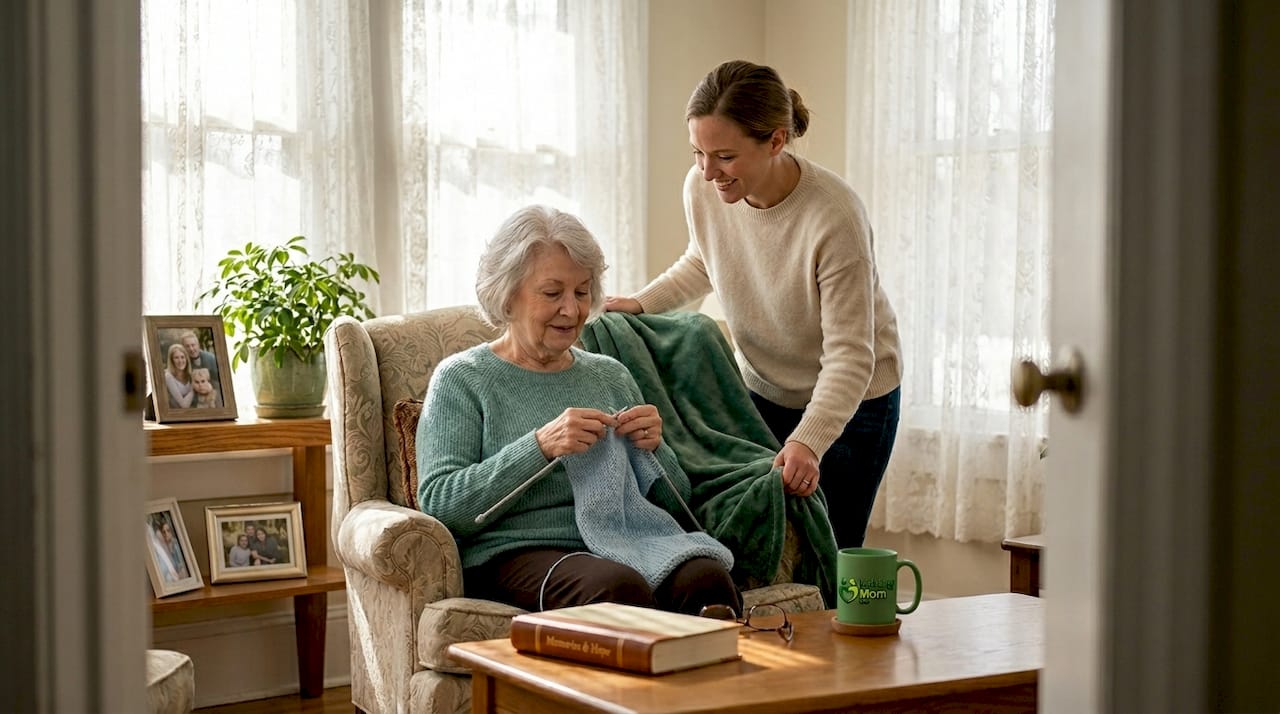
Helping your parent stay safe and comfortable at home is one of the most meaningful things you can do. But knowing where to begin can feel overwhelming. This guide simplifies the process. It focuses on the few changes that make the biggest difference so you can reduce risk, support independence, and move forward with confidence.
You do not have to do everything at once. Start with one area. Make one change. Then build from there.
| Point | Details |
|---|---|
| Bathroom safety upgrades | Installing grab bars, shower chairs, and non-slip mats dramatically reduces at-home falls. |
| Kitchen and daily living tools | Organizing items at safe heights and using lever handles supports independence and safety. |
| Smart technology for monitoring | Wearables and remote devices help caregivers track loved ones and prevent emergencies. |
| Caregiver wellness matters | Taking breaks, finding support, and managing stress are essential for sustainable caregiving. |
| Personalization wins | Annual professional assessments and personalized solutions are more effective than generic checklists. |
Falls are the single biggest physical threat to older adults living at home. The good news is that many falls are preventable with the right modifications in place. You do not need a full renovation to make a meaningful difference. A few targeted changes in the right spots can dramatically reduce risk.
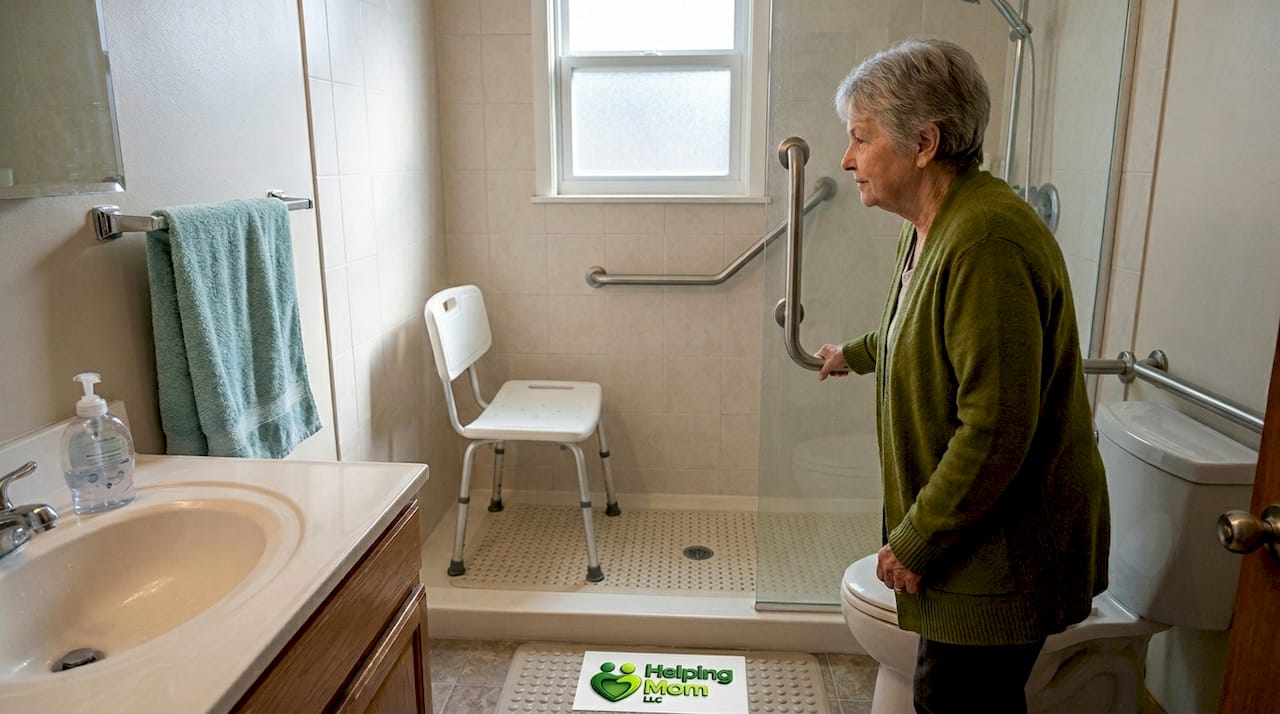
The bathroom is where most falls happen. These three changes make the biggest difference:
If you only do one thing, start here. Bathroom safety upgrades prevent more injuries than almost any other change in the home.
Grab bars, non-slip mats, and shower chairs are considered the most essential tools for preventing bathroom falls. And here's what makes these worth prioritizing: Home modifications improve ADLs by 38%, reduce at-home falls by 17%, and lower emergency room visits, according to a federal evaluation.
Stairs and narrow hallways are the next high-risk areas. Focus on these simple upgrades:
Pro Tip: Most of these changes are affordable and quick to install. Many can be completed in under an hour, and the impact is immediate.
Once the home is safer, the next step is making daily tasks easier.
The kitchen is where your parent spends a lot of time each day. It's also a place where small inconveniences can quietly become safety issues. Reaching for a heavy pot stored on a high shelf, struggling with stiff knobs, or working in poor lighting are the kinds of everyday friction points that are easy to fix once you know what to look for.
Don't overlook the paths between rooms. Handrails on both sides of stairs, contrasting stair edges, and motion-sensor lighting are also recommended for hallways leading to the kitchen and main living areas. These details connect fall prevention throughout the home, not just in the bathroom.
Pro Tip: A slow cooker or an electric kettle with an automatic shut-off is a simple, inexpensive tool that reduces stovetop risks without limiting your parent's independence in the kitchen.
Once the physical environment is safer, technology adds another valuable layer of support. For many families, the hardest part of caregiving is the worry that builds when you're not there. Smart home devices give you practical, real-time information without requiring you to be present every hour of the day.
Technology should support independence, not replace it. Start simple and only add what actually helps day-to-day life.
Smart home technology like video doorbells, fall detection wearables, and medication reminders enables caregivers to monitor safety remotely and respond quickly when something seems off. These tools aren't about surveillance. They're about peace of mind for both you and your parent.
| Device type | What it does | Best for |
|---|---|---|
| Fall detection wearable | Detects a fall and automatically alerts emergency contacts | Parents who live alone or are at high fall risk |
| Video doorbell | Shows who is at the door via phone; records activity | Families concerned about visitors or wandering |
| Smart medication dispenser | Dispenses the correct dose at the right time; alerts if missed | Parents managing multiple daily medications |
| Motion-sensor alert system | Notifies caregivers if no movement is detected by a set time | Long-distance caregivers checking in daily |
| Voice-activated smart speaker | Allows hands-free calls, reminders, and music without a phone | Parents with limited dexterity or vision challenges |
A few things to keep in mind when choosing devices. First, involve your parent in the decision. Technology they feel comfortable using will actually get used. Second, start with one or two tools rather than introducing everything at once. And third, test the device yourself before relying on it for caregiving.
Caregiving is not just physical. It is emotional and mental as well. If you do not take care of yourself, it becomes harder to care for someone else. Small breaks and simple support systems make a real difference over time.
The numbers here are sobering. 53 million Americans are family caregivers, 59% of whom are women, with a median age of 42. Of those caregivers, 88% report that they don't feel they have enough support, and financial assistance is the most commonly cited unmet need. You are not alone in this, and what you're carrying is genuinely heavy.
Caring for yourself isn't a luxury. It's what allows you to show up consistently for your parent over months and years, not just in short bursts.
Here are five practical steps you can take right now:
Sustainable caregiving is not about doing more. It is about doing what matters most without burning out.
To help you prioritize, here's how the key essentials compare side by side across impact and cost. This isn't about doing everything. It's about doing what matters most for your specific situation.
| Essential | Primary benefit | Estimated cost | Impact level |
|---|---|---|---|
| Bathroom grab bars and non-slip mats | Fall prevention | $30 to $100 | Very high |
| Shower chair | Fall prevention, fatigue | $25 to $75 | Very high |
| Motion-sensor night lights | Nighttime safety | $10 to $40 | High |
| Lever handles and anti-scald devices | Independence, burn prevention | $15 to $80 | High |
| Stair handrails (both sides) | Fall prevention | $50 to $200 | High |
| Fall detection wearable | Emergency response | $30 to $60/month | High |
| Medication dispenser | Medication adherence | $40 to $100 | Medium-high |
| Smart speaker | Communication, reminders | $30 to $100 | Medium |
| Respite care | Caregiver sustainability | Variable | Very high |
| Caregiver support group | Emotional wellness | Free to low cost | High |
Research confirms this prioritization. 65% of studies confirm home modifications are effective for fall prevention, functional independence, and cost savings, with bathroom modifications showing the most consistent impact across all populations.
Every home is different. Every parent is different. The goal is not perfection. The goal is progress. The most effective plans are simple, personalized, and built over time.
Most articles on aging in place present a tidy list of modifications and imply that following the list means the problem is solved. The reality is more nuanced. Modifications may actually increase caregiver burden when they're not matched to the specific needs, lifestyle, and resources of the family. In fact, about 35% of studies on home modifications note that effectiveness varies significantly depending on socioeconomic status, living arrangements, and whether the person receiving the modification is willing to use it.
That last point is easy to overlook. You can install the best grab bar available, and if your parent refuses to use it because they don't feel they need it, the risk remains unchanged. The modification only works when it's accepted and used.
What this means in practice is that the most valuable thing you can do isn't necessarily to install everything on a checklist. It's to have honest conversations about what your parent is actually willing to try, get a professional perspective from a Certified Aging-in-Place Specialist (CAPS) or occupational therapist (OT) who can assess your specific home, and build trust gradually so that your parent sees these changes as helpful rather than threatening.
Pro Tip: An annual professional home safety assessment, done by a CAPS or OT, is one of the most efficient ways to prioritize. These professionals look at the actual layout of your parent's home, observe how they move through it, and make targeted recommendations. This approach consistently outperforms generic checklists because it's built around the person, not a template.
This balance applies to you as a caregiver, too. Sustainable caregiving isn't about doing everything at once or perfectly. It's about making manageable progress, adjusting as needs change, and protecting your own capacity in the process. Walking alongside your parent on this journey, rather than trying to control every outcome, is what makes the difference over time.
If you are not sure where to begin, start with a quick safety check of the bathroom and walkways. These small changes often create the biggest impact.
For a simple, step-by-step approach, visit:
👉 start.helping-mom.comYou do not have to do everything at once. Start small. Build from there.
Helping Mom LLC
Helping Mom LLC
Helping Mom LLC
Helping Mom LLC
Premium Bidet