
At its heart, aging in place is about something we all understand: the desire to live in our own homes, on our own terms, for as long as we possibly can. It's not about ignoring the changes that come with age, but about making small, thoughtful adjustments to honor a parent's independence right where they are.
When your parent says they want to stay home, what they're really saying is they want to hold onto the life they've built. That house isn't just wood and nails; it's a library of memories, a place of familiar routines, and a deep, grounding sense of self.
Supporting that wish is one of the most loving things you can do, and it's a feeling shared by millions. In fact, nearly 78% of older adults want to stay in their current homes as they get older. And it's not just about comfort—over 80% report feeling safer in their own home than anywhere else. That's a feeling we all want for the people we love.
The idea of helping a parent age in place can feel big, but it doesn't have to be overwhelming. Think of it like tending a garden you both love. You don't rip everything out and start over. Instead, you make small, steady adjustments—adding a supportive railing here, clearing a potential trip hazard there—so it can continue to flourish.
Your role isn't about taking control; it's about being a supportive partner. You're helping your parent adapt their environment so it keeps working for them. This whole journey is about preserving their dignity and independence, one small step at a time. It's a process you can walk through together, with patience and care. For more guidance, you can explore our resources on how to care for aging parents while respecting their autonomy.
Aging in place isn't about preventing every change; it's about thoughtfully adapting to them. It's a way to honor a parent's wish for comfort, dignity, and the profound security of home.
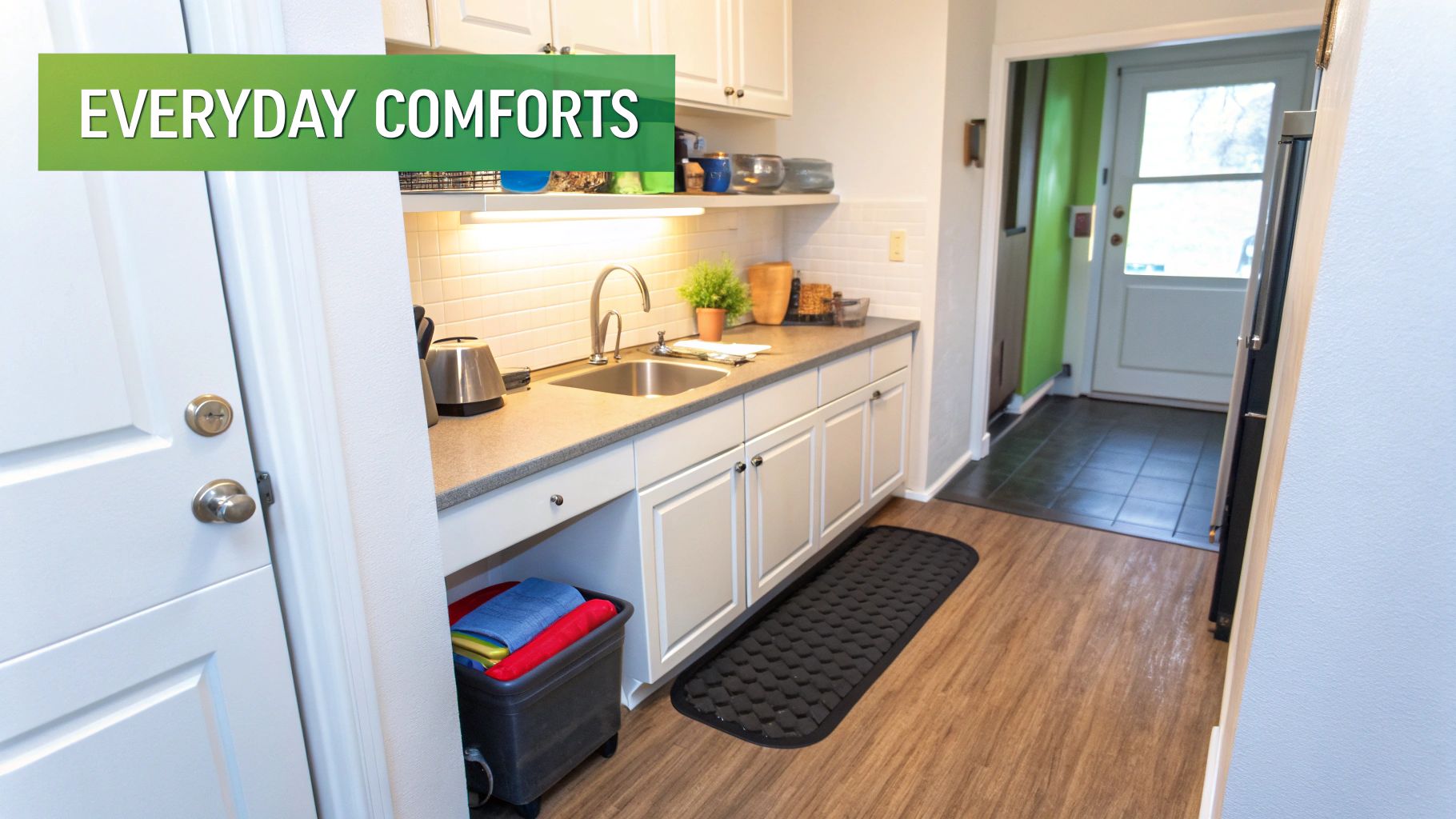
It's one thing to understand the idea of aging in place, but it's another thing entirely to picture what it actually looks like from day to day. The good news is that it almost never means a massive, disruptive renovation.
Instead, think of it as a series of small, thoughtful adjustments that add up to a safer, more comfortable, and more confident life at home. These practical steps usually fall into three main areas: simple changes to the home itself, supportive services that lend a hand, and easy-to-use tech that keeps everyone connected.
Making a home safer doesn't have to start with a construction crew. It starts with noticing the little things—the small opportunities to make daily routines feel just a bit easier. Think of these as comfort upgrades, not drastic overhauls.
Some of the most effective changes are also the simplest:
The desire to stay home is incredibly strong. In fact, over 80% of older adults say they feel safest in their own homes. Yet, a surprising number of homes may lack basic modifications that would make this possible with less worry. This gap is where you can make a real difference with simple updates that preserve the comfort of routines built over decades. You can discover more insights about global health and aging from the World Health Organization.
Aging in place doesn't mean your parent has to do everything on their own. It means having the right support system in place to help life run smoothly. This support can come from the community or from paid services—whatever fills in the gaps where it's needed.
For example, this might look like:
Finally, modern technology offers some wonderfully simple ways to support independence. This isn't about complicated gadgets; it's about straightforward tools that provide peace of mind for everyone.
Think about things like an automated medication dispenser that gives a gentle reminder for each dose. Or a video call device like a GrandPad or an Echo Show, which makes it easy to see and talk with family without any fuss. These tools can help bridge distances and make daily life just a little easier to manage.
Bringing up the topic of aging in place can feel delicate. You want to be supportive without being pushy, and caring without accidentally making them feel like you're taking over. The key is to treat it less like a problem you need to solve and more like a shared conversation about the future.
This isn't a one-time, sit-down meeting with an agenda. Think of it as a series of small, gentle talks that happen over time. Your only goal is to open the door, making it normal to talk about their comfort, safety, and wishes for the years ahead.
Timing is everything. Look for a calm, relaxed moment when you're both in a good mood—maybe over coffee or during a quiet afternoon. Try to avoid bringing it up during a stressful event or right after a health scare, which can make a parent feel defensive or vulnerable.
Before you even say a word, it can be helpful to get your own mindset right. Your goal is to listen and learn, not to direct or decide. Frame the whole thing around supporting their independence, which is the heart of what aging in place is all about. This small shift changes the dynamic from one of concern to one of collaboration.
Your role isn't to have all the answers, but to ask thoughtful questions that honor your parent's wisdom and experience. The best conversations start with curiosity, not conclusions.
Leading with open-ended questions puts your parent in the driver's seat. It shows you value their perspective and trust their judgment. Instead of making statements about what you think they need, try asking questions that invite them to share their thoughts first.
Here are a few ways to gently open the door:
Handling resistance is all about patience. If they change the subject or seem uncomfortable, it's okay to let it go for now. Your gentle approach has planted a seed, and you can always revisit it another day. Showing respect for their pace builds the trust you'll need for these important conversations. For more ideas, our guide on questions to ask old people can help you connect on what truly matters to them.
After you've opened up the conversation, a great next step is a quiet, gentle walkthrough of your parent's home. This isn't about pointing out flaws or making them feel inspected. It's about seeing their space through a new lens—one focused on making daily life a little easier and more comfortable.
Using a simple checklist can turn a vague sense of worry into small, concrete actions. How you approach this makes all the difference. Frame it as a team project: "Let's see if we can make a few things more convenient for you." This honors their independence while giving you a natural way to offer support.
Think of this as trying to see the home through your parent's eyes. What small frustrations might they be dealing with that a simple fix could solve? As you move from room to room, you're just looking for opportunities to add a bit more ease to their day.
Here are a few things to keep an eye out for:
The goal is to move from noticing to listening and then to supporting. This simple framework can keep the conversation productive and respectful.
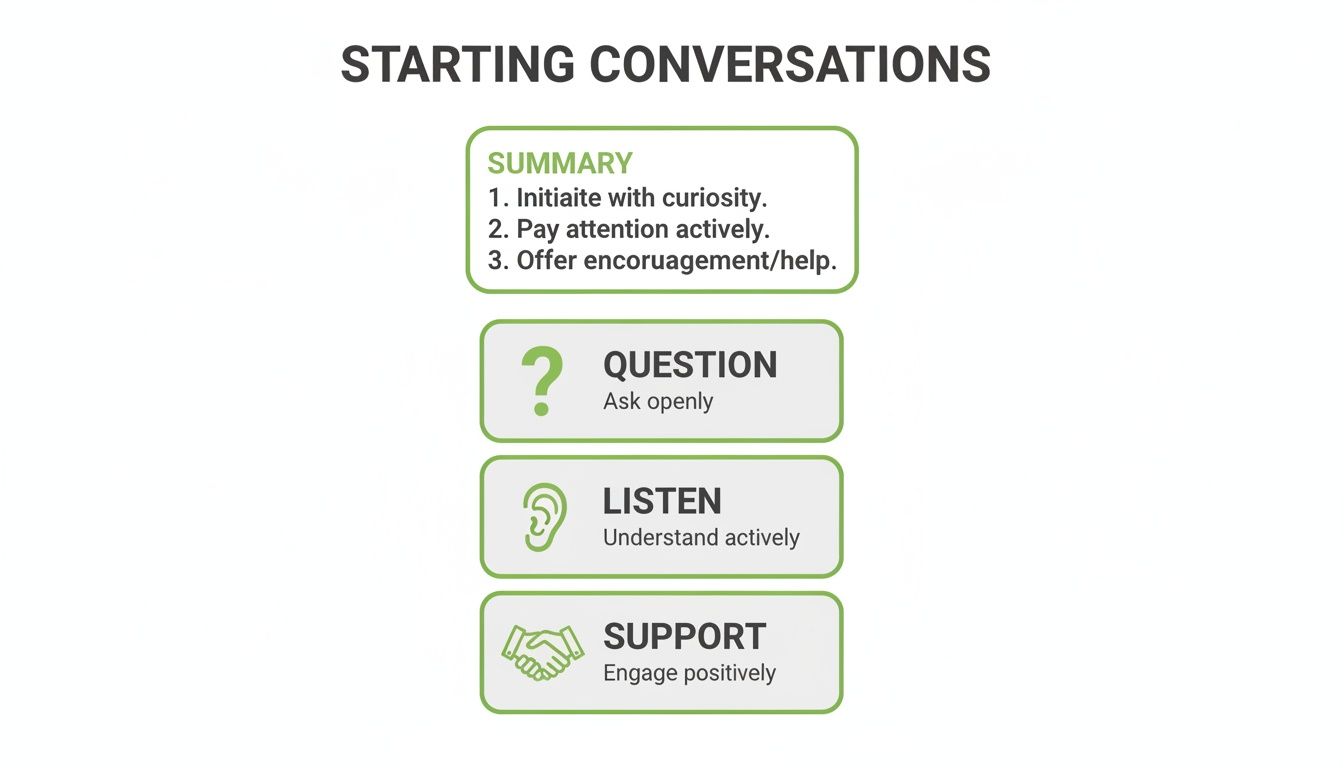
This simple checklist isn't about finding fault; it's about spotting opportunities. Use it as a quiet guide while you walk through the house together, keeping the conversation light and focused on comfort.
| Area of the Home | What to Look For | Simple First Step |
|---|---|---|
| Hallways & Stairs | Loose rugs, poor lighting, clutter | Secure rug corners with non-slip tape or remove the rug. |
| Living Room | Cords across walkways, low chairs | Bundle cords and run them along a wall. |
| Kitchen | Hard-to-reach daily items, poor lighting | Move frequently used dishes to a lower, accessible shelf. |
| Bathroom | Slippery floors, no grab bars | Add a non-slip mat inside and outside the shower. |
| Bedroom | Dark path to the bathroom, clutter by bed | Plug in a motion-activated nightlight. |
Focus on one or two small changes to start. You're building momentum, not trying to remodel the house in an afternoon. Small wins build trust and make it easier to talk about other changes down the road.
Remember, the desire to stay home is the norm, not the exception. In fact, 77% of adults aged 70 and older live in their own homes, not in nursing facilities. This reality is why these small supports are so important—they reinforce the independence your parent already has.
For a more comprehensive look at this, our full guide on how to make a home safe for the elderly breaks down even more practical tips.
Even the best aging-in-place plan isn't set in stone. The whole point is to adapt the home to your parent's needs, and it's only natural for those needs to shift over time.
Noticing these shifts isn't a sign of failure. It's simply a cue that the support plan might need a gentle adjustment.
This isn't about looking for "warning signs" or creating anxiety. Instead, it's about calmly noticing when a daily routine seems to take more effort than it used to. Your role is simply to be a thoughtful observer, ready to open a conversation about adding a little more ease to their day.
When you visit or talk with your parent, you might notice small changes in their patterns. These aren't emergencies, but they can be gentle prompts to check in and see if another layer of support could make life better.
You're not diagnosing a problem; you're just seeing an opportunity to make things smoother.
Some of these cues might include:
Adding support doesn't mean taking away independence. Often, it's the very thing that protects it, allowing a parent to save their energy for the people and activities they love most.
It's easy to feel like bringing in outside help is a step backward. It can be more helpful to see it differently. Introducing support services isn't a retreat from aging in place—it's how you strengthen it for the long run.
Think of it like adding scaffolding to a beloved, historic building. You're not changing the structure; you're just providing extra support so it can stay strong and secure for years to come.
For example, hiring someone for housekeeping a few hours a week doesn't mean your parent can't live at home. It just frees them from a physically draining chore, giving them more time and energy to connect with friends, enjoy a hobby, or simply rest.
Bringing in support can be a slow, gradual process. It can start with just one small thing. The goal is always to introduce help in a way that feels empowering, not intrusive.
Consider these options as ways to add ease, not to take control:
Introducing these ideas gently is key. You might try saying, "I was thinking it might be nice to have someone handle the heavy cleaning so you have more energy for your book club. What do you think?" This approach respects their autonomy while opening the door to valuable support.
As you and your parents start down this path, questions are bound to come up. This journey rarely moves in a straight line, and every family has its own unique currents to navigate. Here are a few answers to the questions we hear most often, meant to bring a little clarity and reassurance.
First, know this is incredibly common. If you've suggested a change and been met with a firm "no," you're not alone. That resistance often comes from a desire to maintain control and a fear that this is the first step toward leaving their home.
To your parent, the house is safe. It's familiar. So when you suggest a change, even with the best intentions, it can sound like you're saying, "You're not safe here anymore."
The best response is patience. Start with the smallest, least intrusive ideas first. Frame every suggestion around comfort and convenience, not risk or decline.
Instead of saying, "You need a grab bar so you don't fall," you might try, "I saw this sturdy handle that could make getting out of the shower feel a little steadier. What do you think?"
Sometimes, the answer will still be no. And that's okay. Respecting their decision is how you build trust. It keeps the door open for another conversation down the road. Your steady, respectful support is what matters most.
Not at all. While aging in place often means staying put in the longtime family home, the real heart of the idea is about living in a supportive, independent setting of one's own choosing. For some, that might mean "right-sizing" to a smaller, more manageable home in the same community they love.
This could look like moving from a two-story house with a big yard to a single-level condo or a patio home with no stairs. The goal is to find an environment that supports their independence and keeps them connected to friends, routines, and familiar places.
The "place" is less about a specific address and more about what it represents: autonomy, comfort, and control over their own life.
The heart of aging in place isn't about a specific building; it's about preserving a sense of home, dignity, and personal choice, wherever that may be.
This is the central challenge for so many of us. You see potential risks, but you also deeply respect your parent's right to live their life on their own terms. It's a tough spot to be in.
The key is to shift your mindset. You can't control every outcome, but you can offer support and options.
Your role isn't to prevent every possible mishap. It's to offer tools that make their choices safer. You can't make them use a walker, but you can make sure the hallways are clear and well-lit. You can't make them accept a meal service, but you can have the information ready if they ever mention that cooking is starting to feel like a chore.
Focus on what you can do: have open conversations, offer practical help without taking over, and ultimately, respect their final decisions. Your concern comes from love. Expressing it calmly and respectfully is often the most supportive thing you can do.
At Helping Mom, our goal is to provide the calm, practical guidance you need to support your parents with confidence and care. Explore our resources for more insights on navigating this journey together.
Visit Helping MomHelping Mom provides calm, practical guidance for adult children supporting aging parents. Explore our guides and checklists for making homes safer, having difficult conversations, and caring for yourself along the way.
View Our Caregiving ChecklistLooking for more calm, practical guidance for supporting an aging parent?
Visit the Helping Mom Caregiving Resource Library to explore our full collection of caregiving guides, home safety resources, and practical checklists designed for adult children helping aging parents.
Browse the Caregiving Resource Library