Aging in Place Guide
Discover what aging in place truly means and learn practical tips for families to support their loved ones in staying safe at home.
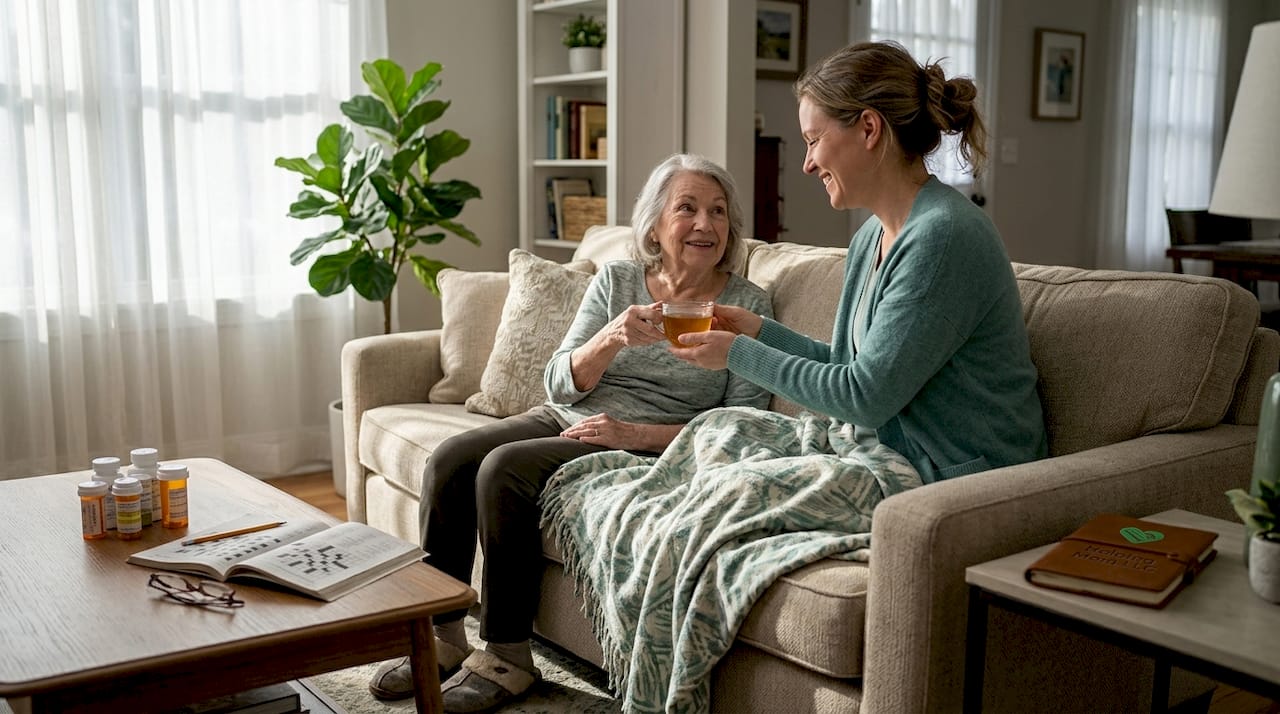
Most older adults want to stay in their own homes as they age. That part isn't surprising. What catches many adult children off guard is the quiet uncertainty that follows: Will this actually be safe? Can we make it work? According to Pew Research Center, most older adults who live at home want to age in place, but they aren't entirely confident they'll be able to. That gap between wanting something and feeling ready for it is exactly where families like yours need clear, calm guidance.
For many families, aging in place sounds simple at first. But once you begin thinking through safety, mobility, health changes, transportation, and daily support, it quickly becomes clear that staying at home successfully requires more than good intentions. It requires planning, communication, and practical adjustments over time.
| Point | Details |
|---|---|
| Aging in place defined | It means adapting a home and support to stay independent—beyond just remaining at home. |
| Safety is key | Address home hazards and plan for changes proactively to help parents stay safe and comfortable. |
| Planning matters | Use step-by-step checklists and revisit support as your parent's needs evolve over time. |
| Progress over perfection | Small improvements and teamwork make a bigger difference than waiting for the 'perfect' solution. |
To better understand why this topic is so complex, let's clarify what aging in place really means.
At its simplest, aging in place means an older adult continues living in their own home as they get older, rather than moving to a facility or assisted living community. But here's where many people get it wrong: aging in place isn't just about not moving. It's about making a home work for someone whose needs are gradually changing.
Think of it less like "staying put" and more like actively adapting. The home itself may need to change through small modifications, accessibility improvements, and thoughtful safety updates that support long-term independence. If you're unsure where to begin, our guide on aging in place home modifications walks through practical changes families commonly make over time. The support systems around your parent may need to grow. And your family's approach to planning will need to become more intentional over time.
"Aging in place" means remaining in the home of your choice safely, independently, and comfortably — regardless of age or ability level. It requires thoughtful planning, not just the absence of a move.
The NIA's home-safety guidance is clear on this: successful aging in place requires planning and practical support changes to match evolving abilities. This is fundamentally different from hoping things will stay the same.
Many families assume that as long as their parent is managing day-to-day, no action is needed. But by the time a problem becomes obvious, the risk has often already been building quietly. For a deeper look at what this process really involves, understanding aging in place can help you start with the right mindset. You can also explore the full aging in place resource hub for a broader picture.
The bottom line: aging in place is a goal, and like any goal, it works best when you plan for it.
Knowing what aging in place truly means, it's important to face both the hopes and uncertainties that come with this decision.
Most families share a few common hopes. They want their parent to feel comfortable and independent. They want to honor their parent's wishes. And they hope that home will remain a place of safety and dignity for as long as possible. Those are beautiful, reasonable goals.
But underneath those hopes, there's often real worry. Will my parent fall and no one will know? What happens if their health changes faster than we expected? Can we actually manage this from a distance?
The Pew Research Center survey on aging in place put real numbers to something many families already feel intuitively.
| What older adults feel about aging in place | Finding |
|---|---|
| Want to remain in their current home | Majority |
| Feel "very confident" they can age in place | Minority |
| Cite health concerns as a barrier | Common |
| Cite home modifications as a concern | Common |
The confidence gap is real.
The desire to stay home is strong, but confidence in actually achieving that safely lags behind. That's not pessimism. It's honesty, and honesty is where good planning begins.
Key insight: Most families aren't failing to plan because they don't care. They're uncertain where to start, or they're waiting for a clear sign that something needs to change. You don't have to wait for a fall or a crisis to act.
The three most common barriers families describe are: changes in physical health that make daily tasks harder, concerns about whether the home itself is set up safely, and questions about who can provide reliable help when they're not there. All three are addressable. None of them require waiting.
Honest conversations within the family, and with your parent, are what bridge the gap between worry and action. Those conversations don't have to be heavy or alarming. They can start simply, with curiosity rather than concern.
While every family's situation is different, nearly all successful aging in place plans start with one thing: reducing unnecessary risk inside the home.
To move from worry to practical action, focus on what matters most: making the home as safe as possible.
Home safety is the single most concrete thing families can address, and it offers some of the most significant returns. Falls are one of the leading causes of injury among older adults. Most falls happen at home. The good news is that many home hazards are both recognizable and fixable.
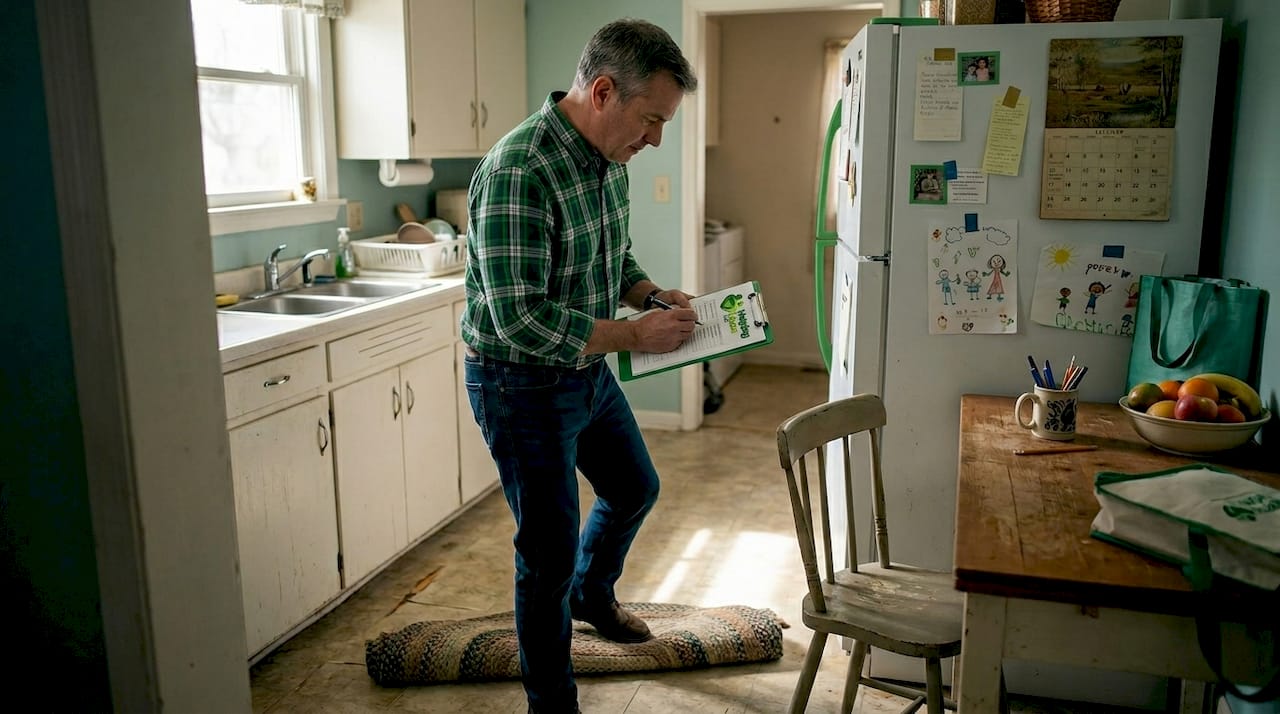
The NIA's approach to home safety centers on a checklist method: systematically address falls risk, accessibility barriers, and everyday obstacles in key rooms. This method works because it gives you a clear starting point and a manageable process.
Many families are surprised by how much difference a few simple bathroom safety upgrades can make in reducing fall risk and improving confidence. You can also review our guide on best bathroom grab bars for elderly parents for practical installation ideas.
| Safety change | Effort level | Impact |
|---|---|---|
| Remove loose rugs and cords | Low | High |
| Improve lighting in hallways | Low | High |
| Install grab bars in bathroom | Medium | Very high |
| Add stair railings or handrails | Medium | Very high |
| Widen doorways for mobility aids | High | Situational |
| Install a walk-in shower | High | Long-term |
Start with the low-effort, high-impact changes first. You don't need to renovate the entire house in a weekend. Small, focused changes add up quickly.
Pro Tip:
Walk through your parent's home as if you've never been there before. Try to see it with fresh eyes. Notice where you grip the wall, where you step carefully, where the light is dim. Your parent may not mention these things, but you'll feel them immediately.
Using an elderly home safety checklist is one of the most practical ways to make sure you're not missing anything. And if you want a fuller walkthrough, the home safety guide for families covers each room in detail. For quick wins you can act on right away, the making home safer article is a good place to start.
The goal isn't perfection. The goal is meaningful risk reduction, one room at a time.
Once the home is safer, lasting success relies on flexible, reliable support for everyday living.
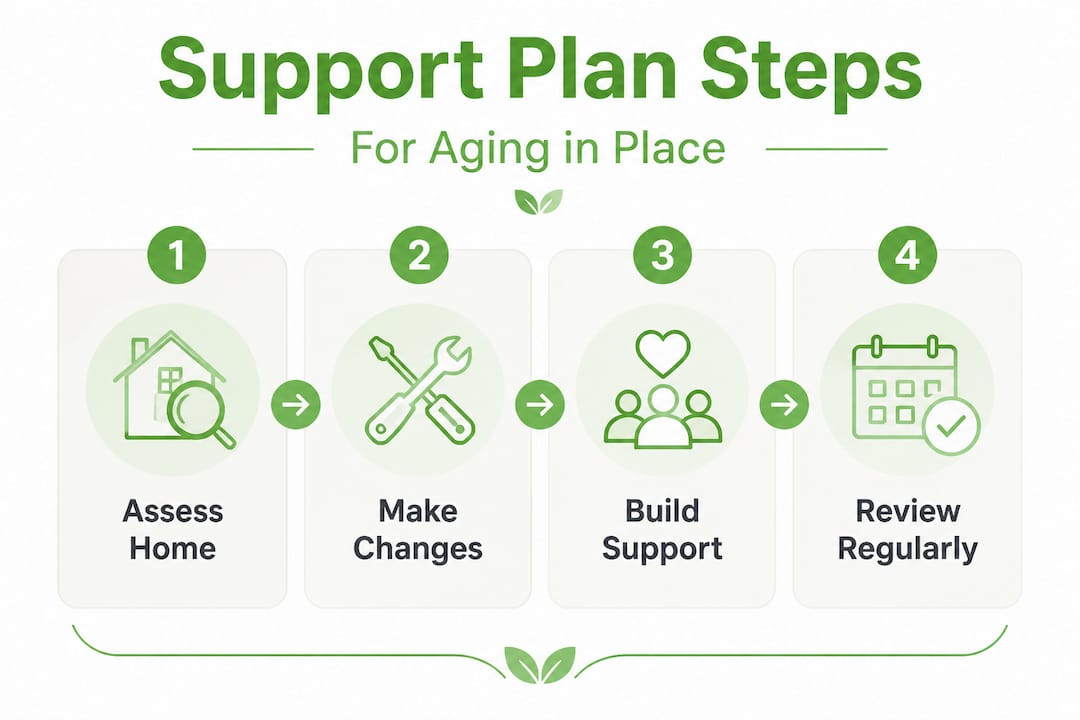
Physical modifications to the home are important, but they're only one piece of the picture. Your parent also needs people, routines, and plans in place for daily life to work smoothly. This is where many families stop short, and it's also where things can quietly fall apart.
A solid support plan covers several areas:
A quick phone call or text each morning creates both connection and an early warning system if something feels off.
Whether that's a meal delivery service, a neighbor who drops by, or a family rotation, consistent nutrition matters more than most families realize.
A pill organizer, a reminder app, or a pharmacy blister pack can prevent missed or doubled doses without requiring a full-time caregiver.
As driving becomes less safe, a plan for getting to appointments and the grocery store needs to be in place before the car keys become an issue.
Isolation is a genuine health risk. Regular visits, community programs, or even a video call schedule help keep your parent connected and emotionally well.
One of the most overlooked parts of aging in place is emotional well-being. Safety matters, but so does feeling connected, included, and valued. Even brief conversations and consistent routines can help older adults feel more secure and less isolated.
Know what to do and who to call if something goes wrong. A medical alert device or a written emergency contact list on the fridge can make a real difference.
The NIA's guidance reinforces a key principle here: start with the highest-risk areas, add external supports, and revisit the plan as needs change. Your parent's needs at 75 will likely look different at 80. Build a plan that can flex.
Pro Tip:
Schedule a "support review" every six months or whenever there's a health change. Treat it like a routine check-in, not a crisis response. This makes conversations feel normal rather than alarming.
You can download a free elder care checklist to help organize your support plan and make sure nothing important gets overlooked.
Even with a solid plan, families often stumble on common obstacles.
Knowing what can go wrong in advance helps you stay calm when it happens, and it usually does happen in some form. Here are the most frequent challenges families face:
Families often adapt to a cluttered hallway or a dim entryway over time and stop seeing the risk. A fresh set of eyes, or a professional home safety assessment, can catch what familiarity hides.
A plan that works well today may not work in 12 months. Health shifts gradually, and so must your support system. Build flexibility in from the start.
Many older adults feel that accepting help signals a loss of independence. This is one of the most emotionally complex parts of caregiving. Framing changes as comfort, convenience, or independence upgrades rather than "safety fixes" often lowers defensiveness and keeps conversations collaborative instead of confrontational.
Siblings don't always agree on what's needed or who should do what. Honest, structured conversations early on prevent resentment later.
Families often delay making changes until a fall or hospitalization forces the issue. At that point, decisions are made under stress rather than thoughtfully.
The NIA reminds us that aging in place requires planning and practical support changes, not just good intentions. That reminder is worth holding onto when inertia sets in.
Progress is the goal, not perfection. Even one change made thoughtfully is better than a perfect plan left undone. For a practical starting point, the practical home safety guide offers clear, room-by-room guidance. For one of the most critical rooms, bathroom safety tips walk you through exactly what to look for.
Let's go a step further with some real-world experience and candid advice.
Most aging in place guides are built around checklists and modifications, and those tools are genuinely useful. But they can leave families feeling like the job is done once the grab bars are installed. In reality, the harder work is often emotional, not structural.
Here's what we've seen time and again: adult children carry a quiet fear of "failing" their parent. They worry that if something goes wrong, it means they didn't plan well enough, didn't catch something in time, or didn't push hard enough for the right changes. That fear is understandable. But it puts enormous pressure on something that is, at its core, a partnership.
Aging in place isn't a problem for you to solve on behalf of your parent. It's a process you navigate together. Your parent's preferences matter. Their sense of dignity and autonomy matters. And their vision of what "home" means to them is often the most powerful motivator for making the changes they resist at first.
Emotional readiness is also something no checklist can measure. Some families aren't ready to have the conversation about what happens if things get harder. Some older adults aren't ready to acknowledge that their needs are shifting. That's okay. You don't have to resolve everything at once. What matters is that you keep the lines of communication open, gently and consistently.
Small wins count. Getting one grab bar installed, setting up a weekly check-in call, or simply having one honest conversation about the future is meaningful progress. Don't let the size of the full picture stop you from taking one small step today.
And if you're not sure where to begin, a structured elderly home safety checklist gives you a tangible, low-pressure starting point that often opens the door to bigger conversations naturally.
You do not have to solve every future problem today. Aging in place works best when families take steady, thoughtful steps instead of waiting for perfect certainty. Small changes made early often create the greatest long-term stability.
Creating a safe aging in place plan is not about removing independence. It's about protecting it for as long as possible.
You don't have to figure this out alone. Helping Mom is built specifically for adult children like you, people who are navigating real caregiving decisions and need clear, compassionate guidance without the overwhelm.
A thorough overview of what families need to consider for aging in place.
A room-by-room framework you can actually use right away.
Hands-on guidance for modifying your parent's home step by step.
You've got this, and we're here to help you along the way.

Aging in Place Resource Hub
Helping Mom LLC
Understanding Aging in Place: A Guide for Caregivers
Helping Mom LLC
Making Home Safer for an Elderly Parent
Helping Mom LLC
How to Support Aging Parents: Practical Steps for Families
Helping Mom LLC
Best Bidets for Seniors in 2025: Safe, Easy & ADA-Friendly Options
Premium Bidet
Reading glasses for elders: preserve independence in 2026
Ministry of Sight
Get our free elder care checklist and start creating a safer home for your parent today.
Download Free Checklist