Many families assume in-home care simply means hiring someone to help with light housework or drive their parent to appointments. That's a natural assumption. But in-home care is far broader than that, and understanding its full scope can genuinely change how you approach your parent's safety, independence, and quality of life. For many families, in-home care becomes the bridge between wanting a parent to stay independent and realizing they may need more support than they used to. Understanding what in-home care actually includes can help you make calmer, more informed decisions before a crisis forces them.
In-home care means broad support for safety, wellness, and family communication.
Simple changes like removing rugs and improving lighting can make a home much safer for aging parents.
Regular in-home support lets family caregivers maintain their own well-being and prevent burnout.
Sensitive, open discussions with aging parents make care transitions smoother and less stressful.
In-home care is professional support provided to older adults in their own homes, covering a wide range of non-medical services. It is not just a housekeeper. And it is not a medical nurse. It sits somewhere in between, offering hands-on, day-to-day support that keeps aging parents safe, comfortable, and as independent as possible. For families exploring aging in place, in-home care for elderly parents is often the missing piece that makes staying home safely possible.
"It's just housekeeping."
In reality, it includes personal care, meal preparation, medication reminders, companionship, and safety monitoring.
"It's only for people with serious health issues."
Many families begin in-home care early as a preventive step, well before a crisis occurs.
"It means giving up independence."
The opposite is often true. Good in-home care is designed to preserve your parent's independence, not replace it.
"It's the same as a nursing home."
In-home care allows older adults to stay in their own familiar environment, which most prefer.
"It's unaffordable for most families."
Costs vary widely, and some services may be covered by long-term care insurance or other programs.
Understanding aging in place explained helps clarify why so many families choose in-home care. The goal is to allow your parent to remain in the home they know and love, with the right support around them.
| Type of Service | What it Includes | Who it Helps Most |
|---|---|---|
| Personal care | Bathing, dressing, grooming, toileting | Those with limited mobility or early dementia |
| Homemaker services | Meal preparation, laundry, light cleaning | Anyone needing daily household support |
| Home modifications | Grab bars, ramps, improved lighting, non-slip surfaces | Anyone at risk of falls |
| Specialized memory care | Dementia-specific routines, safety monitoring | Parents with Alzheimer's or memory concerns |
| Companionship care | Social engagement, errands, conversation | Those experiencing isolation or mild depression |
| Respite care | Temporary relief for family caregivers | You, the adult child caregiver |
Home safety for aging in place focuses heavily on fall-risk reduction, including removing tripping hazards like area rugs, improving lighting, and adding bathroom safety supports such as grab bars and non-slip surfaces. Safety is woven into the very definition of quality in-home care, not added as an afterthought.
With the basics framed, let's look closer at why so many families choose in-home care.
Falls are one of the most serious risks for older adults living at home. In fact, they are a leading cause of injury-related hospital visits for people over 65. In-home care providers often conduct home safety checks as a core part of their service, helping you and your parent identify risks before an accident happens.
The reassuring thing is that many of the most effective safety changes are straightforward. Small changes made early are often far more effective than major changes made after a crisis.
These are among the most common tripping hazards. Replace rugs with non-slip alternatives or remove them entirely.
This includes hallways, staircases, and bedrooms. Motion-activated lights are especially useful at night.
Near the toilet and inside the shower or tub, proper bathroom safety supports can prevent serious falls during the most vulnerable moments.
Especially in the bathroom and on steps, these surfaces provide traction that standard flooring does not.
Any carpet that shifts or bunches at the edges needs to be fixed flat or replaced.
Furniture arrangements that made sense years ago may now create obstacles for someone with reduced mobility.
| Factor | Without In-Home Care | With In-Home Care |
|---|---|---|
| Fall risk | Higher, especially with unaddressed hazards | Reduced through regular safety checks |
| Independence | May decline faster without daily support | Preserved longer through consistent help |
| Caregiver stress | Often high, with no regular relief | Reduced through scheduled respite |
| Hospital visits | More frequent due to preventable accidents | Fewer, thanks to proactive measures |
| Social engagement | May decrease over time | Maintained through companionship |
Use our home safety checklist to walk through your parent's home room by room.
Pro Tip: A few well-placed grab bars and one or two brighter light bulbs in key spots can reduce your parent's fall risk more than almost any other single change you could make. Start there.
You can also explore fall prevention tips for additional guidance on keeping your parent safe without turning their home into an obstacle course of caution signs.
Beyond safety, in-home care can also play a crucial role in supporting the wellness of family caregivers themselves.
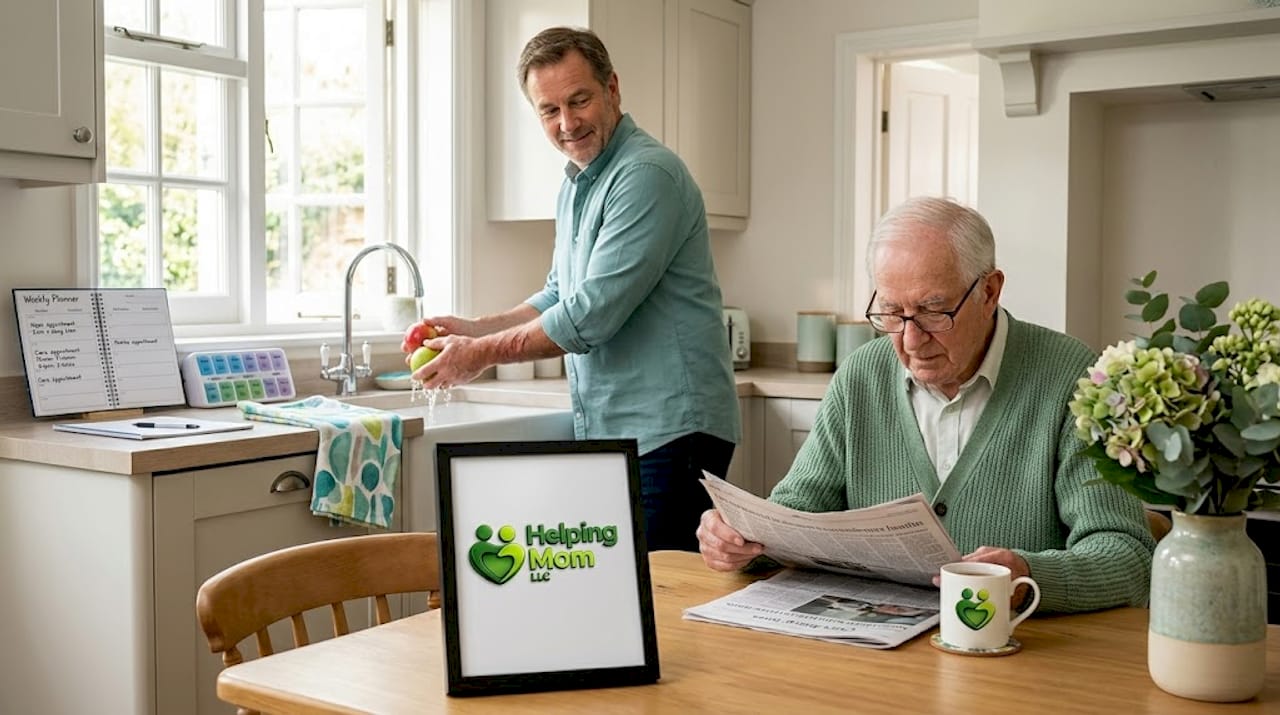
If you are the primary caregiver for an aging parent, you already know how much energy it takes. The grocery runs, medication management, the worry that never quite turns off. In-home care does not replace your role. But it can give you room to breathe.
Sometimes the hardest part is realizing your parent may still sound completely like themselves in conversation while quietly struggling with everyday tasks behind the scenes.
One of the quieter benefits of in-home care is respite. That simply means a break. It can be a few hours a week or a few days a month, but that regular relief makes a real difference in reducing caregiver burnout. Studies consistently show that family caregivers who have consistent support are less likely to experience depression, anxiety, and physical exhaustion.
So you can rest, work, or simply have time for yourself without guilt.
With daily tasks like meals and laundry, which lightens the overall load.
Trained caregivers who can flag concerns you might not notice.
Knowing that your parent is not alone or at risk while you are away.
Especially important for those with memory concerns or anxiety.
Family communication is just as important as the physical setup. When siblings or other relatives have different views on what your parent needs, it can create tension that makes caregiving even harder. Opening a calm, honest conversation early, before a crisis forces the issue, is one of the most protective things you can do for your family's harmony.
Pro Tip: Schedule a brief family check-in once a month, even just a 20-minute video call, to share observations and updates. This keeps everyone informed and reduces the chance of disagreements spiraling.
For more practical strategies, explore caregiver wellness tips and guidance on talking with aging parents when conversations feel difficult.
As you weigh your family's needs, it is helpful to know what to expect and how to get started with in-home care.
Recognizing when aging parents need more help at home can be subtle. These are some of the common signs that families often notice first:
Difficulty managing bills, correspondence, or important documents
Forgetting doses or taking the wrong ones at the wrong time
Even minor incidents can signal increased fall risk at home
Forgetting about groceries or not eating regularly
Reluctance to go up or down stairs due to mobility concerns
Withdrawing from social activities or previous interests
Changes in personal hygiene or self-care routines
Missing scheduled visits or becoming confused about dates and times
If you recognize several of these signs, it may be time to explore in-home care for elderly parents as a way to provide the right level of support while preserving their independence.
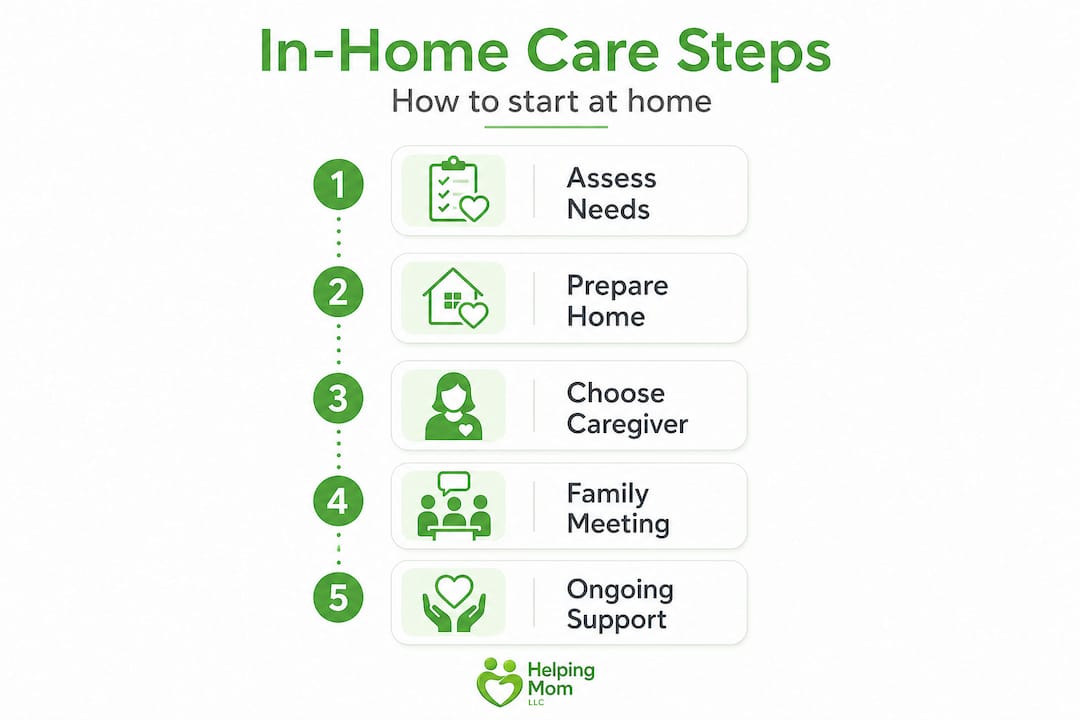
Starting the process can feel like a lot. There are agencies to research, needs to assess, and conversations to have. But it does not all have to happen at once. Taking it one step at a time makes it manageable.
Think about what tasks they struggle with most. Is it bathing? Meals? Getting around the house safely? Being honest about the current situation helps you find the right level of support.
Look for licensed agencies with trained, background-checked staff. Ask about their screening process, how they handle emergencies, and whether they provide consistent caregivers or rotate staff frequently.
A geriatric care manager or hospital social worker can help you assess needs more objectively and point you toward reputable local providers.
This is the right time to walk through the home with fresh eyes. Consider aging in place modifications that can make a real difference. Our guide on making home safer gives you a room-by-room approach that is practical and easy to follow.
You do not have to commit to full-time in-home care from day one. Many families begin with a few hours a week and expand as needs grow.
Your parent's needs will change. The best in-home care arrangements are ones that adapt alongside those changes, rather than staying rigid when the situation shifts.
Involve all relevant family members in the early stages if possible. Even siblings who live far away can play a role in research, financial planning, or simply lending a calm voice during family conversations.
"You can install every grab bar, swap out every area rug, and brighten every hallway in your parent's home, and still miss what matters most."
Physical safety upgrades are real and important. But the families who tend to navigate caregiving most successfully are not just the ones with the safest homes. They are the ones who maintain open, honest, ongoing communication with their parents. The ones who keep asking, "How are you feeling about this?" rather than just "Is the house ready?"
Your parent has opinions about their own care. Often strong ones. And when older adults feel decisions are being made around them instead of with them, even good solutions can start to feel like a loss instead of support. That quiet sense of loss of control can affect a person's mood, motivation, and even their physical health.
This is why communicating openly with parents about care decisions is not optional. It is foundational. No safety checklist replaces the conversation where your parent tells you what they actually want and where you genuinely listen.
The safety features matter. The right caregiver matters. But the conversations, the trust, and the ongoing relationship you maintain with your parent through this process may be what determines how well everything else actually works.
Most families do not realize they need support until they are already overwhelmed. The goal is not perfection. It is creating a safer, calmer path forward one step at a time. At Helping Mom, we have put together practical, easy-to-use resources designed specifically for adult children navigating exactly what you are facing right now.
Understand what changes matter most for your parent's safety at home.
Walk through your parent's home room by room in a structured way.
Remember that taking care of yourself is part of taking care of your parent.
A Guide for Caregivers
A Practical Guide for Families
Helping Mom LLC
A Practical Guide for Families