Most adult children step into caregiving the same way: gradually, then all at once. One day you're helping your mom with groceries, and the next you're managing medications, doctor appointments, and fall risks, all without any formal preparation. If that sounds familiar, you're in good company. But understanding why attend caregiver training matters more than most families realize.
Structured training doesn't just teach you techniques. It reduces hospital visits, lowers your stress, and genuinely improves the quality of life for your aging parent. This guide breaks down what you'll learn, what the research shows, and how to get started.
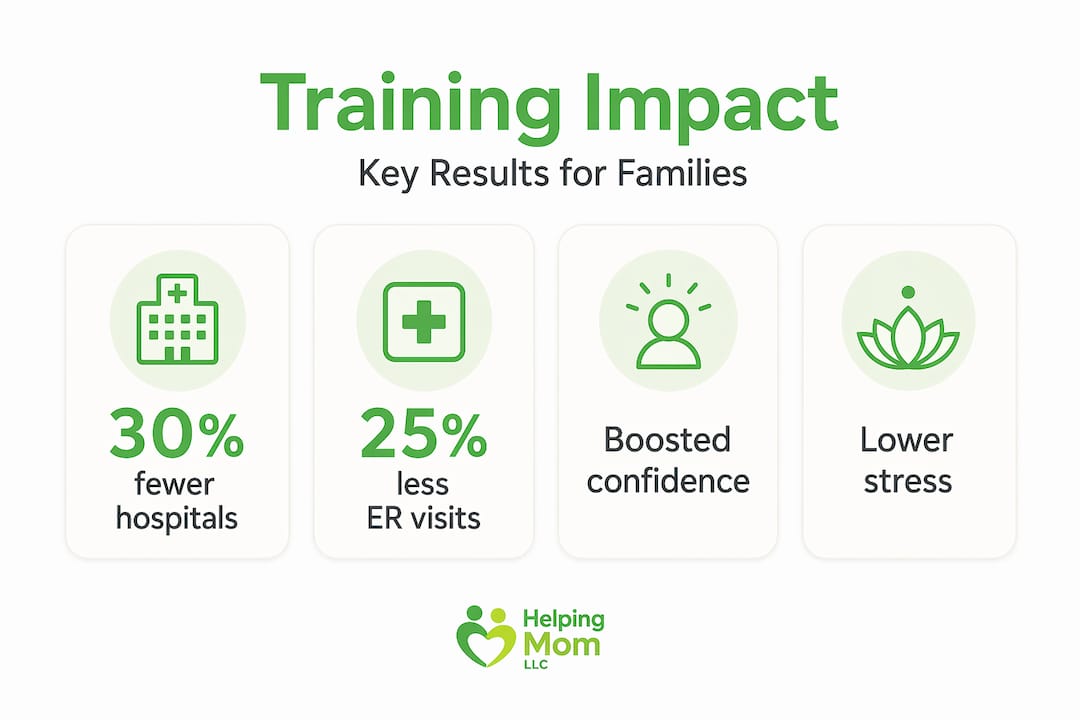
Caregiver training leads to a 30% reduction in hospital readmissions for care recipients.
Training covers fall prevention, dementia communication, medication management, and emergency response.
Trained caregivers report lower burnout and greater confidence in their daily role.
Medicare CTS billing codes can reimburse caregiver training, though many families don't know this.
Trained family caregivers advocate more effectively and collaborate better with doctors and therapists.
Many adult children step into caregiving with love, instinct, and a willingness to help. But caregiving also involves practical safety skills, communication strategies, and medical coordination that most people were never formally taught. Training gives you a practical foundation so you're not figuring everything out in real time, under pressure.
Many adult children carry a quiet fear that they might miss something important, make the wrong decision, or accidentally put a parent at risk. Training cannot remove every challenge from caregiving, but it often replaces uncertainty with confidence. That emotional shift alone can make daily caregiving feel far less overwhelming.
Safely helping your parent transfer from bed to chair, assisting with bathing and hygiene, and managing medication schedules. A solid medication tracking system helps keep track of important medical information and ensures nothing falls through the cracks.
Identifying hazards, proper use of mobility aids, and techniques for supporting balance during movement. Learn how to identify home safety risks and implement effective fall prevention strategies for making the home safer for aging parents.
Knowing what to do if your parent falls, has a sudden health change, or becomes disoriented.
Using validation techniques, nonverbal cues, and calm de-escalation when confusion or agitation arises. Dementia training improves safety and reduces distress responses significantly.
Recognizing caregiver burnout early and building sustainable habits to protect your own health. Discover practical approaches to reducing caregiver stress and protecting your well-being while maintaining routines and balancing caregiving responsibilities. → Explore caregiver well-being resources
Training formats vary, and that's actually good news. You can find in-person workshops through community organizations, fully online self-paced courses, and even structured programs through the VA. The Caregivers FIRST program from the U.S. Department of Veterans Affairs, for example, offers four to six session group trainings with peer support built in, which many caregivers find just as valuable as the skills themselves.
Pro Tip:
When researching programs, look specifically for courses that address your parent's primary diagnosis or condition. A caregiver supporting someone with Parkinson's has different needs than one supporting someone after a hip replacement.
This is where caregiver training shifts from a "nice idea" to a clear decision. The evidence on what structured training actually does for families is stronger than most people expect.
Caregiver training leads to a 30% reduction in hospital readmissions and 25% fewer emergency visits for care recipients. That's not a small margin. Fewer hospitalizations mean less trauma for your parent, less disruption for your family, and less risk of the complications that often follow a hospital stay for older adults.
Beyond safety outcomes, the benefits of caregiver training extend to both the caregiver and the person receiving care:
| Benefit | Who it helps | What the research shows |
|---|---|---|
| Reduced hospital readmissions | Care recipient | 30% fewer readmissions with trained caregivers |
| Lower emergency visit rates | Care recipient | 25% reduction in unplanned ER visits |
| Improved caregiver confidence | Family caregiver | Reduces helplessness and moral distress |
| Lower burnout risk | Family caregiver | Mental health support in training prevents burnout |
| Better care consistency | Both | Structured skill-building improves care quality over time |
The emotional impact matters just as much as the physical skills. When you know what you're doing and why, you feel less helpless. That shift, from uncertainty to confidence, changes how you show up every single day.
"Programs that address mental health support alongside physical skill teaching reduce premature institutionalization and support long-term care at home."
— National Council of Certified Dementia Practitioners
Training can also help families recognize signs of unsafe situations, understand patient rights, and feel more confident navigating difficult care decisions. This protects your parent and gives you greater peace of mind. If you're also thinking about the broader role you're stepping into, explore our practical guide on the role of caregivers or learn about having difficult conversations that can help when working with healthcare providers.
One of the most underappreciated advantages of caregiver courses is how they prepare you to work alongside professionals, not just work around them. Family caregivers are often excluded from formal care planning. Training helps close that gap in a real, practical way.
When you complete structured training, you gain a working vocabulary for medical conversations. You understand what a care plan means, why a physical therapist's recommendations matter at home, and how to flag concerns before they become emergencies. That kind of knowledge gives you standing in the room.
You can accurately describe changes in your parent's condition, which helps doctors make better decisions faster.
You understand post-discharge instructions well enough to follow them correctly, which reduces complications. Learn how to better communicate more effectively and work with healthcare providers effectively.
You feel less dismissed in medical settings because you're speaking the same language as the professionals.
You know when something feels wrong and have the confidence to advocate clearly, not just worry quietly.
Training also addresses moral distress, that uncomfortable feeling when you're not sure if you made the right call. Trained caregivers report lower levels of this because they have a clearer framework for decision-making, which reduces second-guessing and regret. Explore our complete caregiving guides for more resources, or browse all caregiving topics to find what you need.
Pro Tip:
After completing any caregiver training program, bring a one-page summary of your skills to your parent's next medical appointment. Many care coordinators are glad to know a family member has received formal training. It opens doors to more collaborative conversations.
The options are more accessible than most families realize, and some are free or reimbursable. Here's a practical path forward:
Many physicians and therapists can refer you to training directly, and some are certified to provide it. Physical, occupational, and speech therapists often offer training modules as part of a care plan.
Medicare CTS billing codes allow reimbursement for family caregiver training, but this option remains underutilized simply because most families don't know to ask for it.
If your parent is a veteran, structured VA programs offer group training with peer support components. These are free and have a strong track record.
Local Area Agencies on Aging, hospital social work departments, and nonprofits often run low-cost or free caregiver training workshops. Search the Eldercare Locator at eldercare.acl.gov for options near you.
Structured caregiver training programs, such as those offered by Support Broker Services, provide flexible formats that fit around work and family schedules.
If your parent has dementia, prioritize programs that include dementia-specific modules. If mobility is the main concern, look for courses with a strong focus on transfers and fall prevention.
One thing worth knowing: a 2026 study analyzing data from over 20,000 adults found that caregiving intensity affects cognitive outcomes for care recipients. Lower-intensity caregiving of five to nine hours per week was associated with less cognitive decline. Training helps you work more efficiently, which means you can do more good with the time you have, without burning yourself out in the process.
I've spoken with a lot of family caregivers over the years, and the pattern I see most consistently is this: the ones who felt the most overwhelmed weren't the ones dealing with the hardest situations. They were the ones trying to figure everything out alone.
In my experience, the gap between caring deeply and caring effectively is mostly about preparation. Good intentions don't tell you how to safely help someone stand from a low chair. They don't tell you how to respond calmly when your parent with dementia doesn't recognize you. Training does.
What I've also noticed is that training does something quieter and equally important: it reduces isolation. When you take a course alongside other adult children in the same situation, something shifts. You realize this is hard for everyone, not just you. That kind of peer connection, often built right into structured programs, is something you can't get from an internet search at midnight.
I'd also push back gently on the idea that seeking training means you're admitting you can't handle it. I think the opposite is true. Choosing to get trained is one of the most loving things you can do. It says: this person matters enough for me to show up prepared. And it says something important to yourself, too. It says you matter enough to not be drowning.
If you're managing caregiver stress alongside the daily demands of this role, the resources at caregiver well-being on Helping-mom are worth bookmarking.
— Mike
Caregiver training gives you the confidence and skills to care well. But training is just one piece. What you do at home, the layout of your parent's bedroom, the grab bars in the bathroom, the lighting in the hallway, shapes how safe every single day feels.
Practical guide to home safety modifications
Long-term safety resources for families
Support for moments like this one
You don't have to build this alone.
You do not need to become a medical expert overnight. Most caregivers learn one step at a time.
Helping Mom offers practical guides and caregiver planning tools designed to make daily caregiving feel more manageable, organized, and less overwhelming. Browse our blog for more articles, or explore the caregiving resource library for in-depth guides.
Everything you need to know about caregiver training