
Supporting an aging parent financially is one of the most practical and caring roles adult children step into — and one many families enter completely unprepared for. These conversations often begin during a health crisis, after missed bills, or following a concerning phone call about suspicious account activity.
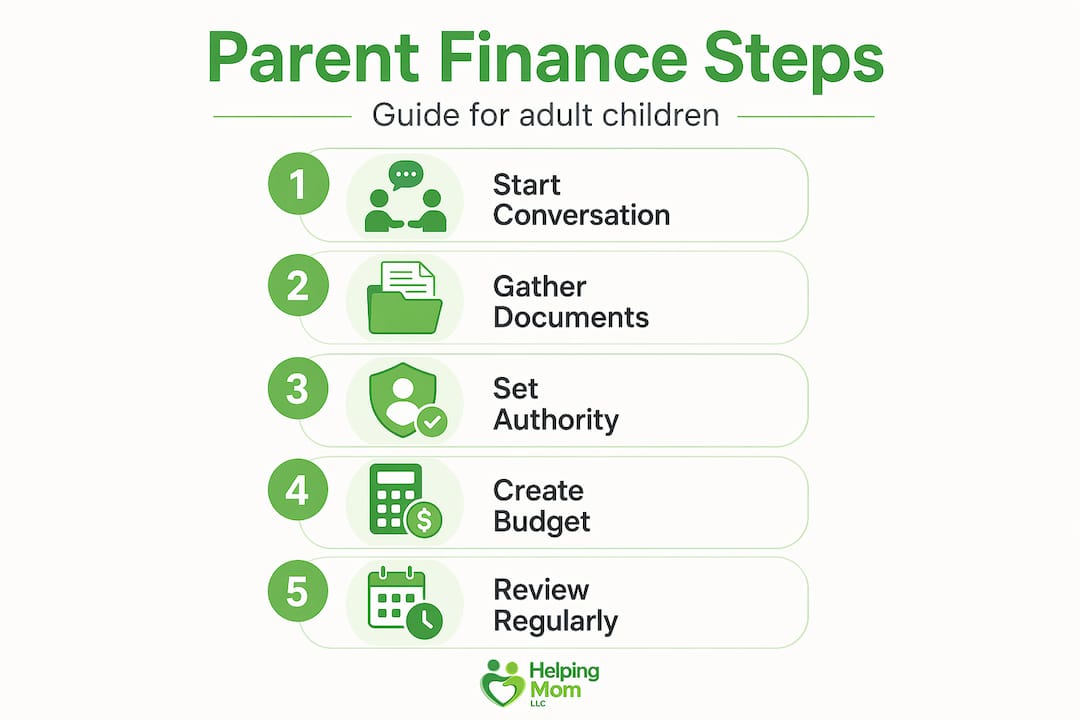
The good news is that you do not have to figure everything out at once. This guide walks through the essentials: organizing important documents, understanding power of attorney, building a realistic monthly budget, protecting against scams, and finding programs that may reduce costs significantly.
| Point | Details |
|---|---|
| Start before a crisis | Beginning financial conversations early avoids conflict and keeps your parents in the decision. |
| Legal documents come first | A durable power of attorney is your most important financial tool, and banks may require their own form. |
| Build a working budget | Track fixed, variable, and healthcare costs monthly so nothing slips through the cracks. |
| Fraud is a real and growing risk | Seniors lost $2.4 billion to fraud in 2024. Trusted contact designations add a layer of protection. |
| Benefits can reduce costs significantly | Programs like Medicare Savings Programs may eliminate premiums and deductibles for eligible parents. |
Before you can help manage your parents' finances, you need to see the full picture. That means sitting down together, ideally before any crisis emerges, and gathering the documents that tell the story of their financial life.
Here is what you are looking for:
Once you have these collected, organize them in a secure location. A fireproof box or a password-protected digital folder with a trusted backup works well. The goal is not to take over but to understand.
Starting these conversations early respects your parents' independence and gives everyone time to plan thoughtfully rather than reactively.
Pro Tip:
Invite your parent to lead this process as much as possible. Framing it as "I want to know how to help you if you ever need it" lands very differently than "I need access to your accounts."
This early work also helps you spot potential gaps. Maybe there is no long-term care insurance. Maybe a recurring subscription has been forgotten. Maybe income does not quite cover monthly expenses. Knowing this now gives you time to address it calmly, together.
Once legal documents are in place, the practical work of managing elderly finances day to day begins. The goal is not perfect financial management. The goal is creating simple systems that reduce stress and prevent small problems from becoming larger ones.

Setting up automatic payments for recurring bills like utilities, insurance premiums, and mortgage or rent removes the risk of missed payments due to forgetfulness or illness. That said, someone should review these charges monthly. Billing errors happen, and forgotten subscriptions can add up quietly.
For banking access, consider these options carefully:
Lets you act on an account without owning it. Lower risk than a joint account.
Monitor activity and catch unusual charges without taking over their finances.
A shared spreadsheet helps both of you stay on the same page without constant calls.
Build a monthly budget that accounts for three categories:
Schedule a brief financial review every quarter. A thirty-minute conversation over coffee, either in person or by phone, to review recent bills and check that income is covering expenses is enough to catch problems before they grow.
Pro Tip:
Keep a simple running document that tracks any unusual expenses: an emergency room visit, a new prescription, a one-time repair. Over time, this gives you a real picture of what care actually costs, which helps with planning for aging parent care down the road.
The financial risk to your parents is not only from poor planning. It is also from people who target seniors specifically. Fraud losses among adults 60 and older reached $2.4 billion in 2024, a fourfold increase from 2020. Many individual losses exceeded $100,000.
Common scams targeting seniors include:
Promising unusually high returns with little risk
Someone claims to fix a computer and gains remote access
Fake IRS agents, Social Security officials, or family in distress
Conducted over social media or email over weeks or months
"No financial plan is immune to exploitation. Continuous vigilance and professional collaboration are key.
— J.P. Morgan Wealth Management
Warning signs worth watching for:
One of the simplest protective steps is adding a trusted contact on financial accounts. This allows a designated family member to receive alerts about suspicious activity without transferring any account ownership. It is a low-barrier safeguard that many families overlook.
Working with an elder law attorney and a financial advisor who specializes in seniors adds another layer of oversight. Regular professional reviews reduce caregiver burden and increase the chances of catching exploitation early.
Contact the FTC at reportfraud.ftc.gov and your state's adult protective services immediately.
Many families pay out of pocket for expenses that programs could cover, simply because they do not know the programs exist. Medicare Savings Programs (MSPs) are one of the most valuable and underused forms of financial support for seniors.
The Qualified Medicare Beneficiary (QMB) program, for example, covers Medicare premiums, deductibles, and co-payments for individuals with income below roughly $1,325 per month and resources under $9,660. Similar programs at slightly higher income thresholds, including the Specified Low-Income Medicare Beneficiary (SLMB) program, cover Part B premiums. Eligibility thresholds and covered costs vary by state, so checking with your state Medicaid office directly is worth the time.
| Program | What it covers | Income limit (individual) |
|---|---|---|
| QMB | Premiums, deductibles, co-pays | ~$1,325/month |
| SLMB | Part B premium only | Slightly above QMB |
| Extra Help | Prescription drug costs | Varies by year |
The Extra Help program, also called the Low Income Subsidy, helps with Medicare Part D prescription drug costs and can save seniors thousands annually on medications. Applications are available through Social Security. Your parent's eligibility for these programs should be reviewed each year, because income and resource thresholds change.
Area Agencies on Aging in every state can connect you with local assistance for utilities, transportation, meals, and home modification. These are often free to access and can reduce monthly expenses for elderly care meaningfully.
I have seen what happens when families wait. A parent falls. A diagnosis arrives. Suddenly, adult children are calling banks, searching for insurance paperwork, and trying to understand Medicare in the same week they are also grieving and scared. It does not have to go that way.
What I have learned, both from experience and from working alongside families in this space, is that the legal and financial pieces are genuinely manageable when you start before you are in crisis. The POA bank form issue trips up almost everyone who has not been warned. The budget gaps are almost always bigger than expected, especially for memory care. And the scam risk is real in a way that most families do not take seriously until it happens to someone they know.
The emotional piece is just as real. This is not about taking control of your parents' lives. Walking alongside them while they can still make decisions, helping build systems together, treating this as a shared project rather than a takeover, matters enormously. Your parents' sense of dignity and independence is worth protecting through every step of this process.
If anything feels overwhelming, the best first step is simply one conversation, one document, one account reviewed.
You do not have to do this all at once.
Most families figure this out one conversation and one document at a time.
At Helping-mom, we know that financial planning is just one piece of a much larger picture. When you are supporting aging parents through this season of life, safety at home, caregiver wellness, and family communication all matter just as much as the paperwork. If these conversations are becoming emotionally difficult, our guide on talking with aging parents about getting help may also help.
Practical steps to reduce fall risks and make aging in place more realistic.
Learn moreGuides, checklists, and tools organized by topic so you can find what you need.
BrowseEverything you need to support your aging loved ones with confidence.
Visit siteA durable power of attorney is the most critical document for financial caregiving. It grants you legal authority to manage your parent's finances even if they become incapacitated, unlike a general POA, which becomes invalid at that point.
Start by having your parent add you as an authorized signer on their accounts while they are still mentally competent. Ask the bank specifically whether they require their own POA form, as many institutions do not accept outside documents without their own paperwork on file.
Medicare Savings Programs like QMB and SLMB can cover Medicare premiums, deductibles, and co-payments for parents who meet income and resource limits. The Extra Help program also assists with prescription drug costs through Medicare Part D.
Add a trusted contact designation to their financial accounts so a family member receives alerts about suspicious activity. Review transactions regularly and talk openly with your parent about common scams, especially impersonation calls, tech support fraud, and online investment offers.
Start well before any crisis arises. Financial planning for aging parents is most effective and least conflict-prone when begun years in advance, while your parent can still participate fully in decisions.