A calm, practical guide on choosing, placing, and discussing bathroom safety with compassion and confidence.
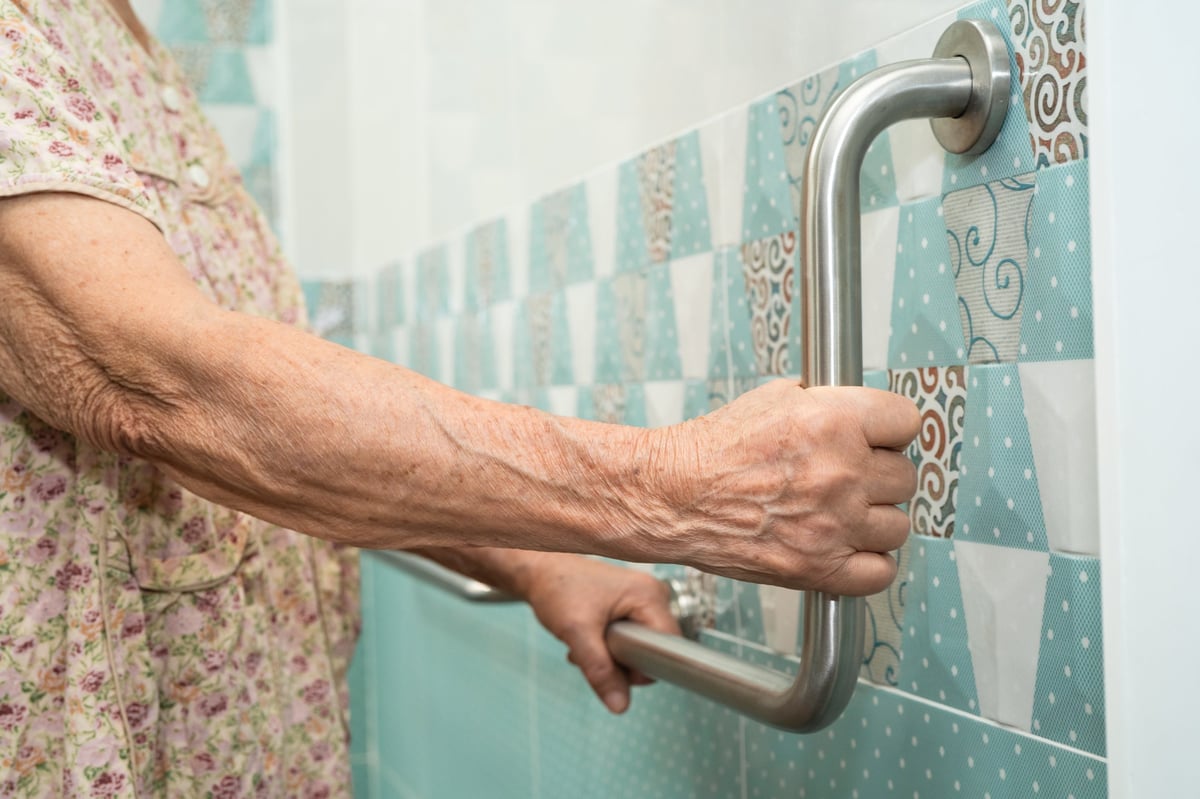
Injury Prevention
CDC: Bathroom = #1 hazard
You may already be noticing it.
Your mom reaches for the vanity when she turns from the sink. Your dad pauses a little longer before stepping over the tub edge. Nothing dramatic has happened. It is just a small hesitation, the kind that is easy to dismiss and hard to forget.
That is often how bathroom safety begins. Not with a crisis, but with a moment that makes you think, maybe we should make this easier now, while it still feels simple.
As a Senior Home Safety Specialist, I have seen how small changes like properly placed grab bars can quietly prevent bigger problems while preserving independence and privacy.
The best bathroom grab bars for elderly parents are not just about preventing falls. They make everyday routines feel steadier, less tiring, and more manageable without needing help. For many families, that matters just as much.
If you want a simple way to walk through your home and spot risks like this, start with the Calm Home Safety Starter Checklist. It is designed to help you make practical changes without overwhelm.
A helpful way to think about grab bars is this. They support the life your parent is already living. They are not a signal of decline. They are a practical upgrade that makes daily movement safer and more comfortable.
When reviewing resources, keep the focus on what works in your parent's actual space. For a broader look at fall prevention, you can reference national data from the CDC, but most of your decisions will come from what you observe at home.
Also, whenever possible, prioritize guidance that keeps everything within your own home safety plan. For example, improving traction, lighting, and layout alongside grab bars will make the biggest difference over time.
If you are continuing to build out your bathroom safety plan, you may also want to review:
Over time, this becomes less about one product and more about creating a space that works with your parent, not against them.
This conversation goes better when it feels respectful from the first sentence.
Most parents do not want to feel managed by their children. Even when they know a change makes sense, they may push back if the topic arrives as a verdict. The goal is not to "convince" them. The goal is to invite them into a decision about their own comfort and independence.
You might say:
"I noticed the bathroom could be easier to use. What would make it feel more comfortable for you?"
"I've been thinking about small updates that could help everyone feel steadier in there."
"Would you be open to looking at a few grab bar options together?"
These openings work because they leave room for your parent to respond as an adult with preferences, not as someone being corrected.
Research reveals surprising openness
72.3% of adults ages 18 to 39 said they would use a grab bar if installed, and adoption increased significantly with age. This points to broad practical appeal rather than a niche "old age" device.
Instead of saying, "You're getting unsteady," try:
That keeps the focus on the environment, not your parent's identity.
People usually resist less when they still have control. A few ways to keep that control with them:
Ask where support would feel most useful.
Some parents care most about the shower entrance. Others want help near the toilet.
Let them weigh appearance as well as safety.
They may prefer a bar that blends with the bathroom hardware instead of looking clinical.
Invite a trial mindset.
You are not redesigning their whole life. You are making one space easier to use.
Try this sentence if emotions are running high:
"I'm not trying to take over. I just want the bathroom to work better for you."
A parent can agree with the idea and still feel uneasy about what it represents. That does not mean the conversation failed. It may mean they need time. You do not have to win the whole discussion in one sitting.
If you live far away, a photo or video call can help. Ask them to walk you through the bathroom and show where they naturally place a hand when moving around. That gives you something concrete to discuss together.
Grab bars are there to help your parent keep doing things for themselves. They support privacy. They support confidence. They support staying at home longer with less strain. When the conversation stays centered on those values, it tends to feel less like a loss and more like a smart upgrade.
Not all grab bars are equally useful. Some look attractive but are hard to grip. Some fit the room but not the person.
A real grab bar is made to support body weight. ADA-compliant grab bars must support at least 250 pounds and typically have a diameter of 1.25 to 1.5 inches.
If a product does not clearly indicate that it is a grab bar with an appropriate load rating, skip it.
The bar should fit the hand, not just the wall. Textured surfaces can improve traction for wet hands, which is especially important for someone with reduced grip strength or arthritis.
"That one feels easier to trust" — pay attention to that response.
Bathrooms stay damp, and hardware has to hold up over time. Stainless steel is a common favorite because it resists corrosion and feels solid. Aluminum can also work well in humid spaces.
Many bars come in finishes that blend in with faucets and other fixtures.
Straight bars are the most versatile, but they are not the only option. Some people do well with vertical bars, angled bars, or combination styles.
Shape should match the movement, not just the wall.
| Feature | Consideration | Best For |
|---|---|---|
| Weight rating | Look for at least ADA-compliant 250 lb support | Any area where weight shifts suddenly |
| Diameter | 1.25 to 1.5 inches for secure grip | Most adults, especially beginners |
| Textured finish | Improves wet hand traction | Shower and tub areas |
| Stainless steel or aluminum | Resists bathroom moisture well | Long-term humid room use |
| Straight bar | Simple and flexible | Toilet, shower walls, tub walls |
| Vertical or angled bar | Supports specific movements | Shower entry, personalized setups |
Think about the whole bathroom, not just the bar.
A grab bar works best as part of a safer setup. If the floor is slick, or the tub bottom feels slippery, your parent still may not feel secure even with a solid bar.
Placement is where a good idea becomes a useful one.
A strong bar in the wrong spot can still be awkward. The right placement follows your parent's real movements. Where do they pause? Which hand reaches out first? Do they push up, pull up, or do a bit of both?
That is the information that matters most.
A common reference point is to place toilet-area bars at a height that allows for comfortable use, often at a standard height above the floor, with adjustments based on the person using them.
That gives you a starting range, not a rule carved in stone. Some parents are taller. Some lean heavily on one side. Some need support earlier in the motion of standing, while others need it at the end. The best placement reflects the body in front of you, not just the diagram on the box.
This is often the place where sitting down and standing up need the most help. A bar beside the toilet usually matters more than one behind it.
Stepping over an edge or crossing onto a wet floor is a common point of hesitation. A vertical bar often helps here because it gives the hand something natural to grasp.
Once inside, support may be needed while turning, washing, or shifting weight. A horizontal bar can give steadiness during those small movements.
This is especially important when your parent has hand stiffness, tremor, or joint pain.
Combining a vertical bar for pulling up with a horizontal bar for stability can work better than a single bar. Angled bars can reduce joint strain during use for conditions such as arthritis or Parkinson's.
Watch how they move. Ask what feels awkward. Then place support where the motion happens.
A useful question is:
"Where do you wish there were something solid to hold?"
It helps to have your parent stand, turn, sit, and mimic the motion of stepping into the shower while you observe.
Look for:
The best placement often looks obvious in hindsight. It is the spot your parent reaches for without being told.
A grab bar only helps if it stays firmly attached when someone suddenly puts weight on it.
If you or someone in the family is comfortable with tools, understands wall structure, and knows how to secure hardware properly, a do-it-yourself install may be possible.
DIY tends to work best when:
This is not the place for improvisation. If you are unsure whether a wall can support the bar, uncertainty is already useful information.
Many bathrooms are more complicated than they look. Tile, older walls, hidden plumbing, and waterproof layers can all make the job harder.
Professional installers deal with those details every day. They are also less likely to turn a safety project into a repair project.
Drilling through a shower's waterproofing membrane, even if sealed with caulk, can create a path for hidden leaks over time, leading to mold and structural damage.
| Option | Good Fit When | Main Caution |
|---|---|---|
| DIY installation | You have solid experience with secure mounting and the wall type is clear | A bar that feels secure at first may still be poorly anchored |
| Professional installation | The bathroom has tile, complex walls, or uncertain backing | Costs more, but can reduce guesswork and hidden damage risk |
If you are deciding between the two, ask yourself:
Do I know exactly how this bar will be anchored?
Am I confident about what is behind this wall?
Would I trust this installation if my parent slipped and grabbed it hard?
If any answer is "not really," that is a strong sign to bring in help.
Peace of mind counts here. A professionally installed bar often feels different because everyone in the house trusts it.
The best route is the one that leads to a secure result, not the one that feels fastest.
Turn a big decision into a short list you can use on your phone, on paper, or during a call with siblings.
Free printable checklist • PDF format
Talk with your parent first
Ask what feels awkward in the bathroom and what kind of support would feel useful.
Notice their natural movements
Watch where they reach when standing up, turning, or stepping into the shower.
Identify the priority area
Pick one place to start. For many families, that is the toilet area or shower entry.
Choose a true grab bar, not a look-alike
Make sure it is designed for support, not just decoration.
Check grip comfort
Consider diameter, finish, and how the bar feels in your parent's hand.
Think about moisture and upkeep
In a humid bathroom, durable materials and easy-to-clean finishes usually make life simpler.
Mark likely hand positions
Use painter's tape or sticky notes on the wall to test where support seems most natural.
Have your parent try the motion
Let them mimic sitting, standing, and stepping in or out while you watch.
Adjust for comfort
If the taped location looks good on paper but feels awkward in practice, trust the trial.
Be honest about your skill level
A straightforward wall is one thing. Tile and waterproofing are another.
Get help if the wall is uncertain
A professional can be the simpler option, especially in showers.
Ask about secure mounting
Whether you do it yourself or hire someone, the key question is: Will this hold reliably under sudden weight?
The best setup often comes from one quiet observation session, not from shopping longer.
When we suggest products, we focus on simple, dependable options that hold up over time and feel comfortable to use every day.
We tend to choose options that blend into the home rather than stand out as medical equipment.
The goal is always the same. Support that feels natural, reliable, and easy to trust without thinking twice.
As we continue to test and use products in real homes, we will expand this section with specific recommendations and the reasons behind each choice.
A few questions that come up almost every time families look into grab bars.
Grab bars can bring up a lot of feelings.
For you, they may represent worry, responsibility, and the quiet realization that your parent needs more support than before. For your parent, they may stir up pride, resistance, relief, or all three at once.
That is normal. What helps is remembering what this change is really for. It is not about taking over. It is about making daily life easier to manage alone.
A thoughtfully chosen and well-placed grab bar can protect privacy, reduce strain, and help your parent keep moving through familiar routines with more confidence.
That is why the "how" matters as much as the "what."
When you involve your parent in the conversation, choose features that fit their hands and habits, and take installation seriously, the result feels less like a safety device and more like a practical part of the home.
Quiet support is often the best kind.
If you are working through this now, you do not need to do everything at once. One careful decision is enough to begin.
Helping Mom LLC offers calm, practical guidance for adult children supporting aging parents at home. If you want more steady, non-alarmist help with home safety, caregiving decisions, and aging in place, visit Helping Mom LLC.