
One of the hardest parts of caring from a distance is feeling like you aren't doing enough. The truth is, your role simply looks different. You may not be there every day, but you can become the person who keeps everything connected. This practical guide walks you through what long-distance caregiving actually involves — from building a local support network to using technology intentionally and protecting your own well-being along the way.
Long-distance caregiving often feels reactive. You wait for updates, worry between phone calls, and wonder whether you are missing something important. This guide is designed to replace that ambient worry with a concrete plan.
Long-distance caregiving means supporting a loved one who lives an hour or more away, whether that's across the state or across the country. When you're caring for elderly parents from a distance, you may not be there for the daily moments, but your role is real and it matters. The National Institute on Aging defines this role broadly: it includes managing finances, coordinating care, planning for emergencies, and staying connected with the people who are physically present.
One of the hardest parts of caring from a distance is feeling like you aren't doing enough. The truth is, your role simply looks different. Think of yourself less as a hands-on helper and more as a coordinator and communication hub — the person who connects the right people and makes sure nothing falls through the cracks. That simple shift in perspective can lift a surprising amount of guilt.
Here's what caring from a distance typically looks like in practice:
You don't have to solve everything this week. Start with the next important step, then build from there.
Caring from afar comes with real friction. Travel costs, time zone differences, and the simple fact of not being there can leave you feeling helpless. Many long-distance caregivers carry a quiet, constant worry. You wonder if everything is okay. You wonder whether your loved one is telling you the whole story. You wonder what happens if something changes tomorrow.
When I help my own mother from a distance between visits, I've learned that a five-minute phone call often tells me less than a quick FaceTime conversation. Seeing her face, the house behind her, and how she's moving gives me information I would otherwise miss.
The good news is that most of these challenges have practical solutions. The VA's caregiving resources note that remote caregivers can succeed by planning ahead, building a local team, and using available tools. Here's where to focus:
Pro Tip: Set a recurring weekly call with one trusted local contact, not just your loved one. That single habit gives you a reliable read on how things are actually going.
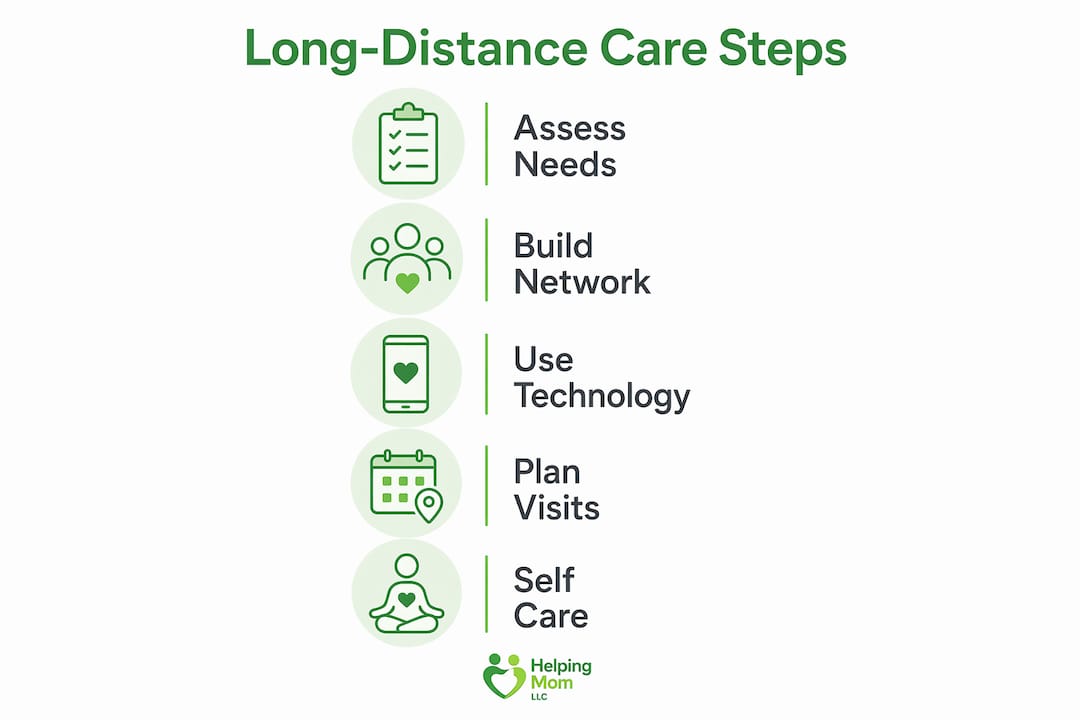
Technology will never replace being there, but it can help you stay connected between visits. Telehealth and video calls let you sit in on medical appointments, ask questions in real time, and see your loved one's face rather than just hearing their voice. Even a short video call lets you notice things that never come across on the phone — whether Mom looks tired, if she's wearing the same clothes several days in a row, or whether she's moving comfortably around the house. That visual check-in often tells you more than a phone call ever could.
A few tools worth knowing about:
When introducing new technology, a practical approach is to cover the cost yourself and set it up during a visit. Seniors are far more likely to use a device when someone they trust has shown them how it works and there's no financial barrier on their end. For telehealth specifically, an online doctor visit through insurance can be a straightforward way to keep your loved one connected to their care team between in-person appointments.
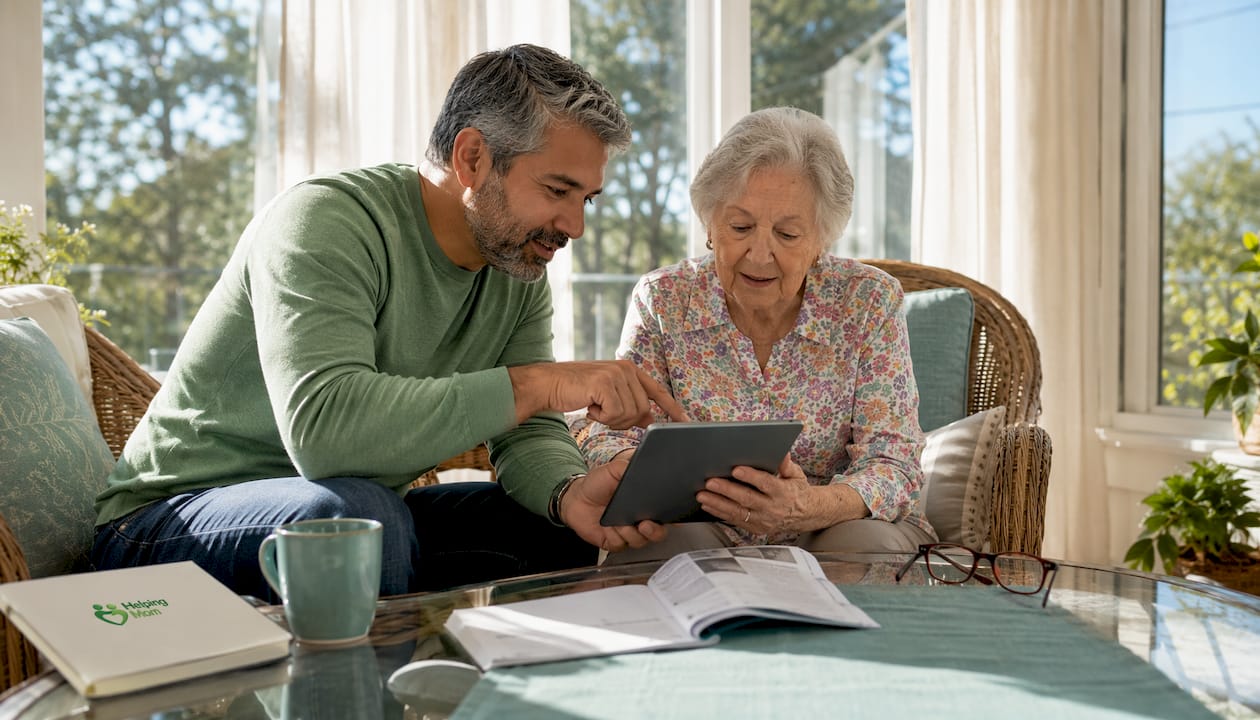
You need partners on the ground. No one should try to do this alone — not the person living nearby and not the family member living hundreds of miles away. As the National Institute on Aging advises, building a reliable local team is one of the most effective things a remote caregiver can do. That team might include a nearby sibling, a trusted neighbor, a home health aide, and a care manager who can coordinate services professionally.
Local community organizations are also worth exploring. The Alzheimer's Association notes that area aging agencies often provide meal delivery, transportation, and wellness checks that you can arrange remotely. Your loved one's local Area Agency on Aging (searchable through Eldercare Locator at eldercare.acl.gov) is a good starting point.
When you do visit, make it count. The Alzheimer's Association recommends scheduling visits to include medical appointments, home safety checks, and time with local caregivers. Before you arrive, ask your loved one what they actually want to do together. That conversation shapes a better visit than any checklist.
A few things to prioritize during in-person time:
Pro Tip: Organize all critical documents in one shared digital folder before your visit ends. Tools like Google Drive or a secure family portal mean anyone on the care team can access what they need without calling you first.
Legal preparation matters too. Make sure you have written permission to speak with your loved one's medical providers. A healthcare proxy and durable power of attorney, put in place before a crisis, make it much easier to help when difficult decisions have to be made. For guidance on coordinating care for an aging parent, Helping-mom has a practical family guide that walks through these steps.
Remote caregiving can quietly wear you down. The distance adds a layer of helplessness that on-site caregivers don't always feel, and the worry doesn't clock out when your workday ends. Acknowledging that is the first step toward managing it well.

Open communication and planning are two of the most effective tools for reducing that emotional weight. When you have a written care plan, a reliable local team, and regular check-ins scheduled, the uncertainty shrinks. You're not waiting for something to go wrong; you're already prepared.
A few practices that genuinely help:
The VA's long-distance caregiving handout mentions metta meditation, a practice of directing loving kindness toward others, as one tool for managing the emotional weight of remote care. Whether or not that resonates with you, the underlying point holds: caring well from a distance requires tending to your own emotional state, not just your loved one's needs.
Helping-mom's caregiving resource library covers caregiver wellness, family communication, and practical planning in plain language, without clinical jargon or alarm.
Distance changes how you care, but it doesn't lessen your love or your importance. Your parent doesn't measure your care by the number of miles between you. They measure it by the consistency of your calls, the planning you do behind the scenes, and the confidence that someone is looking out for them. Sometimes the greatest gift you can give isn't being there every day — it's making sure they are never facing life alone.
If you're thinking about home safety for your loved one, Helping-mom's practical home safety guide is a good place to start. It covers the modifications that matter most for aging in place, written for adult children who want clear guidance without the overwhelm.
Long-distance caregiving works best when you act as a coordinator and communication hub, building a reliable local team rather than trying to manage everything alone.
| Point | Details |
|---|---|
| Define your role clearly | Long-distance caregivers coordinate care, manage finances, and serve as the central contact for local helpers. |
| Build a local team first | Neighbors, paid aides, and nearby family members are your most valuable resource when you can't be present. |
| Use technology with intention | Video calls, shared calendars, and telehealth visits keep you informed and involved without requiring travel. |
| Make visits purposeful | Schedule medical appointments, home safety checks, and respite time for the primary caregiver during each visit. |
| Protect your own well-being | Open communication, shared responsibilities, and realistic expectations reduce caregiver stress over time. |
Yes. Long-distance caregivers play a vital role by coordinating services, managing finances, and staying connected through regular communication and technology, even without being physically present every day.
Caregiver fatigue is the physical and emotional exhaustion that builds when caregiving demands consistently outpace rest and support. Remote caregivers are especially vulnerable because the worry rarely stops, even when they're not actively doing caregiving tasks.
Caregiving centers on supporting a person's independence and well-being while respecting their choices. Caretaking tends to involve doing things for someone rather than with them, which can unintentionally reduce their autonomy over time.
Start by organizing key documents, building a local support network, and scheduling regular check-ins. Use telehealth to stay involved in medical care, and plan visits to cover healthcare appointments and home safety assessments.
Long-Distance Caregiving Tips for Adult Children
How to Support Aging Parents: Practical Steps for Families
Supporting Aging Parents: A Calm, Practical Guide for Adult Children
Caregiver Support - Resources & Support for Family Caregivers