Thinking about a parent's safety at home can feel overwhelming. It's natural to be concerned about falls or other emergencies, but it can be difficult to know where to begin without causing alarm or feeling like you're taking over. This isn't about transforming their home into a sterile, medical environment; it's about making small, thoughtful adjustments that help their home continue to be a place of comfort, familiarity, and independence.
This elderly home safety checklist is designed to be a gentle, practical guide. It offers manageable steps you can take, often together with your parent, to address common safety concerns calmly and respectfully. We will walk through each area with a focus on simple changes that can make a significant impact on daily safety and peace of mind.
Instead of a daunting overhaul, this list breaks down the process into clear, actionable items for every room. You'll find specific tips for clearing pathways, improving lighting, and securing bathrooms, along with guidance on creating an emergency plan that feels reassuring, not restrictive. The goal is to provide a straightforward framework that helps you support their independence, maintain their dignity, and ensure their home remains their sanctuary. This guide can help you move from worry to confident action, one small step at a time.
Creating clear, unobstructed pathways throughout your parent's home is one of the most immediate and effective ways to support their safety. This first step on our elderly home safety checklist often costs nothing but can make an enormous difference in day-to-day confidence by addressing common, often overlooked, risks.
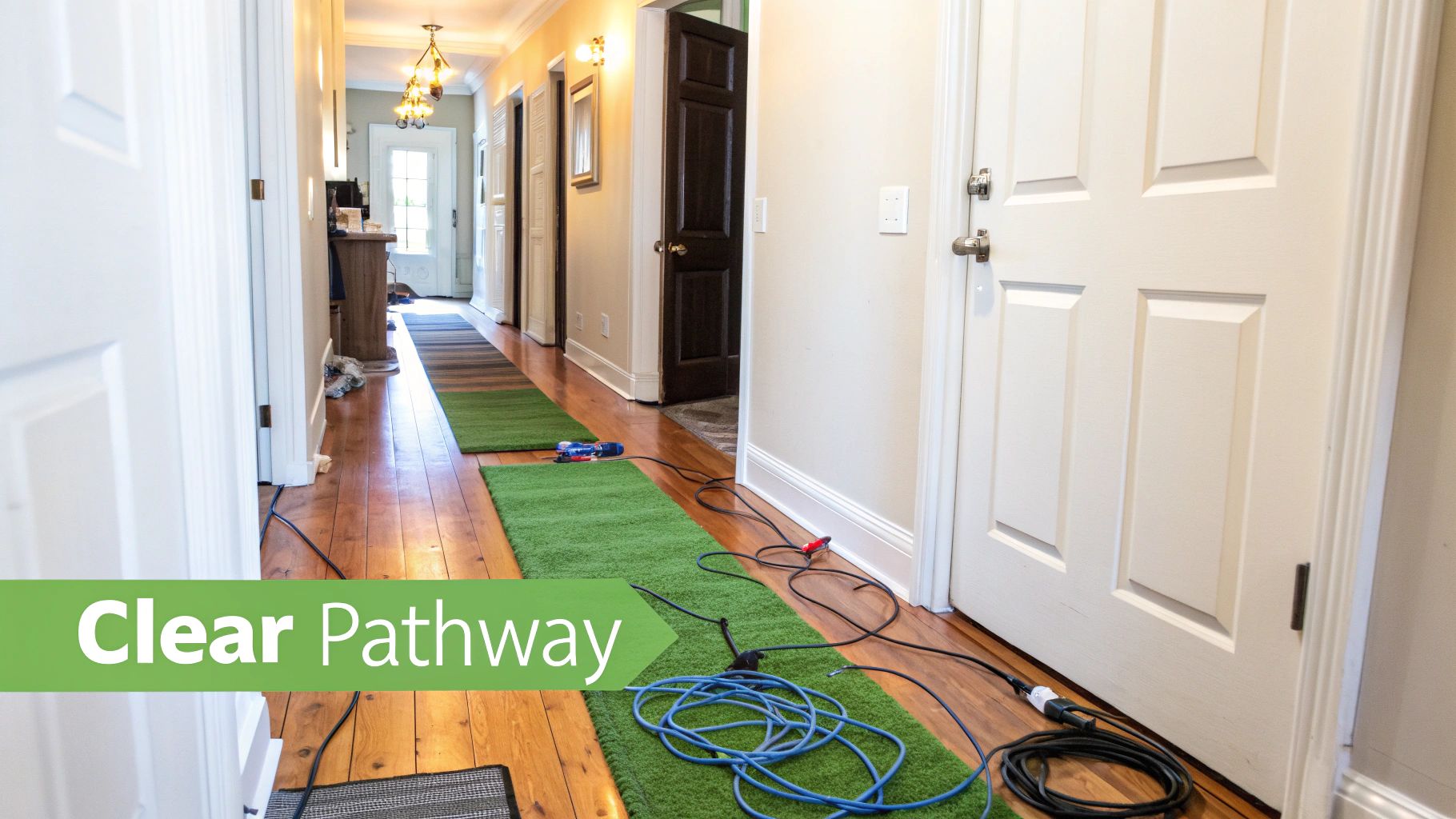
The goal is to ensure your parent can move freely from one room to another without having to navigate around obstacles. Even small changes in flooring or a stray cord can catch a foot, especially for someone with vision changes or balance challenges.
You can start by walking the most-used routes in the home: from the bedroom to the bathroom, the living room to the kitchen, and from the main entrance to the living area.
Involving your parent in this process is key to making it a positive experience. You could frame it as a way to make their home easier and more comfortable to live in, rather than as a critique. By working together, you can identify problem areas and find solutions that respect their belongings and independence. This simple but powerful action is a foundational part of any effective home safety plan.
Bathrooms are often a high-risk area in a home due to wet, slippery surfaces and the need to bend, sit, and stand. Installing properly anchored grab bars provides a stable handhold during these moments, offering support and confidence. Similarly, sturdy handrails along stairways are helpful for maintaining balance. This addition is a practical piece of infrastructure that supports safety and preserves independence.
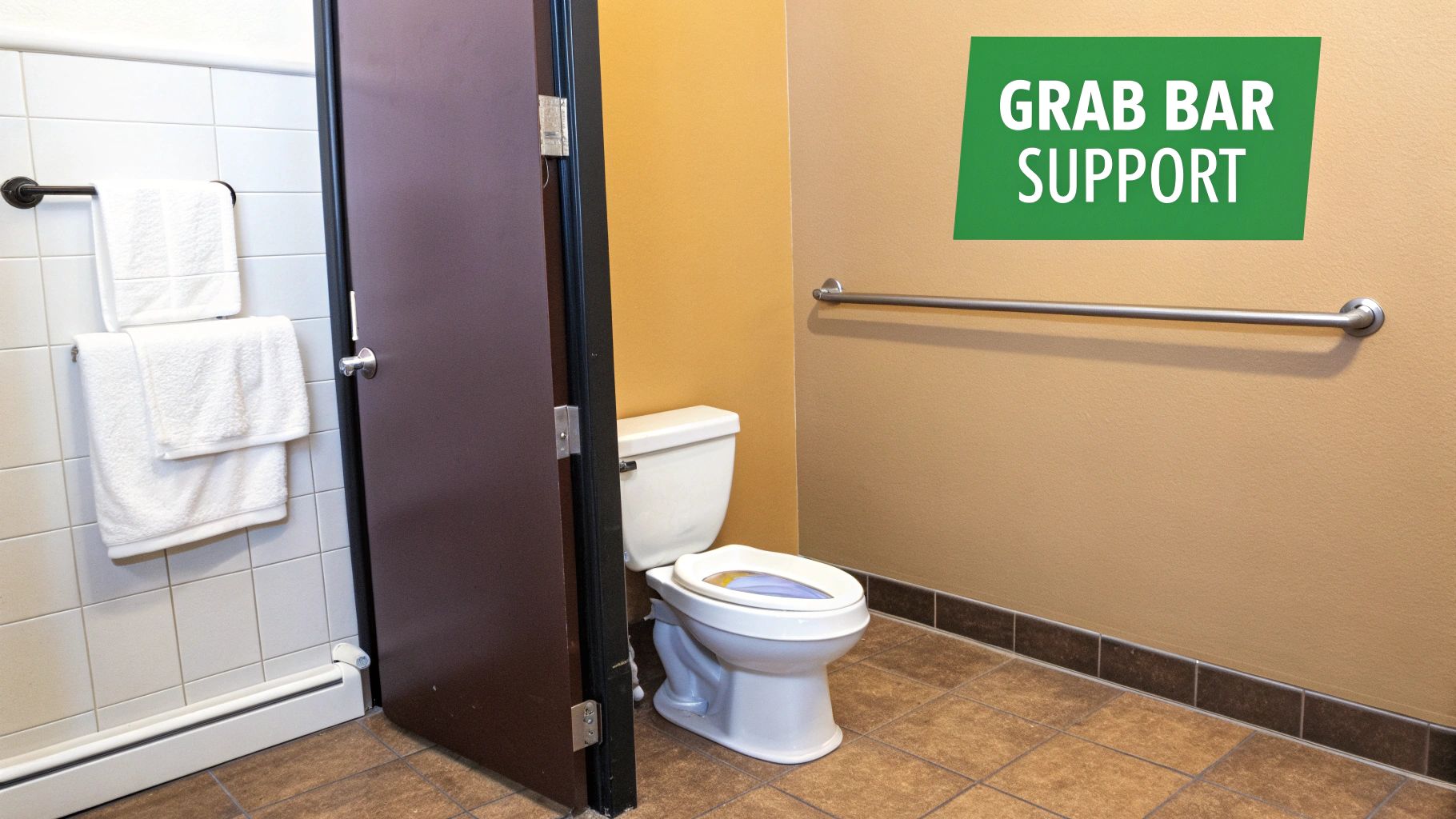
The goal is to give your parent something reliable to hold onto, reducing the physical strain and fall risk associated with activities like getting in and out of the tub, using the toilet, or navigating stairs. These are not just "medical" devices; they are simple supports that make daily routines safer for anyone, and they are a vital part of a comprehensive elderly home safety checklist.
It can be helpful to focus on locations where your parent transitions from sitting to standing or could use extra balance. Common, high-impact areas include:
Proper installation is very important for safety. Towel racks and soap dishes are not designed to support body weight and can fail when gripped. If you are not experienced with finding wall studs and anchoring hardware securely, it is often best to hire a professional handyman. You could frame the suggestion positively: "I was thinking about how helpful these would be for anyone. I'd like to get them for my own home, too." This normalizes the addition as a smart, practical upgrade rather than a sign of frailty.
For specific placement guidelines, you can learn more about ideal grab bar height to ensure maximum effectiveness and comfort.
Dim lighting can create a significant, yet often overlooked, safety concern. As we age, our eyes may require more light to see clearly, making once-familiar spaces feel less secure in low-light conditions. Nighttime trips to the bathroom or navigating hallways in the dark can become more challenging. Improving the lighting throughout your parent's home is a simple but powerful update that can enhance their ability to move around safely and confidently.
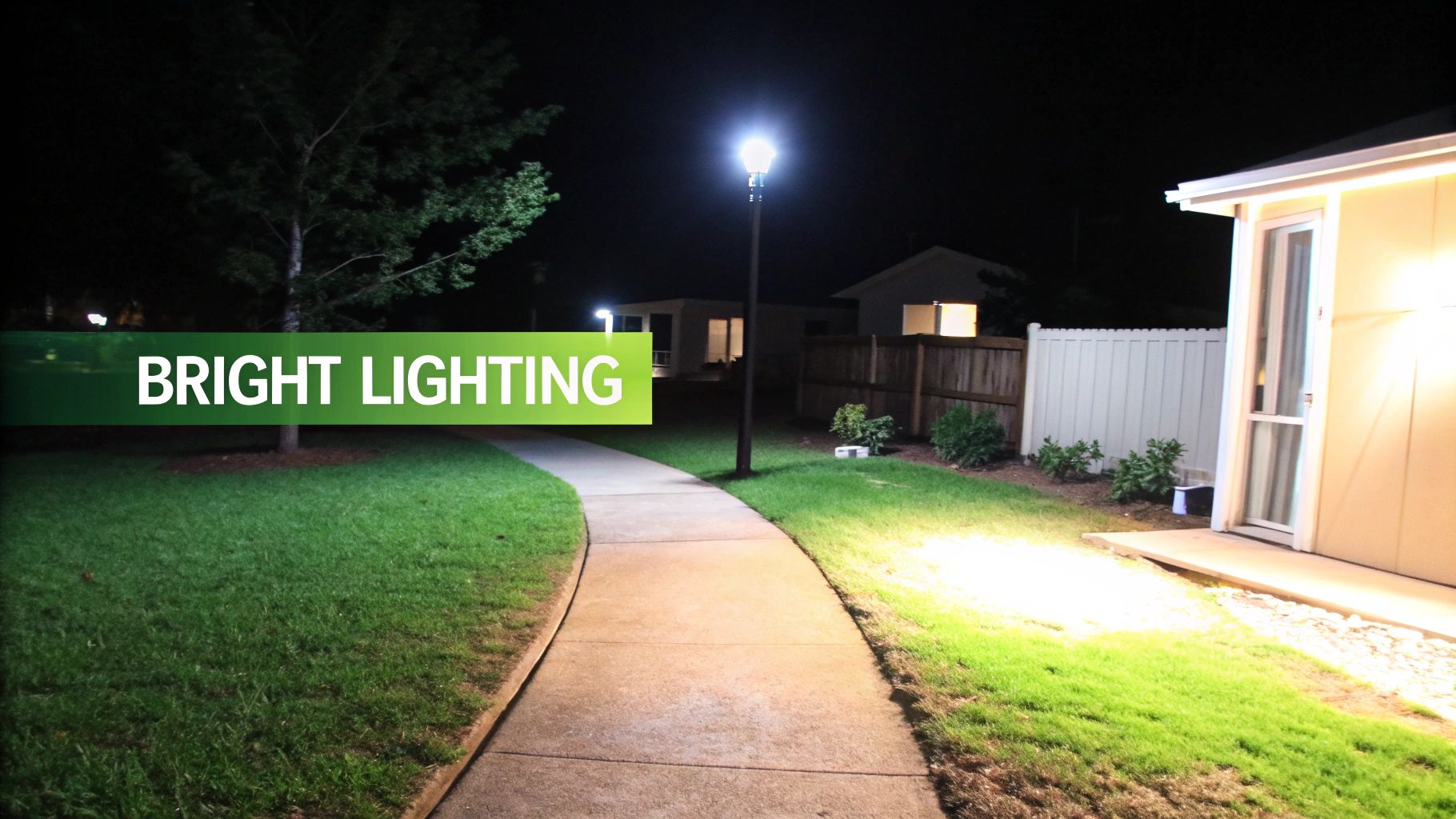
The goal is to eliminate dark corners, reduce harsh shadows, and ensure every path is well-lit, day or night. This is a crucial element of any elderly home safety checklist because it directly addresses potential age-related changes in vision and helps prevent falls caused by misjudging steps or bumping into furniture. Many effective lighting solutions are inexpensive and easy to install.
Walking through your parent's home during the day and again after dark can help identify poorly lit areas. It may be helpful to pay special attention to transition zones and key pathways.
When discussing lighting with your parent, you can frame it as a way to make reading more enjoyable or to make the home feel brighter and more welcoming. Involving them in choosing fixtures or the brightness of bulbs can make it feel like a home improvement project rather than a safety mandate. Simple upgrades, like swapping old bulbs for brighter, energy-efficient LEDs, can make a world of difference in creating a safer living environment.
Slippery surfaces are a significant concern, especially in high-risk areas like bathrooms and on stairways. Addressing these specific spots with non-slip materials is a direct, tangible way to improve home safety. This is a practical upgrade that your parent will feel and appreciate immediately, providing them with better footing and increased confidence as they move around their home.
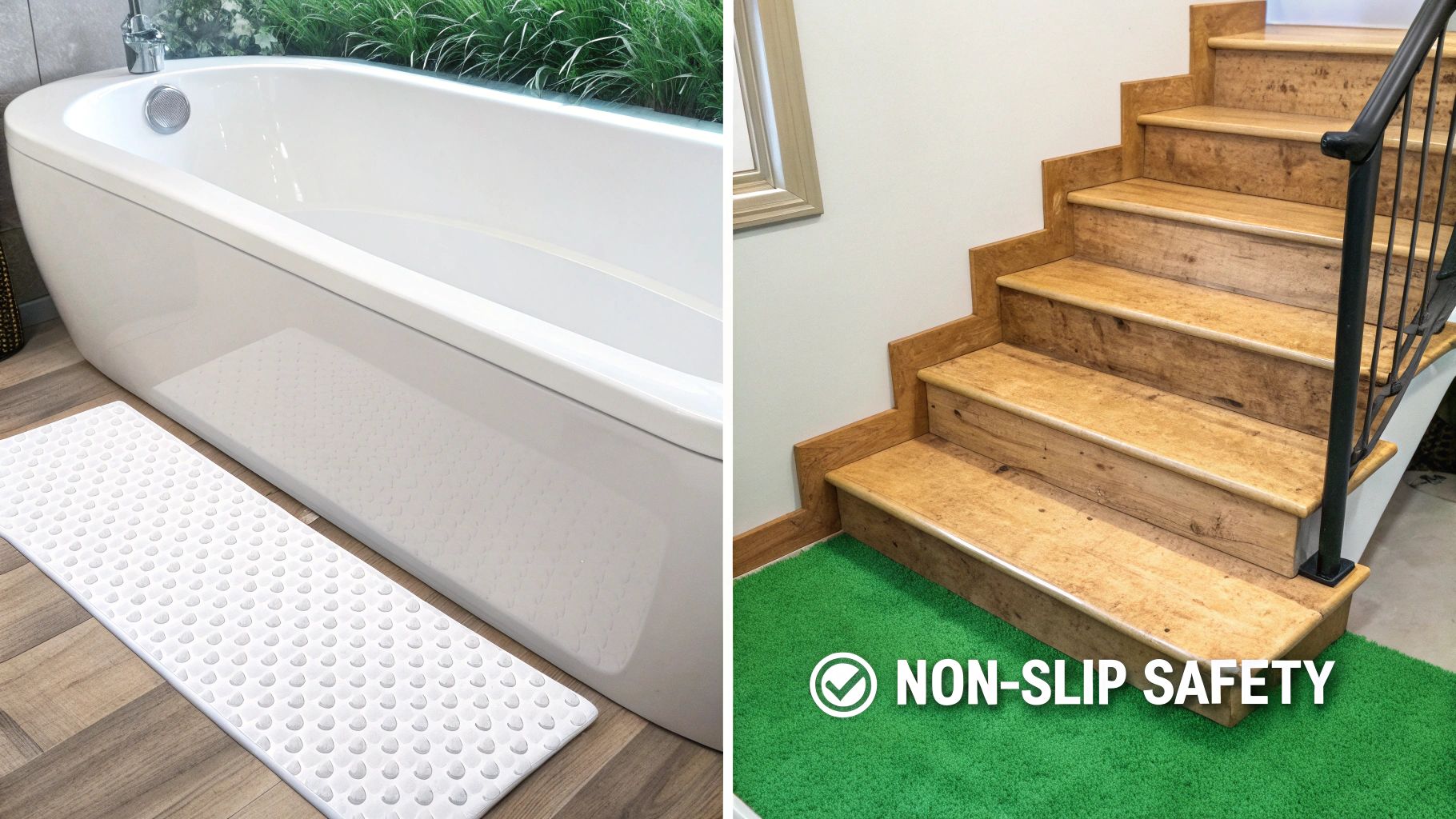
The goal is to add texture and grip to inherently slick surfaces. A wet tile floor, a smooth bathtub bottom, or polished hardwood stairs can sometimes cause a loss of footing. Adding a non-slip surface introduces friction, making these areas much safer to navigate, especially for someone who may have challenges with balance or mobility. This simple fix is a key part of any comprehensive elderly home safety checklist.
It can be helpful to focus on areas where water is present or where there are changes in elevation. These are common places for slip-related falls.
You might introduce this as a simple upgrade to make their home feel more secure, emphasizing the comfort and peace of mind it provides. For instance, you could say, "I noticed the tub floor gets a bit slick, and these non-slip strips could make it feel much more stable." When choosing products, it can be useful to look at reviews and select options that are durable and easy to clean, as dirt buildup can reduce their effectiveness over time. Combining non-slip surfaces with other safety aids, such as grab bars in the bathroom, creates a layered approach to fall prevention.
One of the more subtle safety considerations involves stretching, bending, or climbing to get something needed every day. Arranging frequently used items to be easily accessible, ideally between waist and shoulder height, is a proactive step in a comprehensive elderly home safety checklist. This simple organizational change can eliminate the need for unsteady movements and reduce potential frustration.
The goal is to thoughtfully place essential items in the most logical, convenient locations based on your parent's daily routines. By anticipating their needs, you can help arrange their environment to support their independence safely, preventing the use of an unsteady chair or footstool to reach a high shelf.
Thinking through a typical day in your parent's life, from morning to night, can help identify times they may have to reach, bend, or stretch for an item.
Are medications, a glass of water, reading glasses, a phone, and the bedside lamp all on the nightstand?
Could coffee, tea, favorite mugs, and common pantry staples be moved from high cabinets to an eye-level shelf?
Is the TV remote, reading material, and a phone on an end table right next to their favorite chair?
Are daily toiletries like a toothbrush and soap in a shower caddy or on the most accessible part of the vanity?
You can frame this reorganization as a collaborative effort to make their home more comfortable and functional. Asking questions like, "What do you find yourself reaching for most often in this room?" or, "Would it be easier if we moved your favorite snacks to this shelf?" can be a good start. Clear, labeled containers or baskets can also help keep items organized and easy to find. This thoughtful adjustment respects your parent's habits while quietly building a safer environment.
Beyond fall prevention, a critical part of an elderly home safety checklist is preparing for unseen dangers like fire or carbon monoxide, and for medical emergencies. Functional smoke and CO detectors provide an essential early warning system, while a centralized emergency information station ensures first responders have the vital details they need to provide fast, effective care.
This step combines routine equipment maintenance with simple, life-saving organization. It's about creating systems that work in the background to keep your parent safe, and preparing for moments when clear, immediate information can make all the difference.
A good starting point is checking the home's existing detectors and then creating a simple, visible information sheet. These two actions address both environmental and medical safety.
You can frame this as a routine home maintenance task and a smart organizational step. Many older adults appreciate having their important medical information organized in one easy-to-find place.
Work with your parent to test every detector by pressing the test button, and perhaps make it a habit to check them during each visit. A common way to remember to replace batteries is to do it annually when the clocks change for daylight saving time. For the information sheet, you could use a free template from a local hospital or agency on aging. Updating it together after every doctor's visit helps ensure it's always current. This small habit can provide immense peace of mind.
Clear vision is fundamental to navigating a home safely, yet it's an aspect of well-being that can quietly change over time. An outdated prescription or an unmanaged eye condition can increase the risk of misjudging steps or missing a potential hazard on the floor. Supporting your parent's vision is a proactive health measure that can significantly enhance their safety and confidence at home.
This part of the elderly home safety checklist connects health directly to the physical environment. If your parent cannot see a wrinkled rug or a small puddle clearly, even the most well-organized home can present a challenge. Ensuring they have the right eyewear and are using it consistently is a simple yet powerful way to support safety.
Vision-related risks aren't just about the eyes; they can manifest in how your parent interacts with their space. Observing their daily routines may offer subtle clues.
Suggesting an eye exam can feel sensitive. You could frame it as a routine part of overall health management, just like a dental cleaning. You might say, "I'm scheduling my annual eye exam and it made me wonder when your last one was. It might be good to get it on the calendar." By normalizing the process, you make it a simple health to-do rather than a comment on their capabilities. Helping them create a system for keeping glasses clean and accessible reinforces their independence.
Even with every precaution in place, accidents can still happen. If your parent has a medical emergency when they're alone, a personal emergency response system (PERS) can be a true lifeline. These devices provide a direct connection to a 24/7 monitoring center, ensuring help can be dispatched immediately, even if your parent can't reach a phone. For many families, this single tool provides the greatest peace of mind.
Often called medical alert devices, these systems typically involve a wearable button (pendant or wristband) that, when pressed, connects the user to a trained operator. Modern systems have evolved and now include features like automatic fall detection, GPS tracking, and sleeker, more discreet designs. This addition to your elderly home safety checklist is about ensuring a rapid response when it matters most.
The best system is one your parent will consistently and correctly use. Involving them in the selection process is helpful to find a device that fits their lifestyle and comfort level.
Does your parent prefer a necklace or a watch-style device? Modern options are often lightweight and less stigmatizing than older models. The goal is for them to wear it at all times, especially in high-risk areas like the bathroom.
Is automatic fall detection a useful feature? This can summon help even if your parent is unable to press the button. For parents who are still active outside the home, a mobile device with GPS can be valuable.
Is the device simple to operate and charge? It may be helpful to set up a daily or weekly reminder to ensure the battery is always powered. Testing the system together during setup and then periodically builds confidence.
You could frame the device as a tool for connection and independence. You might say, "This is for my peace of mind, so I know you can get help instantly if you ever need it." This makes it feel like a support system, not a loss of autonomy.
Once the system is in place, make sure emergency contacts are up-to-date with the service provider. Keep the device model and provider information in an accessible file. If cost is a barrier, you might investigate options through local Area Agencies on Aging, veteran benefits, or even some Medicare Advantage plans that may offer partial or full coverage.
Even in the safest home, having a consistent check-in routine and a clear response plan provides a crucial layer of security and peace of mind. This proactive step on our elderly home safety checklist creates a reliable communication loop, ensuring your parent feels connected and that help can be summoned quickly if needed. It's about creating a safety net built on communication and preparation.
The goal is twofold: to have a gentle, regular pulse on your parent's well-being and to have a pre-agreed-upon plan that removes guesswork during an emergency. Knowing what to do can empower both you and your parent, making a stressful situation more manageable.
You could begin by discussing the idea with your parent, framing it as a partnership to ensure they feel safe and connected, not monitored. The key is finding a rhythm that feels natural and supportive for both of you.
You can try to make the check-in something to look forward to, not a chore. Tie it to a daily event, like their morning coffee or after their favorite evening show. During these calls, asking open-ended questions like, "What did you do today?" instead of just, "Are you okay?" can foster genuine conversation and allow you to listen for changes in their tone or energy.
When creating the response plan, using collaborative language like, "What would make you feel most secure if something happened?" can be helpful. Revisit and update the plan together annually or whenever a significant life change occurs. This shared strategy ensures everyone is prepared and confident in the steps to take.
Stairs can become a significant challenge, requiring a combination of balance, strength, and good vision. Each step is a potential fall risk, making staircases one of the most critical areas to address in an elderly home safety checklist. Making stairs safer isn't just about preventing injury; it's about helping your parent maintain access to their entire home with confidence.
Whether it's a full flight of stairs or just a few steps leading to the front door, these high-traffic areas deserve special attention. Even small, thoughtful upgrades can dramatically improve safety and ease of use, ensuring your parent doesn't feel limited or anxious about moving around their home.
Taking a slow walk up and down the stairs with your parent, if possible, can help you observe how they navigate them. This can reveal specific areas of difficulty and help you prioritize the most impactful changes.
Discussing stair safety requires sensitivity, as it can touch on fears about losing mobility. You might frame the conversation around making things easier and more comfortable, not about what they can no longer do. For many families, creating a comprehensive plan is a key part of aging in place. You can explore more ideas in this complete aging in place checklist to see how stair safety fits into the bigger picture.
In some cases, the safest solution might be rearranging the home to move the primary bedroom to the first floor, eliminating the need to use stairs daily. This can be a proactive step that supports long-term independence.
| Item | 🔄 Complexity | ⚡ Resources | 📊 Outcomes | ⭐ Advantages |
|---|---|---|---|---|
| Remove Tripping Hazards | Low | Very low | Fewer trips/falls immediately | High impact, minimal cost |
| Install Grab Bars | Moderate | Low–Moderate | Reduced transfer-related falls | Stable support, preserves independence |
| Improve Lighting | Low | Low | Better night navigation | Inexpensive, immediate |
| Add Non-Slip Surfaces | Low | Low | Reduced slipping | Visible, removable, renter-friendly |
| Arrange Items Within Reach | Low | Minimal | Fewer risky reaches | Zero/low cost |
| Safety Devices & Info Station | Low–Moderate | Low | Life-saving alerts | Catastrophic risk reduction |
| Manage Eyewear | Moderate | Moderate | Better hazard detection | Most effective for fall-risk reduction |
| Emergency Response System | Low–Moderate | Moderate | Faster assistance after falls | Immediate help access |
| Regular Check-In Plan | Low | Minimal | Earlier detection of problems | Emotional reassurance |
| Address Stairs | Moderate–High | Moderate–High | Fewer stair-related falls | Directly mitigates high-risk area |
Navigating the path of home safety with an aging parent can feel like a big responsibility, and looking at a long checklist might seem overwhelming at first. But the goal of this guide isn't to create a weekend project that must be completed all at once. Instead, it's about fostering a collaborative, ongoing conversation and making gradual, meaningful adjustments that support your parent's desire to live independently and safely in their own home.
You've explored the essential areas of a secure living environment, from the ground-level importance of clear pathways and non-slip surfaces to the proactive measures of installing grab bars and improving lighting. Each item on this elderly home safety checklist represents not just a physical change, but a conversation and a shared decision. The most powerful tool you have is your ability to listen, observe, and approach these changes as a supportive partner.
The true success of implementing these safety measures often lies in how you approach them. It can be helpful to frame these changes around preserving independence, not highlighting limitations. Instead of saying, "You need a grab bar so you don't fall," you might try, "I think a grab bar right here would make getting out of the shower feel much more stable and secure. What do you think?" This small shift in language transforms a directive into a dialogue, respecting your parent's autonomy.
Think of this process as a gentle, continuous dialogue. Some changes, like removing a loose rug, are quick wins. Others, like discussing a personal emergency response system, may require more time and several conversations. That is perfectly okay. Progress is measured in small, steady steps, not giant leaps.
Key Takeaway
The checklist is a guide, but your relationship is the foundation. Prioritize open communication and collaborative problem-solving. Every small adjustment made together is a victory for both safety and your parent's sense of control.
Feeling unsure where to begin is a common and understandable feeling. The key is to avoid trying to tackle everything at once, which can lead to stress for both you and your parent. Instead, a calm, prioritized approach may be helpful.
If you noticed your parent struggling on the stairs or holding onto furniture for balance, you might focus on clearing pathways and ensuring handrails are secure. If the lighting in a hallway is dim, making a trip to the bathroom at night a challenge, you could start there.
Look for low-effort, high-impact changes. Swapping out old lightbulbs for brighter LEDs, adding non-slip mats to the shower, and organizing frequently used items in the kitchen are all simple tasks that can be done in an afternoon and make a significant difference.
Installing grab bars may require more planning, and potentially professional help. You can begin by researching options and having an initial conversation with your parent, framing it as exploring possibilities for the future.
Remember, the purpose of using an elderly home safety checklist isn't just about preventing falls; it's about creating an environment where your parent feels confident, secure, and empowered. Every modification, no matter how small, contributes to a larger sense of well-being and peace of mind for everyone. You are doing a wonderful job by simply being present, thoughtful, and proactive. Be patient with the process, be patient with your parent, and most importantly, be patient with yourself. One step at a time is more than enough.
For more compassionate guides and practical tools designed to help you navigate these conversations with confidence, explore our resources at Helping Mom LLC. We're here to support thoughtful adult children like you, providing clarity and reassurance for every step of the journey.
Explore More ResourcesHelping Mom provides calm, practical guidance for adult children supporting aging parents. Explore our guides and checklists for making homes safer, having difficult conversations, and caring for yourself along the way.
View Our Caregiving ChecklistLooking for more calm, practical guidance for supporting an aging parent?
Visit the Helping Mom Caregiving Resource Library to explore our full collection of caregiving guides, home safety resources, and practical checklists designed for adult children helping aging parents.
Browse the Caregiving Resource Library