Senior Mobility Gentle Exercises Caregiver Support

A Reassuring Guide to Gentle Bed Exercises for Elderly Parents

Discover safe and gentle bed exercises for elderly parents. This reassuring guide for adult children helps support mobility, comfort, and well-being.

Gentle bed exercises guide for elderly parents

When you notice a parent spending more time in bed, it's natural to feel a sense of concern. This isn't about pushing them into an intense workout. It's about introducing small, gentle movements that can help maintain comfort, support circulation, and preserve a sense of confidence—right where they are.

Think of it less as "exercise" and more as a quiet act of care.

Why Gentle Movement in Bed Can Be So Helpful

It can be unsettling to see a parent become less active. But the goal here isn't to reverse time or ask for more than they can give. It's to help them feel more comfortable and in tune with their own body, one small stretch at a time.

These simple motions often have a bigger impact than you might expect, touching on emotional and mental well-being, too.
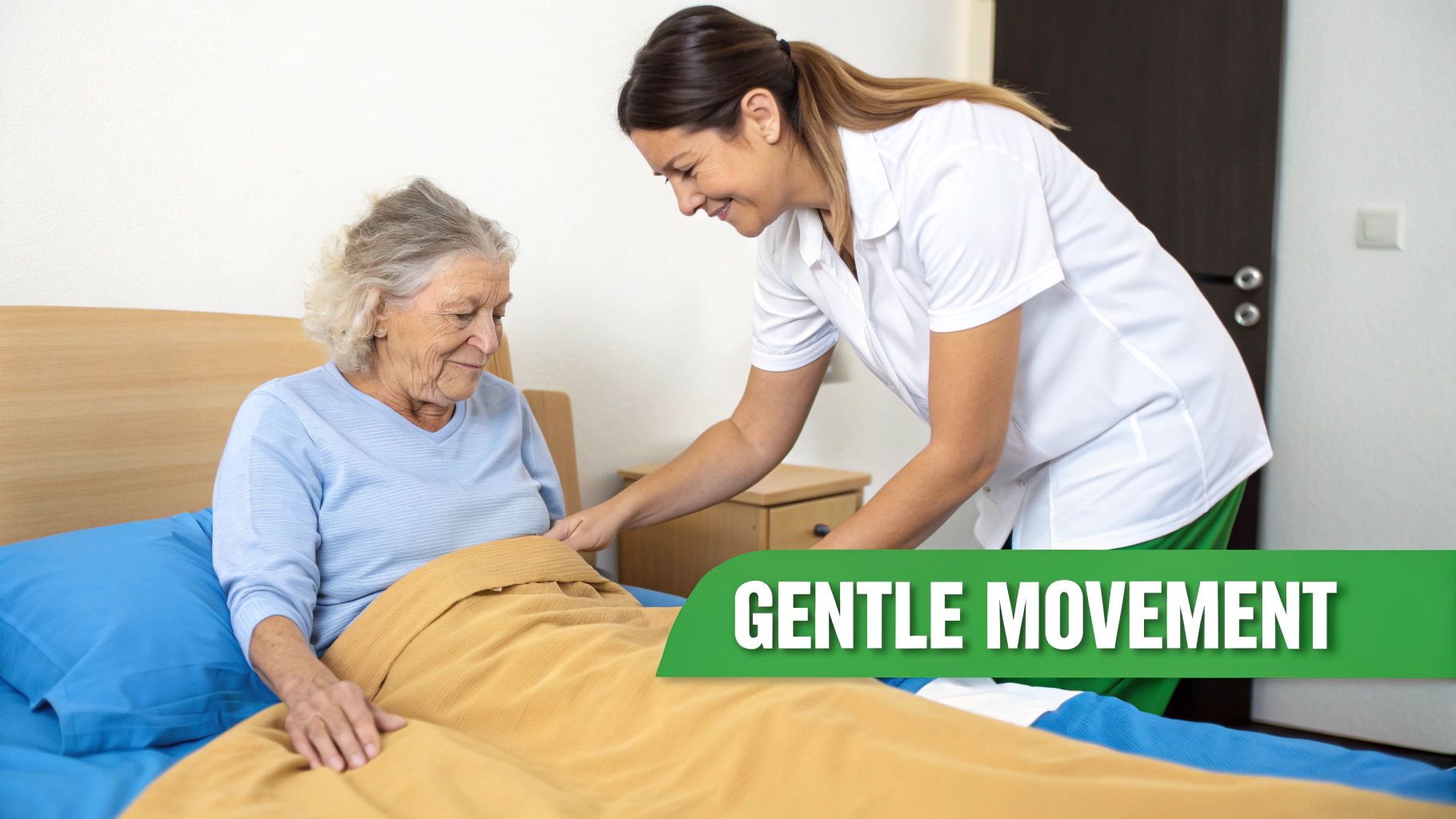
A kind caregiver gently assists an elderly woman sitting up in bed, promoting movement.
A caregiver gently assists an elderly woman with bed exercises

Supporting Comfort and Confidence

When someone spends a lot of time in bed, stiffness and discomfort can become part of the daily routine. Gentle movements can help in a few important ways:

It's the consistency that often matters most. Research on in-bed exercise programs found that even short, regular sessions led to meaningful improvements. One study showed that after two months of sessions three times a week, participants reported better emotional well-being and lower pain levels. Encouragingly, there were no adverse effects, and more than half were still doing the exercises six months later—a testament to how sustainable this approach can be. Read the full research about these findings.

A Focus on Dignity and Independence

Introducing these movements is an opportunity to support your parent's independence with dignity. It's about creating a safe, calm routine that respects their energy and comfort levels on any given day.

The purpose of these gentle exercises is to help your parent feel as capable and comfortable as possible in their own space. It's a way to honor their body and support their well-being, one small movement at a time.

This approach reinforces a sense of control and self-care. It's a quiet way of showing you care about their comfort, not just their health statistics. Of course, a well-prepared home is the foundation for all of this. For more on that, you might find our comprehensive aging in place checklist useful.

Creating a Safe and Comfortable Space for Movement

Before suggesting a single stretch, the first step is always to make sure your parent feels safe and at ease. It's less about a formal routine and more about creating a quiet, shared moment where movement feels like a gentle option, not a chore.

The most important conversation isn't actually with your parent—it's encouraging them to talk to their healthcare team. A quick check-in with their doctor or physical therapist can confirm that even gentle bed exercises for elderly loved ones are appropriate for their specific health needs. This one step can provide so much peace of mind for everyone.

A cozy bedroom with a white mattress, pillows, folded blue and white linens, and a nightstand.
Creating a comfortable environment for gentle exercises

Simple Preparations for Peace of Mind

Once you have the green light from their doctor, a few small adjustments can make a world of difference. This isn't about buying special equipment; it's about using what's already there to create a stable, reassuring space.

Starting the Conversation Gently

How you bring up the idea of movement matters just as much as the exercises themselves. The goal is to create a partnership, not hand them a plan they feel pressured to follow.

Your approach can be an invitation, not an instruction. It can help to emphasize that their comfort is the priority and that they can stop at any time, for any reason.

You could try saying something like, "I was thinking we could try a few simple stretches together right here in bed. It might help with some of that morning stiffness. What do you think?"

This framing gives them control and turns it into something you can do together. By focusing on comfort and collaboration, you're building a positive experience based on trust and respect.

A Practical Guide to Gentle Bed Exercises

Here are some simple, natural movements that can be done right in bed. It's often best to think of these less as a formal "routine" and more as quiet ways to invite a little flexibility and circulation back into the day. The goal is always comfort, never strain.

How you bring it up matters. An invitation usually feels better than an instruction.

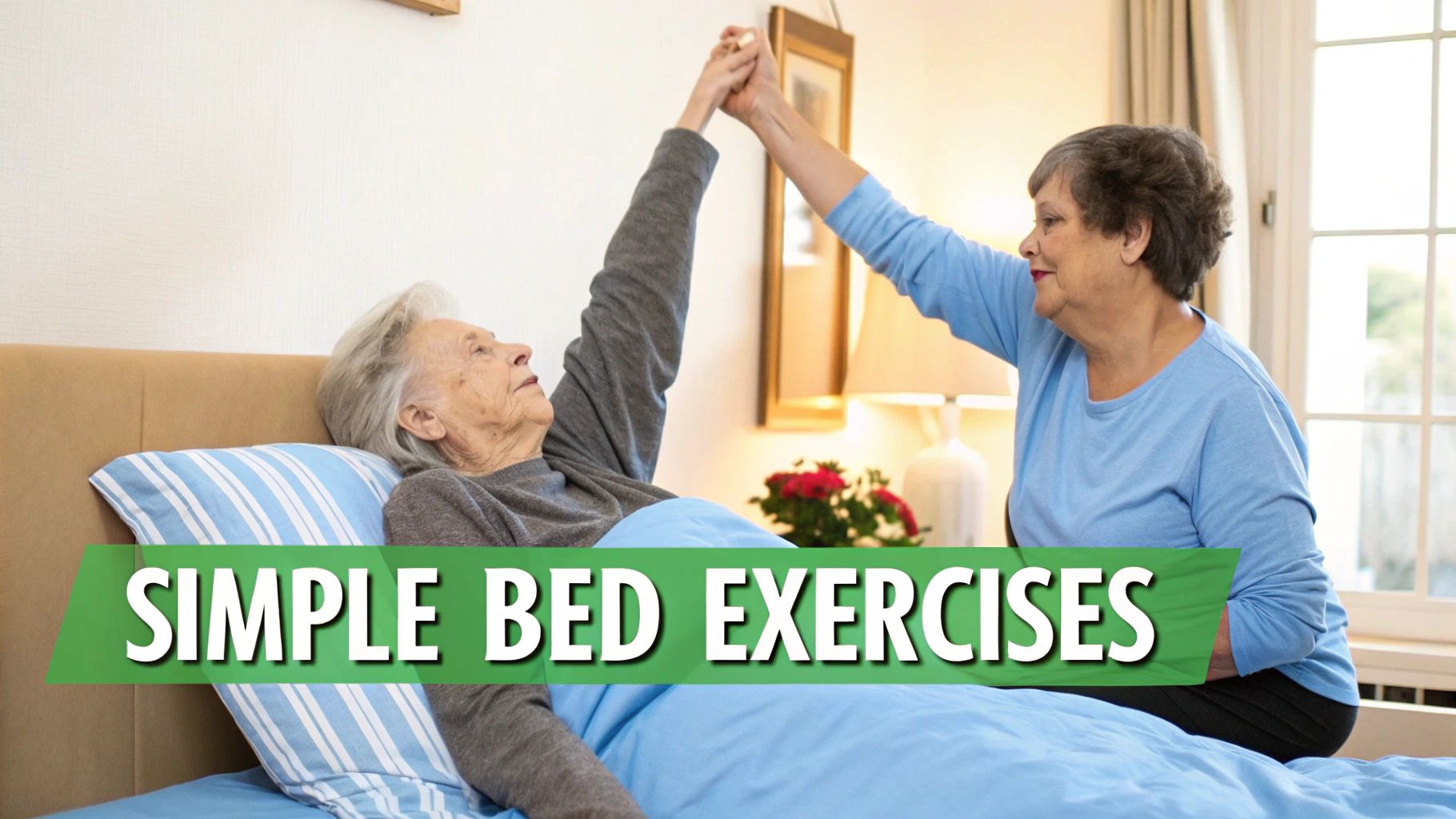
Two elderly women performing simple bed exercises, holding hands and reaching up.
Gentle bed exercises can be a shared, bonding experience

Here's a quick look at a few gentle movements that can feel really good, especially in the morning or after a long period of rest.

Gentle Movements for Everyday Comfort
Movement What It Helps With A Gentle Way to Suggest It
Ankle Circles Getting circulation going in the feet and ankles. "How about we slowly draw some circles with your toes? Just to wake your feet up a bit."
Knee-to-Chest Hug Easing stiffness in the lower back. "Sometimes gently hugging one knee can feel nice for your back. Want to see how it feels?"
Slow Arm Raises Maintaining shoulder range of motion for reaching. "Let's try slowly reaching one arm up, nice and easy. No need to force anything."
Gentle Neck Tilts Releasing tension in the neck and shoulders. "Let's very gently tilt your head to the side, just until you feel a light stretch. Does that feel okay?"

These aren't about performance or hitting a certain number of repetitions. They're simply about moving in a way that feels good and supportive.

Movements for the Lower Body

Stiffness in the legs and feet is common, especially after a long night. These motions are designed to wake up the lower body slowly and ease that feeling of being "stuck."

Ankle Circles

This is wonderful for getting fluid moving in the feet and ankles. While lying down, they can slowly circle one foot a few times, then switch directions. It's like drawing a small circle in the air with the big toe.

Pointing and Flexing Feet

Another great one for the ankles. Gently point the toes away from the body, then slowly flex them back toward the shins. It's simple but effective.

Gentle Knee-to-Chest Hug

This can be a relief for a tight lower back. Lying on their back, they can gently guide one knee toward their chest, holding it for a few deep breaths if that feels good.

Remember, this is not about how far they can stretch. The real benefit comes from the motion itself. It can be helpful to encourage them to breathe deeply and move only within a range that feels completely comfortable.

Movements for the Upper Body

Keeping the arms, shoulders, and neck mobile helps with all the little things—reaching for the water on the nightstand, putting on a sweater, or brushing their hair. These movements are intentionally slow and mindful.

Slow Arm Raises

A simple way to keep the shoulders moving. While on their back, they can slowly raise one arm toward the ceiling and then gently lower it. Then the other. It's about the reach, not the speed.

Shoulder Rolls

If they're sitting up in bed, this can feel incredible for releasing tension in the neck and upper back. Just a few slow rolls up toward the ears, back, and then down.

Gentle Neck Tilts

To ease a stiff neck, they can slowly tilt their head to one side, as if trying to touch their ear to their shoulder (without raising the shoulder). A brief hold, back to the middle, then the other side.

The key to suggesting these bed exercises for elderly loved ones is to frame them as moments of comfort and care. It's about being a partner in their well-being, not a coach.

How to Offer Support Without Adding Pressure

When you're helping a parent with these gentle movements, your role is less of a coach and more of a calm, reassuring presence. It's a delicate balance—you want to encourage them, but in a way that honors their dignity and independence, without ever making it feel like a demand.

It often starts with quiet observation. Just noticing their energy levels, their comfort, and what they're telling you without words is one of the most supportive things you can do.

A young man and an elderly woman hold hands in bed, symbolizing supportive presence.
Being a calm, supportive presence makes all the difference

Creating a Positive, No-Pressure Routine

The goal is to turn a few minutes of movement into a pleasant part of their day, not another item on a to-do list. When something feels good, it's much more likely to stick.

Here are a few ways to create that positive atmosphere:

Remember, every small effort is a positive step. A simple, "That's great, Mom," can go a surprisingly long way.

Being a Partner in Their Well-Being

Your presence is powerful, but their comfort always leads. Think of yourself as a partner who listens far more than they direct.

The most supportive thing you can offer is your calm attention. Make it clear that their comfort is the priority, and that it's always okay to stop, skip a day, or just do less.

Making these gentle movements a regular habit can be a powerful way to counter the effects of inactivity. This has been shown in various studies. One remarkable case study followed a sedentary 70-year-old man who, over 10 years of consistent in-bed workouts, improved his muscle structure and function well into his 80s. In another study, older adults reported less pain and a noticeable lift in their mental health after just two months on a similar program.

This whole journey requires a lot of patience and compassion—for both of you. You can find more insights on navigating these dynamics in our broader caregiving guide. By focusing on partnership and celebrating the small wins, you can help make gentle movement an empowering and positive part of their life.

Noticing Progress and Adapting as You Go

When it comes to these gentle bed exercises for elderly parents, progress isn't something you track with a stopwatch or count repetitions. It often shows up in quieter, more meaningful ways—and your best tool for spotting it is simply paying attention.

You might see it when your parent mentions feeling a little less stiff in the mornings. Or when you notice them adjusting their own blankets or reaching for the remote with a bit more ease. Sometimes, the biggest sign of progress is emotional. They might start looking forward to this quiet time together, a clear signal that the movement feels good and supportive, not like a chore.

What Does Progress Look Like?

The real wins here are about function and feeling. It's the small stuff that can make daily life just a little bit better.

Here are some signs you might be on the right track:

Less Stiffness

They mention that their back, neck, or legs don't feel as tight during the day.

Easier Movement

You see them shift positions in bed more easily or get up with a little more confidence.

Brighter Mood

They seem more cheerful or engaged after a few minutes of gentle movement.

More Willingness

They start to ask about doing the movements or seem more open to trying them.

This isn't about performance. It's about creating a positive, repeatable experience that honors how they feel each day and reinforces their sense of control and dignity.

How to Adapt the Routine Thoughtfully

Every day is different. Your parent's energy and comfort levels will naturally go up and down, and the key is to stay flexible. The goal is to match the routine to how they're feeling in the moment.

On a "low energy" day, or when they're in more discomfort, it can help to dial it back. You could say, "How about we just do the ankle circles today and see how that feels?" This shows you're listening and that their comfort comes first.

On a "good" day, when they seem to have a bit more energy, you might gently introduce something extra. For instance, "You seem to be moving well today. Would you like to try adding a gentle arm raise?"

This responsive approach keeps the routine helpful, not a burden. It's easy to underestimate the impact of extended bed rest on strength, but even very light activity can make a real difference. One study found that after just 14 days of bed rest, a group doing adapted in-bed exercises successfully kept their muscle mass and aerobic fitness. Meanwhile, the non-exercising group saw their fitness drop by 12.3%. You can read more about these hopeful findings on the effects of in-bed exercise.

Common Questions About These Gentle Movements

As you start thinking about introducing some simple movements, it's natural for questions to come up. You want to be helpful without being pushy, and supportive without taking over. Here are a few common situations you might run into.

Need More Caregiving Support?

Explore our comprehensive resources designed to help you care for your aging loved ones with confidence and compassion.

Get Personalized Support