
TL;DR:
Sometimes the hardest part of caring for an aging parent isn't the appointments, the medications, or the safety concerns.
Sometimes it's realizing that the person who once cared for you now needs your help.
It happens in small moments. A forgotten story. A slower walk. A phone call that leaves you worried long after you've hung up.
Many adult children experience grief long before they experience loss. If you've been feeling that quiet sadness, you're not imagining it. What you're feeling is real.
The grief of watching a parent age is a recognized psychological experience called anticipatory grief, and it is just as real and valid as any other form of loss.
You may not have a name for what you're feeling, but that quiet ache when your father struggles to rise from his chair, or the moment your mother forgets a story she's told a hundred times, is grief. It doesn't wait for death to begin. It arrives in small, ordinary moments, and it tends to stay. Understanding what this grief actually is can change how you carry it.
Anticipatory grief is grief that begins before a loss is complete. In the context of parental aging, it means mourning changes that are already happening, while your parent is still very much present in your life. Psychologist Dr. Pauline Boss introduced the concept of ambiguous loss to describe exactly this kind of experience. She defines it as a loss without closure, where the person you love is still here, but is also, in some ways, less reachable than before.
Ambiguous loss prevents typical grief from resolving, because your parent is still present but has changed in significant ways. That is what makes this grief so disorienting. You cannot mourn fully, because there is no clear ending. You cannot celebrate fully, because loss is woven into every good day.
Dr. Regina Koepp, a clinical psychologist specializing in aging, describes this as grief that keeps "shape-shifting." One week you grieve your mother's lost independence. The next, you grieve the conversation you used to have. The loss keeps moving.
Several patterns show up consistently in this kind of grief:
Naming this experience matters. When you know what you are dealing with, you can begin to respond to it with more patience, both toward your parent and toward yourself.
Looking for practical support?
Understanding your emotions is important, but so is having a plan. Helping Mom offers free resources designed specifically for adult children caring for aging parents, including home safety guides, family conversation tools, and caregiver wellbeing resources.
Explore Resources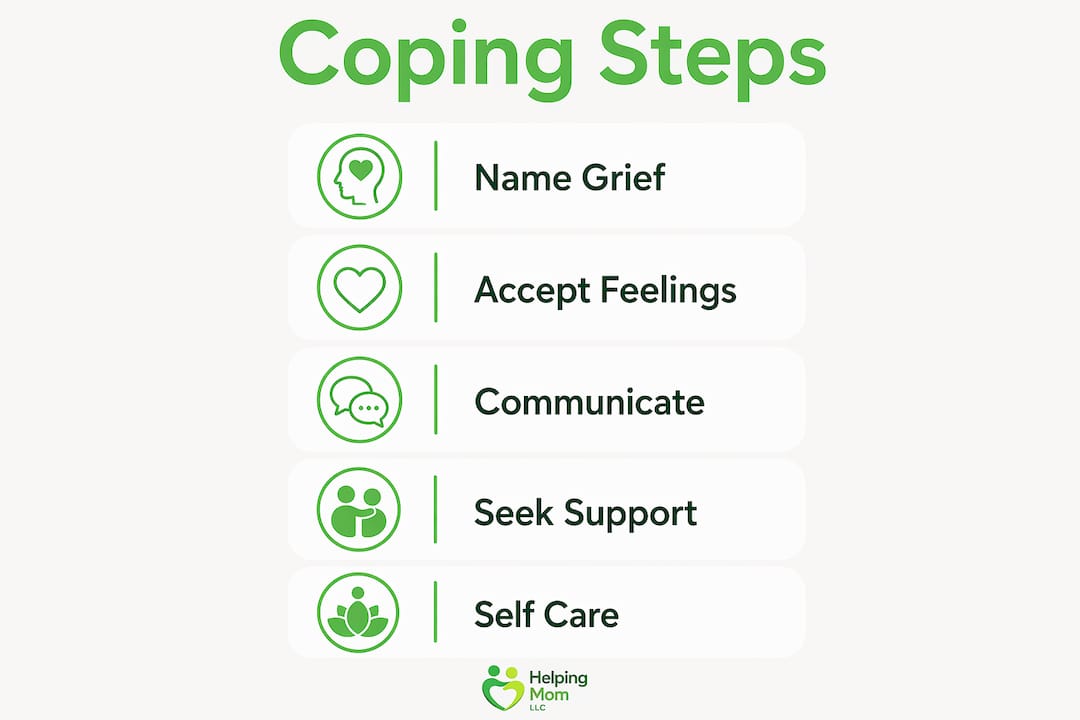
The emotional impact of aging on adult children is broader than most people expect. This is not just sadness. It is a layered experience that touches your sense of identity, your relationships, and your mental health in ways that can catch you off guard.
Here is what many adult children report feeling, often all at once:
There is also the matter of secondary losses. When a parent loses the ability to drive, for example, that single change triggers a domino effect of losses affecting social connection, independence, and identity. Each secondary loss carries its own grief, and they accumulate. With over 60 million Americans aged 65 and older, this is a collective experience — yet it still tends to feel deeply private and invisible.
Society does not offer much space for this grief. There is no bereavement leave for watching your parent forget your name. That lack of social validation makes the grief harder to process, not easier.

Pro Tip: If you find yourself feeling ashamed of your grief, remind yourself that grief is a sign of love. You are not mourning your parent. You are mourning the changes, and that is a completely different thing.
Coping with parental decline does not mean eliminating the grief. It means learning to carry it without being crushed by it. The strategies that actually help tend to be quieter and more personal than most advice suggests.
You can feel grateful for a good afternoon with your mother and still grieve the version of her you miss. Holding grief and gratitude simultaneously is not a contradiction. It is emotional honesty, and it is healthy. Trying to suppress one feeling in favor of the other tends to make both harder to manage.
This distinction matters more than it sounds. When you reduce your parent to a list of needs and limitations, you lose sight of who they still are. Separating the "care recipient" role from the full person in front of you protects your compassion and reduces the risk of burnout. Ask about their memories, their opinions, their preferences. Let them still be themselves.
Using logic to push change on a resistant parent rarely works and often damages trust. What works better is validation, patience, and small steps. Have conversations early, when stakes are lower. A family meeting for aging parents can create a shared plan before disagreements become urgent.
General therapy helps, but support from people who understand caregiving specifically goes further. Look for a counselor with experience in aging and grief, or find a local or online caregiver support group. The grief support strategies that tend to work best involve accepting mixed emotions rather than resolving them.
Pro Tip: Plan your respite time before you need it desperately. Waiting until you are burned out to ask for help makes everything harder. Schedule a break the same way you would schedule a medical appointment.
Internalizing negative beliefs about aging worsens mental health for both caregivers and parents. Viewing aging as a transition that includes resilience, rather than only decline, genuinely improves emotional wellbeing. This is not about forced positivity. It is about choosing a more complete picture.
Balanced caregiving honors your parent's dignity and keeps you sustainable over the long term. These two goals are not in conflict. They depend on each other.
Free Download: Caregiver Emergency Information Organizer
Keeping important medical, medication, insurance, and emergency contact information in one place can reduce stress during difficult moments.
Your parent's need for control over their own life does not disappear because their abilities have changed. Whenever possible, offer choices rather than directives. Ask what they want before deciding what they need. This preserves their sense of self and reduces the friction that makes caregiving harder for everyone.
Making your parent's home safer is one of the most concrete ways to support their independence. Good lighting, grab bars, cleared pathways, and non-slip surfaces reduce fall risk without requiring a move. Helping-mom.com has a full home safety guide for seniors that walks through these changes room by room. For bathroom-specific guidance, see our bathroom safety guide, and for a broader plan, explore the aging in place resource hub.
| Area of support | Approach that works |
|---|---|
| Emotional support | Validate feelings; avoid rushing to fix or correct |
| Home safety | Make small, practical changes that preserve independence |
| Family communication | Hold structured conversations before a crisis forces them |
| Caregiver wellbeing | Schedule regular breaks and seek peer or professional support |
| Sharing responsibilities | Divide tasks clearly among siblings or other family members |
Caregiving that falls entirely on one person is not sustainable. Sibling conflict during parent care is common, but a clear division of responsibilities reduces resentment. Use a written plan, even an informal one, to clarify who handles what.
Knowing when to bring in professional help is also part of caring well. A geriatric care manager, a social worker, or a home health aide can fill gaps that family members cannot. Asking for help is not giving up. It is making sure your parent gets what they actually need.
If this article feels uncomfortably familiar, start small:
You don't have to solve everything today. You only need to take the next step.
The grief of watching a parent age is anticipatory grief, a real and recognized psychological experience that requires emotional validation, practical coping strategies, and consistent self-care to navigate well.
| Point | Details |
|---|---|
| Name the grief | Anticipatory grief and ambiguous loss are real; naming them reduces confusion and shame. |
| Expect mixed emotions | Grief and gratitude coexist naturally; suppressing either one makes both harder to manage. |
| Secondary losses accumulate | Each lost ability triggers further losses; prepare for this cascade rather than being caught off guard. |
| Communication before crisis | Build family plans and caregiver conversations early, before urgency forces poor decisions. |
| Protect your own wellbeing | Scheduled respite and peer support are not optional extras; they are what keeps caregiving sustainable. |
When I talk with adult children who are caring for aging parents, the thing that surprises them most is how alone they feel in a grief that is actually incredibly common. They describe watching their parent struggle and feeling a sadness they cannot quite explain to anyone around them. They feel guilty for grieving someone who is still alive. They feel like they should be grateful instead.
Here is what I have come to believe: the guilt is a signal that you care deeply, not a sign that you are doing something wrong. The grief is not a problem to solve. It is a response to real loss, and it deserves to be treated that way.
What I have also seen is that the adult children who do best over time are not the ones who push the grief aside. They are the ones who find at least one person, a counselor, a sibling, a friend, or a support group, who can hold that grief with them without trying to fix it. The role of grief in relationships is often underestimated. Grief shared is genuinely lighter than grief carried alone.
This caregiving season will change you. Some of those changes will be hard. Some will be unexpected gifts. You will likely discover a patience and a tenderness in yourself that you did not know was there. Be gentle with yourself as you find it.
— Mike
If this article resonated with you, you're not alone.
Helping Mom was created for adult children navigating exactly these moments: the uncertainty, the responsibility, and the emotional weight that often comes with caring for an aging parent.
Whether you're worried about safety at home, struggling with caregiver guilt, planning family conversations, or simply trying to understand what comes next, you'll find practical guidance designed to help you move forward with confidence.
Start with:
Caregiver Wellbeing Resources — Coming Soon Aging in Place Guide Home Safety Guides Family Meeting Planning ResourcesA guide for concerned caregivers wondering if their worries about an aging parent are justified.
A practical guide to creating an emergency plan for your aging parents so you're prepared before a crisis hits.
Helping Mom provides calm, practical guidance for adult children supporting aging parents. Explore our guides and checklists for making homes safer, having difficult conversations, and caring for yourself along the way.
Browse Our Caregiving Resources