Discover why monitor aging parents is essential for their safety. Learn how to balance care, independence, and your relationship effectively.
Helping Mom
Caregiving Expert
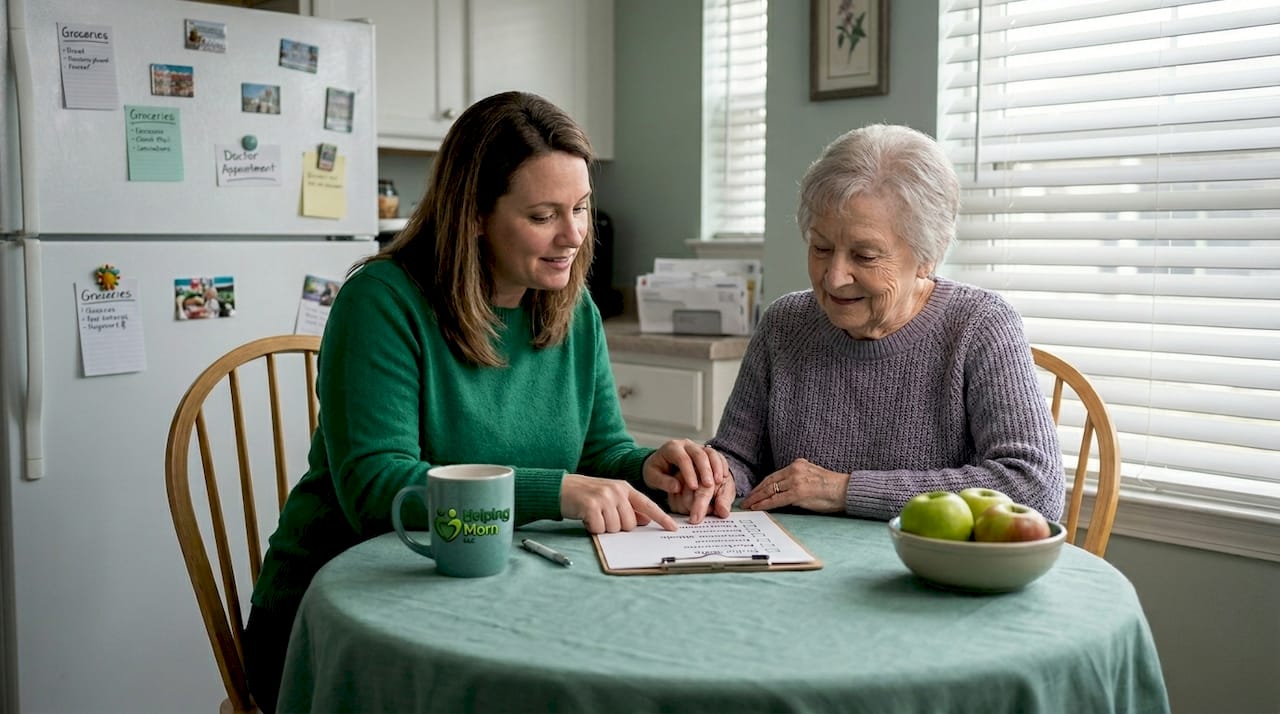
Setting up a camera in your parent's home or calling to check in every day can feel uncomfortable, even a little strange. But unintentional falls are among the most serious health risks for adults over 65, and most happen at home when no one is watching.
Monitoring isn't about surveillance. Most families don't talk about this until something goes wrong. It's about building a quiet layer of safety that lets your parent live as independently as possible, for as long as possible. In this guide, you'll find practical information on the real risks seniors face, how monitoring affects your relationship, and specific steps you can take to do this in a way that feels respectful and sustainable for everyone.
Early risk detection
Monitoring helps catch falls and emergencies sooner for seniors living at home.
Relationship balance
Effective monitoring minimizes tension by prioritizing transparency and collaboration.
Monitoring approach
The best approach combines technology, human check-ins, and clear escalation rules.
Integrated safety
Pair monitoring routines with practical home safety upgrades and regular communication.
Expert resources
Guides and checklists make applying monitoring strategies simpler for families.
Many adult children don't start thinking seriously about monitoring until something goes wrong. A fall. A missed doctor's appointment. A worrying phone call. The truth is, the risks that make monitoring worthwhile are very real and very common.
Falls account for 77% of senior consumer product-associated injuries and 84% of fatalities in that category. That's a striking number. And it points to something most families underestimate: the home itself is often the most hazardous environment for an aging parent.
Falls are only one part of the picture, though. There are four main categories of risk that monitoring can help address:
Slippery floors, loose rugs, poor lighting, and balance changes all contribute. Many falls happen in hallways, bathrooms, and stairways. Learn how to prevent falls at home →
Missed medications, skipped meals, and delayed responses to health changes can all have serious consequences over time. Get a medication schedule template →
Seniors are frequently targeted by scammers and, sometimes, by people they trust. A parent showing early cognitive changes is especially vulnerable.
Driving when it's no longer safe, leaving the stove on, or wandering at night are behaviors that monitoring can help catch early. When should elderly stop driving? →
| Risk category | What to watch for | Why it matters |
|---|---|---|
| Falls | Mobility changes, bruises, clutter | Leading cause of senior injury |
| Medication | Missed doses, confusion about schedules | Directly affects health outcomes |
| Exploitation | Unusual financial activity, new "friends" | Seniors lose billions annually |
| Risky behavior | Driving, stove use, nighttime wandering | Can escalate quickly without notice |
If you're starting to notice these risks but aren't sure what to do next, the Start Here guide walks you through the first simple steps without overwhelm.
✔ This captures people right when they realize: "Oh… this is me."
"Monitoring isn't a sign that you've given up on your parent's independence. It's a way to protect it."
Research shows that adult children often feel obligated to keep tabs on specific risk areas, especially when their parent lives alone. That sense of responsibility is healthy and natural. What matters is how you act on it.
The goal is always to help your parent stay safely at home, on their own terms, for as long as that's possible.
Here's what rarely gets talked about: monitoring your parent can stir up a surprising amount of emotional complexity. For you and for them.
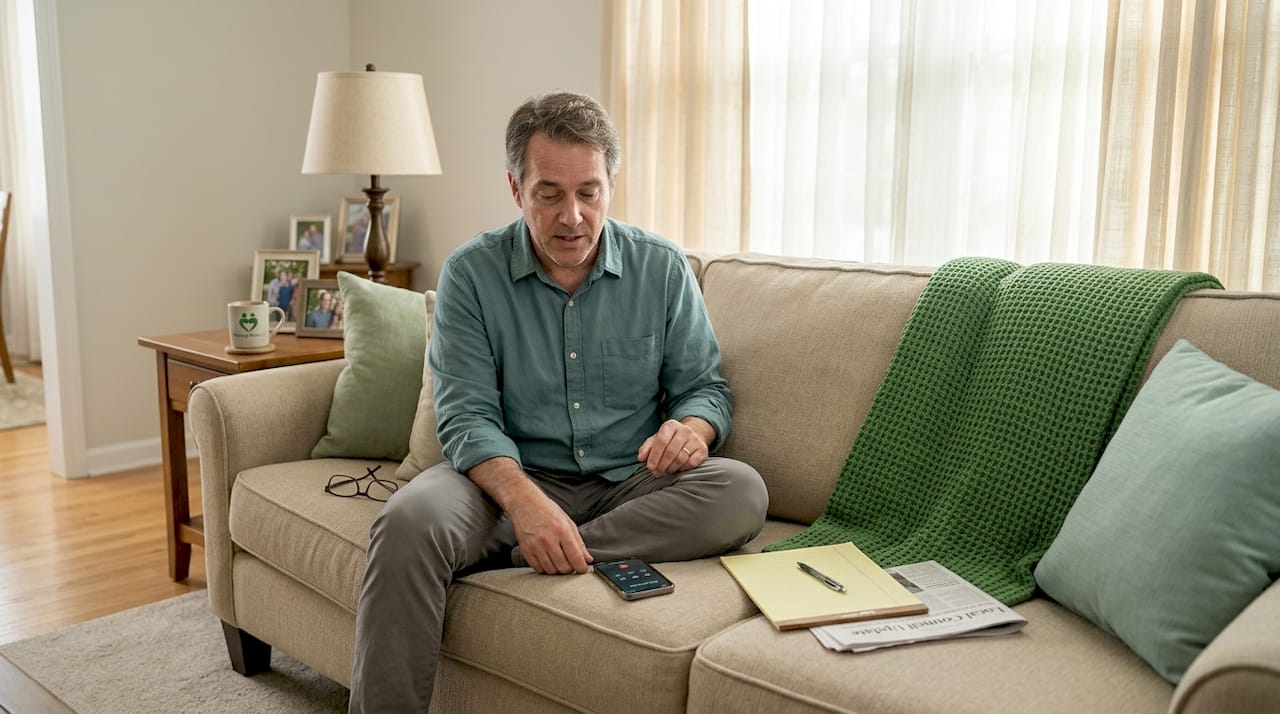
Many caregivers describe feeling caught between two uncomfortable feelings. The worry that something bad will happen if they don't watch closely. And the guilt that comes from feeling like they're treating their parent like a child. That tension is real, and it's worth acknowledging. It doesn't mean you're doing anything wrong.
Research confirms that low parent transparency can lead to negative feelings and relationship tension on both sides. When a parent doesn't know what's being monitored, or why, they may feel watched rather than supported. That feeling of lost autonomy is one of the most common sources of friction in caregiving relationships.
Your parent grew up making their own decisions. They raised you. Being told they need to be checked on can feel like a demotion. That's understandable. It doesn't mean monitoring is wrong. It means the way you approach it matters enormously.
| Approach | Parent's experience | Caregiver's experience |
|---|---|---|
| Monitoring without disclosure | Confusion, resentment, distrust | Short-term relief, long-term conflict |
| Monitoring with open conversation | Cooperation, shared purpose | More effort upfront, better outcomes |
| Collaborative monitoring design | Dignity, buy-in, partnership | Stronger relationship, less guilt |
Pro Tip
Frame monitoring as something you're doing together, not something you're doing to your parent. Try saying, "I want to make sure you feel safe at home. Can we talk about what would be most helpful?"
The takeaway is clear. Transparency isn't just kind. It's practical. When your parent understands what you're watching for and why, they're far more likely to cooperate and far less likely to feel controlled.
Physical changes in the home often support this conversation naturally. If you're already thinking about making the home safer for an elderly parent, bring your parent into that process. Ask what they feel uncertain about. What worries them. That conversation can open a door that feels much less threatening than announcing you've set up monitoring tools.
Good monitoring isn't about watching everything all the time. It's about building a system that catches problems early and helps you respond calmly when they arise.
If you want to see how families approach this in real life, this quick video walks through what that can look like:
Think of it as an early warning layer. You're not trying to prevent every possible risk. You're trying to notice changes sooner so you can respond before a small problem becomes a serious one. Paired with clear escalation rules, this kind of monitoring is both practical and humane.
Here's a simple framework to build from:
Falls? Medication? Wandering? Start where the concern is highest, not everywhere at once.
Motion sensors work well for activity tracking. Medication dispensers with alerts help with missed doses. Cameras, if your parent agrees, can be appropriate in common areas.
Decide in advance what triggers a follow-up call versus an in-person visit versus calling emergency services. Write it down.
Technology is a support, not a replacement. Daily calls, weekly visits, or shared meals keep the human connection alive.
Your parent's needs will change. What works now may need adjusting in six months. Build in a time to reassess.
Save this: You may want to screenshot this section — it's a simple way to build a plan without overthinking it.
"The best monitoring system is one that your parent helped design and understands completely."
This matters more than any specific tool. When you're comparing options like motion sensors vs cameras for your parent's home, involve them in the conversation. Ask what feels acceptable. Ask what feels intrusive. The answers will shape a plan that actually gets used.
Pro Tip
Write a simple one-page monitoring plan that both you and your parent can refer to. Include what's being tracked, who gets alerted, and what the steps are. Revisit it together every three months.
Using a caregiver monitoring checklist can help you stay organized without feeling like you have to hold everything in your head. Caregiving is a long road. Building systems that are simple and clear reduces your stress considerably over time.
Monitoring works best when it's woven into daily life rather than treated as a separate, clinical project. The families who do this well tend to combine two things: physical safety improvements and consistent communication routines.
Monitoring works best alongside clear communication and home safety upgrades. Start by making sure the home environment itself reduces the most common risks. Then layer in monitoring to catch what the physical changes can't prevent.
Identify spots that feel unsafe or inconvenient. Bathroom grab bars, better lighting in hallways, and removing loose rugs are often the easiest and most impactful changes.
A morning text, a quick call at lunch, or a shared app that shows your parent is moving around can be enough to reassure you without feeling intrusive.
These don't need to be formal. A relaxed conversation over dinner about how things are going lets everyone express concerns and adjust the plan.
Noting when something shifts, like a new fall, a repeated confusion about medications, or a change in appetite, gives you a clearer picture over time and helps you communicate with healthcare providers if needed.
To make sure you haven't missed common hazards. It's easy to overlook things you see every day.
Pro Tip
Keep a short shared document or notes app entry where you, your siblings, and any other involved family members can log observations. This prevents the problem of one person carrying all the information and all the worry.
If you're also thinking about the bigger picture of supporting aging parents at home, remember that monitoring is just one piece. Nutrition, social connection, meaningful activity, and emotional support all contribute to how well your parent is actually doing day to day.
The goal isn't a perfect monitoring system. It's a home environment where your parent feels safe, respected, and still very much themselves.
Here's something most caregiving articles won't tell you directly: more monitoring isn't always better.
It's tempting, especially when you're worried, to want to see everything, know everything, and track every change. That impulse comes from love. But it can quietly tip into something that doesn't serve anyone well.
Over-monitoring can erode trust. When your parent feels watched at every moment, they may start to conceal things to reclaim a sense of privacy. Ironically, this can leave you less informed, not more. You may also find that your own anxiety doesn't decrease with more data. Sometimes it increases. More alerts, more check-ins, and more information to interpret can amplify worry rather than soothe it.
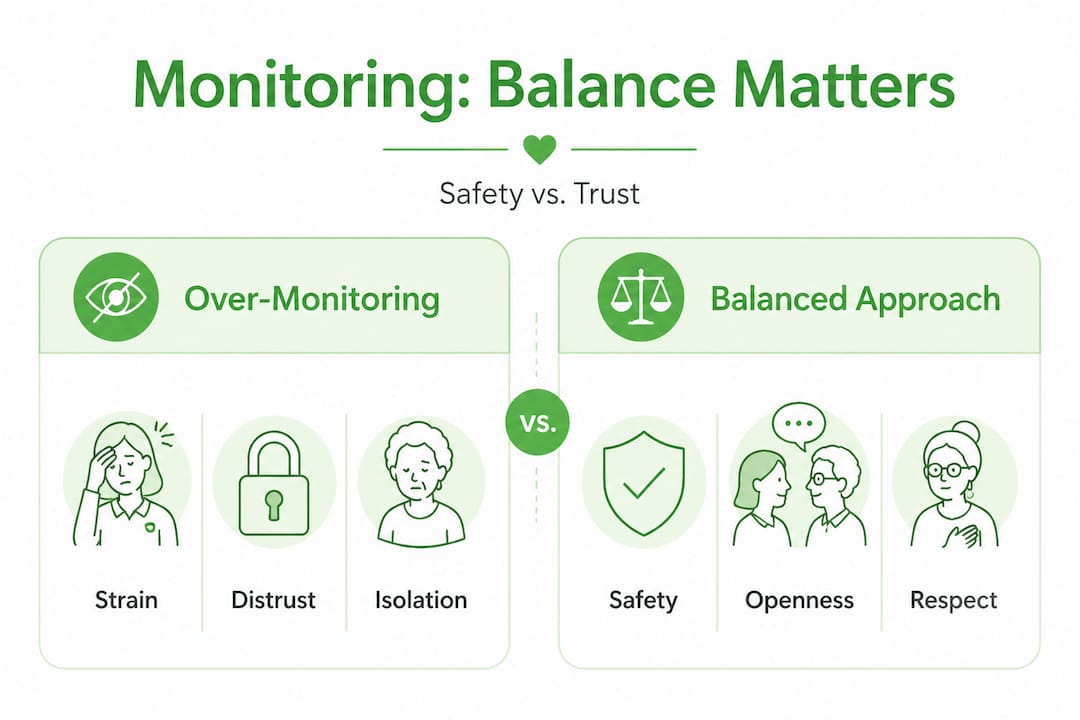
The most effective monitoring relationships we've seen are built on negotiation, not just necessity. Your parent gets a voice in what's monitored and how. You get the early warning layer you need. And the relationship stays intact because neither of you is simply imposing a system on the other.
There's also something worth sitting with here: monitoring is not a substitute for actual conversation. A camera in the living room can tell you your parent is moving around. It can't tell you they're feeling lonely, scared, or depressed. The human connection piece is not optional. It's the part that matters most.
This is why caregiver emotional support matters for you as much as your parent. Caregiving at this level is emotionally demanding. Giving yourself space to process your own feelings, get support, and avoid burnout is not a luxury. It's what makes sustainable caregiving possible.
Aim for safety, not control.
Negotiate boundaries together. And revisit them as things change, because they will.
If you're feeling unsure where to start, begin with one simple step instead of trying to fix everything at once.
Walks you through the most important home safety upgrades with clear, calm guidance.
A simple, printable tool to assess your parent's home room by room.
Resources to help you take care of yourself while you take care of your parent.
You don't have to figure all of this out alone.
Falls are the most common serious home hazard for seniors, followed by medical emergencies, financial exploitation, and risky behaviors like unsafe driving or leaving the stove unattended.
Transparency and shared decision-making are the key factors that keep monitoring from feeling controlling. Involve your parent in choosing what gets monitored and combine technology with regular personal check-ins.
Frequent falls, missed medications or sudden inactivity, increased confusion, unusual financial activity, or a general shift in their daily patterns are all signals worth paying attention to and responding to thoughtfully.
Set specific alerts for defined risks, like falls or extended inactivity, and then pair monitoring with human connection through scheduled calls, visits, or family check-ins that give your parent emotional support alongside the safety net.
Organize key information for quick reference
Room-by-room modifications and fall prevention
Preserving dignity and trust
Balancing safety, privacy, and independence
Emotional support for caregivers
Practical guide for adult children

The information provided on this page is for educational purposes only and does not constitute medical, legal, or professional advice. While we strive for accuracy, Helping Mom LLC makes no representations or warranties about the completeness, reliability, or suitability of the information contained herein. Always consult with qualified professionals regarding specific caregiving situations, medical concerns, or legal matters. Individual circumstances vary, and what works for one family may not be appropriate for another.