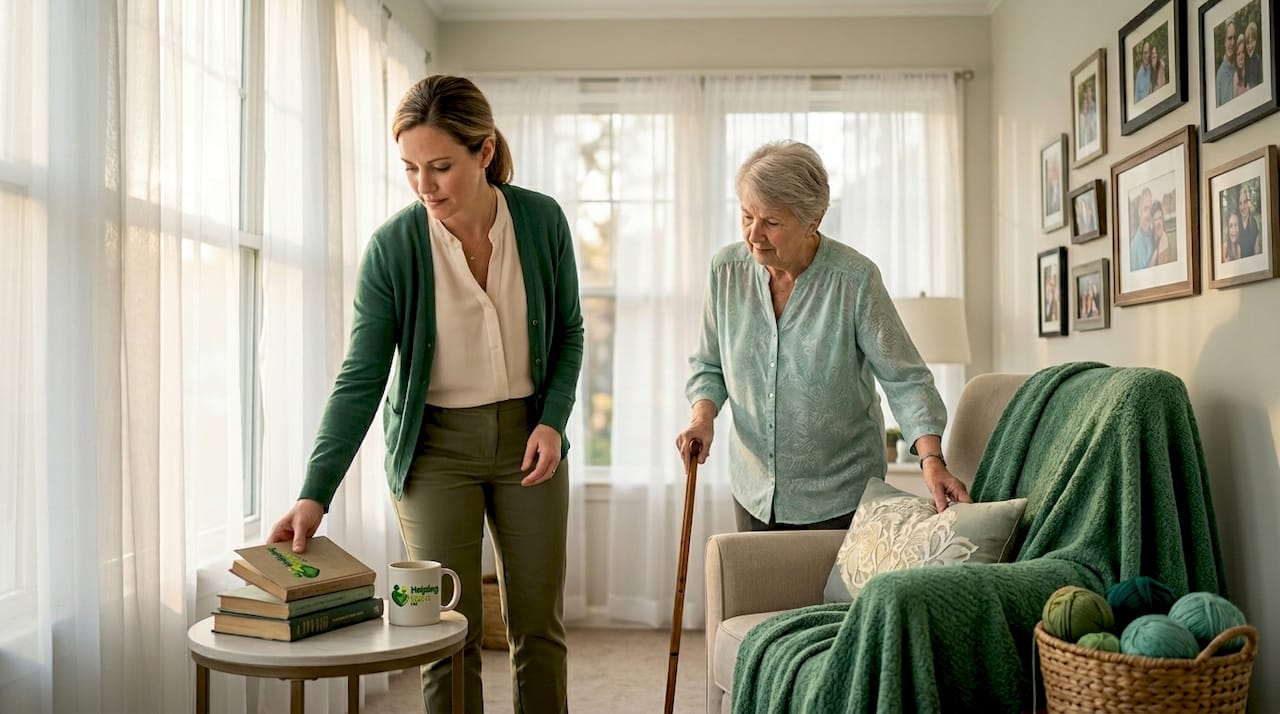
If your parent lives alone, there's often a quiet question running in the background of your day: "Are they really okay right now?" Finding the right ways to support aging alone is one of the most common challenges adult children face, and it's often harder than it looks. You can't be there every hour of the day, but you also can't stop caring about what happens when you're not.
The good news is that safety and independence don't have to be in conflict. With some planning, the right network, and a few practical changes, your parent can live well at home without you having to manage every detail.
One in four adults over 65 falls annually, so reducing hazards is critical.
A circle of neighbors, friends, and community helps keep seniors safe and connected.
Installing grab bars and improving lighting reduce fall risk by about one-third.
Managing medications and encouraging exercise cut fall risk and support independence.
Many government programs provide financial and practical support for aging alone.
Before you can put any support in place, it helps to take an honest look at where the real risks are. Not every concern carries equal weight, and knowing where to focus first will save you time and reduce the worry that can come from trying to fix everything at once.
For older adults aging without nearby family support, intentional connection becomes even more important. Explore practical ways to build stronger support systems at Aging Solo.
Understanding these four areas gives you a working framework. You don't need to overcomplicate the process to begin making meaningful improvements. A relaxed visit and a few honest conversations will reveal most of what you need to know.
Write down what you observe during visits, including small things like a new wobble when walking or a cluttered hallway. Patterns are easier to spot when you have notes to look back on.
Many adult children quietly try to carry the entire responsibility themselves. Over time, that becomes exhausting, unsustainable, and emotionally heavy. One of the most effective things you can do is shift away from thinking of yourself as the sole source of help.
The most critical resource for solo agers is a structured circle of support that includes neighbors, friends, and community members, not just family.
Many older adults are now navigating aging without a traditional built-in support system. If your parent is aging independently or without nearby family, Aging Solo offers additional resources focused specifically on solo aging and community-building.
Who can notice if the mail piles up or lights stay off
Friends, faith community members, or volunteers
Grocery delivery, pharmacist, who sees your parent regularly
Usually you, who stays in touch with the whole network
"This journey isn't about taking control, it's about walking alongside your parents and helping build the village around them."
The key is making this network proactive rather than reactive. Don't wait for a crisis to introduce yourself to your parent's neighbors. A friendly conversation now creates a connection that matters later.
Community support for elderly individuals is often closer than families realize. Start with the people already in your parent's life and formalize the loose connections that already exist.
Most serious falls happen in familiar places people stop thinking about — bathrooms, hallways, stairs, and cluttered walkways. These areas are the most common trouble spots, and many of the risks there are straightforward to address.
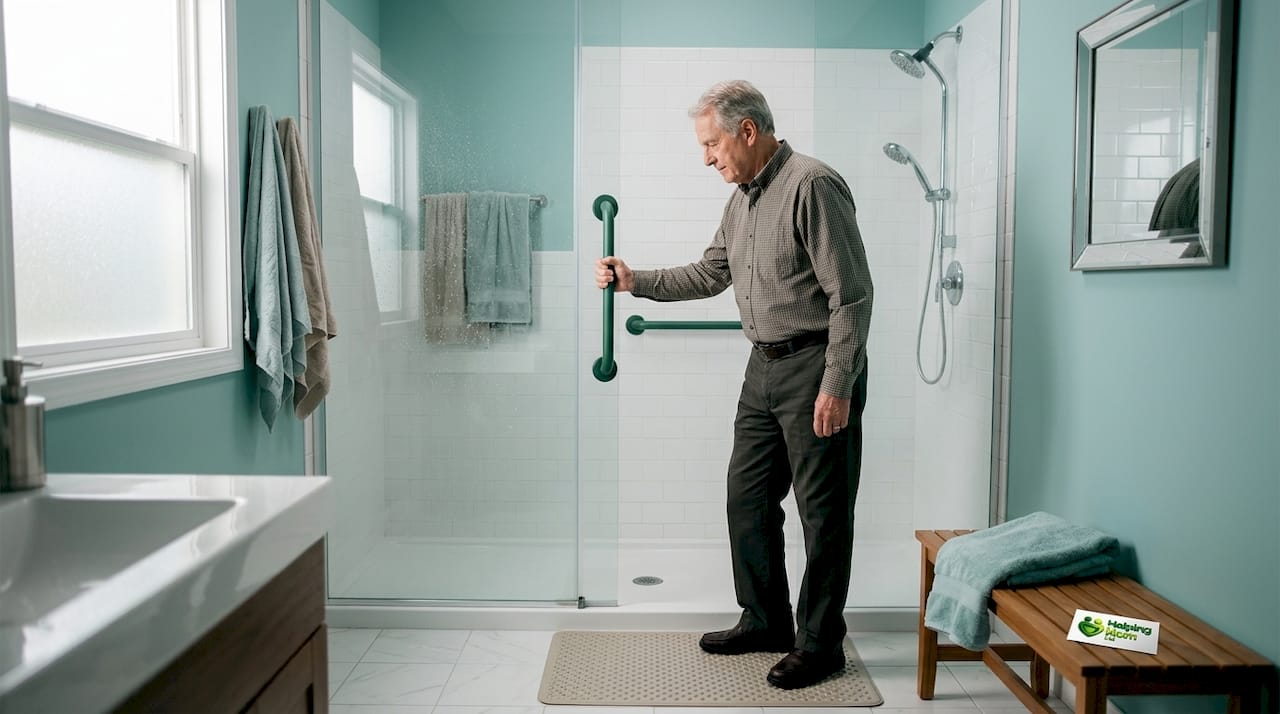
Professional home safety assessments and modifications can reduce falls by about 33%. That's a significant number for a set of changes that often cost very little.
Small safety changes often preserve independence longer because they help older adults stay confident moving through their own home.
Hire a certified aging-in-place specialist (CAPS) for a professional home walkthrough. Many occupational therapists also offer home safety assessments and can spot risks you might miss.
Good health habits don't require constant oversight. A few well-placed systems can make a big difference in your parent's daily independence.
Medication mistakes are one of the most common reasons older adults end up in the emergency room unexpectedly.
A simple pill organizer helps, but automatic pill dispensers go further by alerting your parent when a dose is due. Many pharmacies also offer blister packaging.
Medication reviews by a pharmacist can reduce fall risk by 20% on their own.
Balance and strength exercises are genuinely effective. Exercise programs including Tai Chi reduce falls by up to 50%.
Look for local senior center programs or ask a physical therapist for a safe home routine.
Dehydration is surprisingly common in older adults and contributes to dizziness and falls.
Encourage consistent meals and water intake. Meal delivery services can help if cooking has become difficult.
Vision changes are one of the leading contributors to falls.
Schedule annual eye exams and stay on top of routine appointments.
Ask your parent's doctor to do a full medication review at least once a year. Some drugs, including sleep aids and certain blood pressure medications, increase fall risk significantly.
If cost is a barrier to consistent prescriptions, a medication savings program may help reduce out-of-pocket expenses.
Many families are navigating aging without family financial safety nets in place, and the costs of care can feel overwhelming. The good news is that more assistance exists than most people realize, and a significant portion of it goes unclaimed every year.
Many seniors miss out on benefits they qualify for, but multiple applications can be submitted at the same time so there's no need to wait on one before starting another.
Visit BenefitsCheckUp (run by the National Council on Aging) to screen for programs your parent may qualify for.
Contact your local Area Agency on Aging. They provide free, personalized guidance and can walk you through the application process.
Apply for multiple programs simultaneously to avoid gaps in coverage.
Set calendar reminders for annual renewals so benefits don't lapse.
Resources for elderly care at the local level are often better than people expect. Area Agencies on Aging in particular are underused and genuinely helpful.
Technology works best when it supports human connection rather than replacing it. Think of it as a backup layer, not the whole solution.
Technology is most effective as a supplement to human interaction, creating a safety net of connection rather than a substitute for it. That framing matters, because the goal is to reduce loneliness in aging adults while also adding practical safety measures.
Technology works best when paired with real relationships and intentional routines. Aging Solo also shares practical ideas for staying socially connected while maintaining independence.
For regular family check-ins feel warmer than phone calls and let you observe how your parent looks and moves.
Medical alert buttons give your parent a way to call for help immediately if they fall.
Daily automated calls or texts that alert a family member if there's no response.
Group chats that keep multiple family members informed without relying on one person to report everything.
A brief text or short call from any family member
One video call where everyone sees each other
An in-person visit when possible, or a longer planned call
| Support Strategy | Key Benefit | Main Consideration |
|---|---|---|
| Home safety modifications | Reduces fall risk by up to 33% | Upfront cost and installation |
| Circle of support | Reduces isolation; extends daily monitoring | Requires building relationships proactively |
| Health routine support | Reduces fall risk; maintains independence | Needs consistent follow-through |
| Financial assistance programs | Reduces care cost burden | Application process takes time |
| Technology and monitoring | Provides safety net between visits | Cannot replace human connection |
Use this table as a starting point when deciding where to focus your energy first. Most families find that combining two or three strategies creates a stronger foundation than any single approach alone.
Here's something worth saying plainly: most families wait too long to act, and then scramble when a fall or health event forces the issue. The crisis mode approach is harder on everyone, including your parent.
Proactive planning is not the same as taking over. It's the opposite. When you address fall risks before a fall happens, when you map out a support circle before it's urgently needed, you're actually preserving your parent's independence. You're removing the barriers that would eventually require more intervention, not less.
There's also a tendency to rely too heavily on technology as a solution to isolation. A medical alert button does not replace a neighbor who checks in. An automated call does not replace your voice. The families who manage support for seniors living alone most successfully are the ones who invest in human connection first and use technology to fill the gaps.
Your role as an adult child is significant, but it shouldn't come at the cost of your own wellbeing. Carrying this alone is neither sustainable nor necessary. Sharing responsibility across a network is not a failure of devotion. It's a practical act of love.
"The goal is not to control your parent's life. The goal is to help them continue living it safely, confidently, and with connection."
If you're feeling the weight of this and need support for yourself, we're here for you too.
Visit Caregiver Wellbeing ResourcesAt Helping Mom, we've built a library of practical guides specifically for adult children navigating the early and middle stages of caring for a parent at home. You don't need to figure this out alone, and you don't need to wade through complicated medical language to find answers that actually help.
Room-by-room guidance on reducing fall risks
Quickly identify hazards in your parent's home
Planning process in clear, manageable steps
Start with one step. Then take another. You've got this.
Back to HomeEssential steps for navigating the caregiving journey
Your comprehensive caregiving reference guide
Everything you need to help parents age at home
Approaching sensitive topics with care